
Cubism
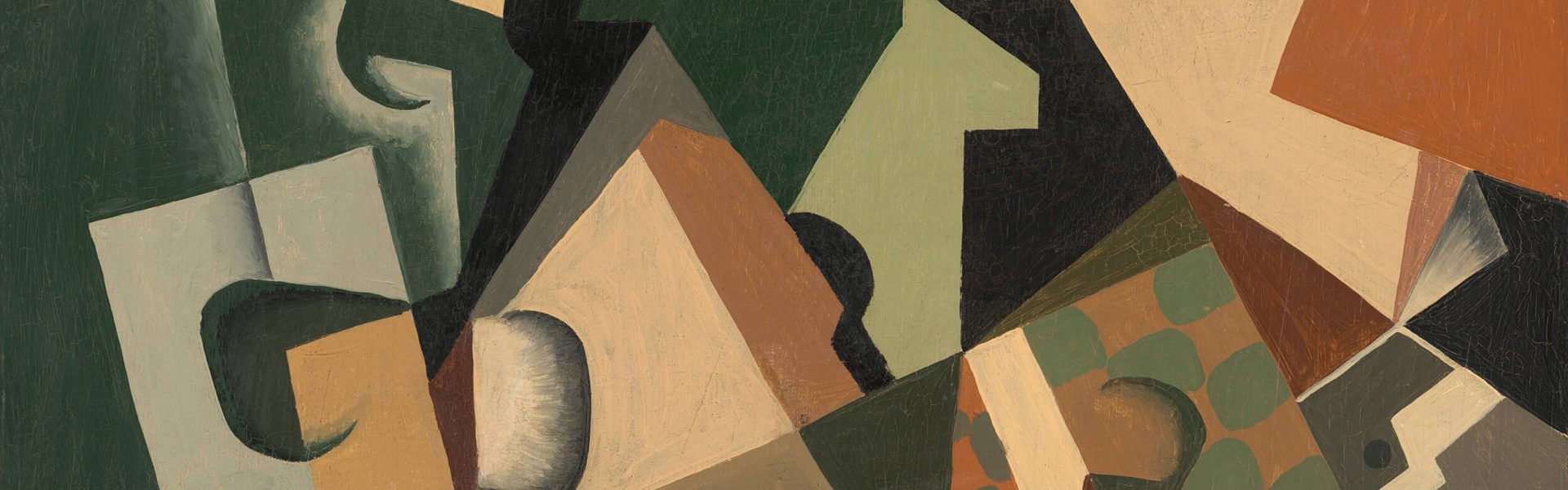
Cubism radically transformed the traditional conception of pictorial space. Objects were no longer depicted from a single fixed viewpoint, but were broken down into planes and conceived from multiple perspectives simultaneously. This marked the beginning of a profound reordering of visual language.
➡ General information on Art History and Artistic Periods
➡ Overview of art periods from antiquity to the modern era
Time Period
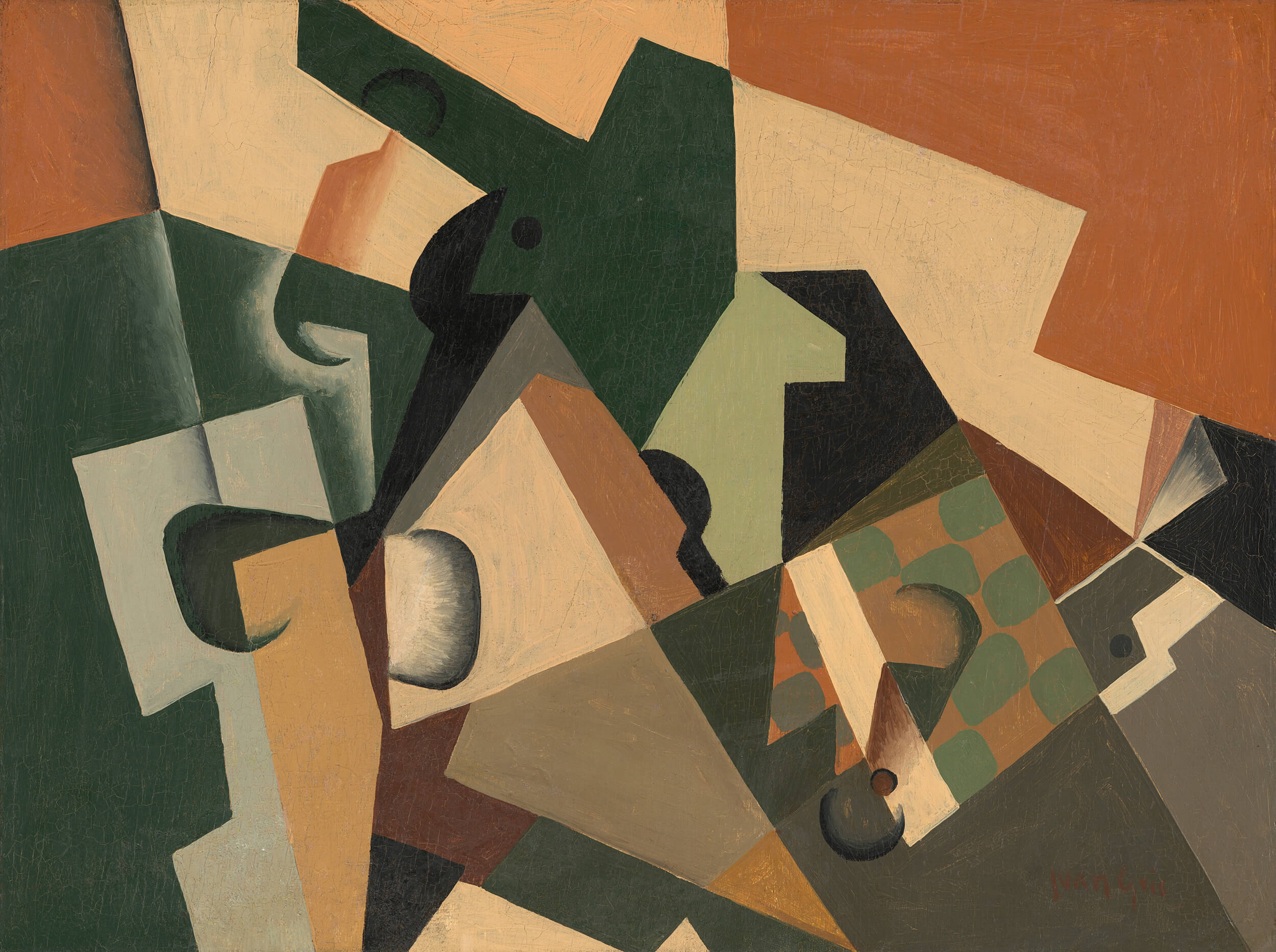
Cubism focused on the years from 1907 to 1914 and was centered in Paris. It developed during a period of intense artistic renewal prior to World War I. The movement continued to exert an influence long after its core period had ended.
Key Milestones
Picasso’s 1907 painting *Les Demoiselles d’Avignon* is considered a key work. Subsequently, forms were analyzed, deconstructed, and reassembled. Perspective, space, and the human form were no longer treated according to conventional rules but were fundamentally reorganized.
Influential Artists
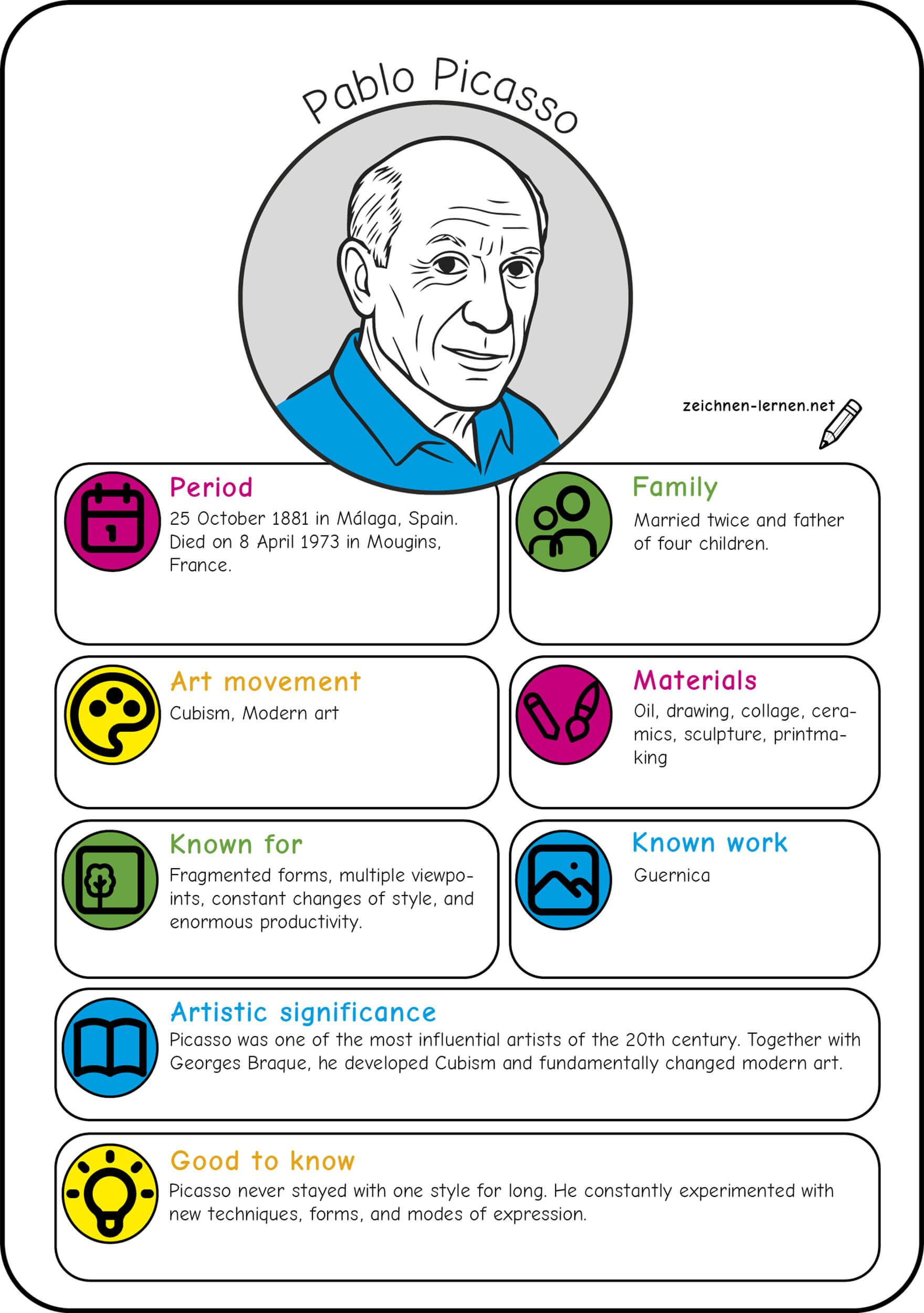
Pablo Picasso and Georges Braque were the main founders of Cubism. Juan Gris carried the movement forward in a particularly clear form. Fernand Léger and Robert Delaunay were also closely associated with Cubist developments, albeit each with their own distinct style.
Famous key works
- Picasso, Les Demoiselles d’Avignon
Famous because this work decisively paved the way for a new conception of space and form. - Picasso, Guernica
Famous because the Cubist formal vocabulary is combined here with a political indictment of world-historical significance. - Braque, Violin and Candlestick
Famous because Analytical Cubism is particularly clearly recognizable in this painting.
Connoisseur’s gems
- Juan Gris, Breakfast
A connoisseur’s gem because Synthetic Cubism is particularly balanced and precisely executed in terms of color here. - Picasso, Glass of Absinthe
A connoisseur’s gem because relief, object, and picture plane are redefined. - Picasso and Braque, papiers collés
A connoisseur’s gem because the use of pasted-in paper fragments marks the beginning of a completely new approach to material and pictorial reality.
Typical Materials and Media
Oil on canvas remained important, but was used differently—namely, in a more two-dimensional, fragmented, and constructive manner. A decisive innovation was papier collé and later collage, because newspaper, wallpaper, or pieces of paper introduced real materials directly into the picture. This deliberately shifted the boundary between representation and object. In the synthetic phase, bolder colors and simplified forms also became more prominent.
Impact on the Era
Cubism had a revolutionary impact because it questioned the very foundations of representation. Art was no longer understood as a reflection of a fixed viewpoint, but as an independent construction. This marked a decisive step toward a modern conception of the image.
Summary
| Key Features | Materials and Media | Notable Artists | Notable Artworks |
| Objects and figures are broken down into geometric shapes | Oil on canvas | Pablo Picasso | Pablo Picasso: Guernica |
| Multiple perspectives appear simultaneously in the image | Drawing | Georges Braque | Georges Braque: Houses in L’Estaque |
| Space and perspective are reconstructed | Collage | Juan Gris | Juan Gris: Portrait of Picasso |
| People, instruments, bottles, newspapers, and everyday objects are common motifs | Newsprint | María Blanchard | María Blanchard: La comulgante |
| Early Cubism often appears restrained in color | Wallpaper scraps | Fernand Léger | Fernand Léger: The City |
| Later, collages, text, and patterns are added | Typography | ||
| Simplified forms such as cubes, cones, cylinders, and planes |