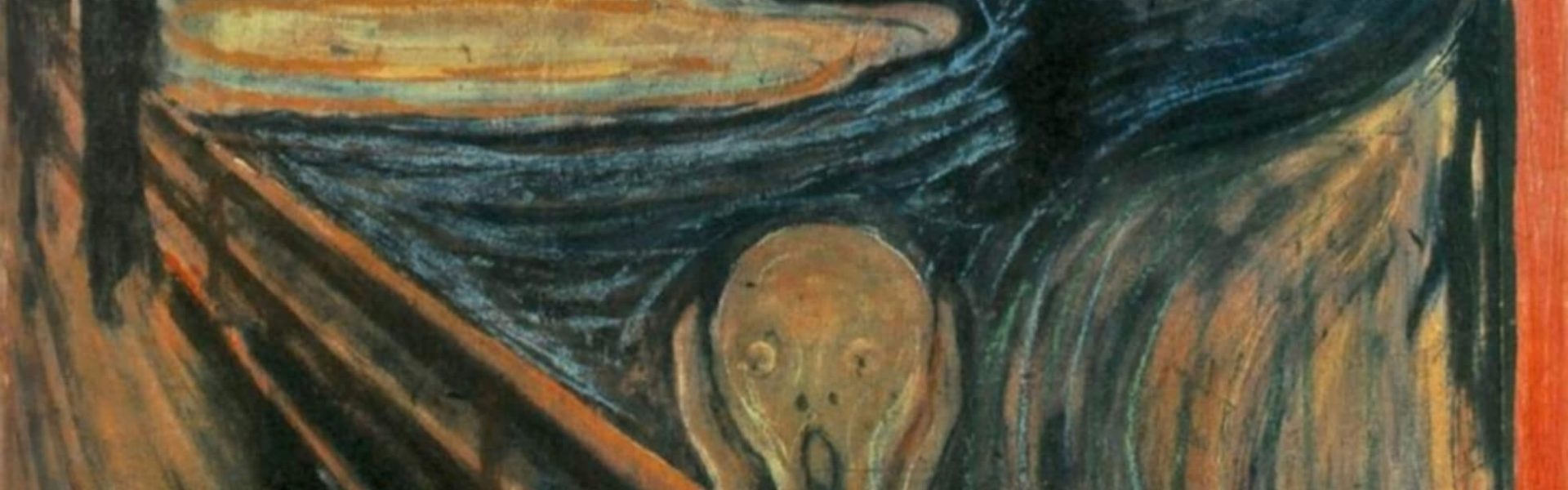

Expressionism
Expressionism focused not on outward appearance, but on inner experience. Forms were simplified, distorted, or exaggerated, and colors were deliberately used in a non-representational manner. Art was not meant to depict reality, but to make emotional excitement and subjective tension visible.
➡ General information on Art History and Artistic Periods
➡ Overview of art periods from antiquity to the modern era

Edvard Munch – The Scream
Time Period
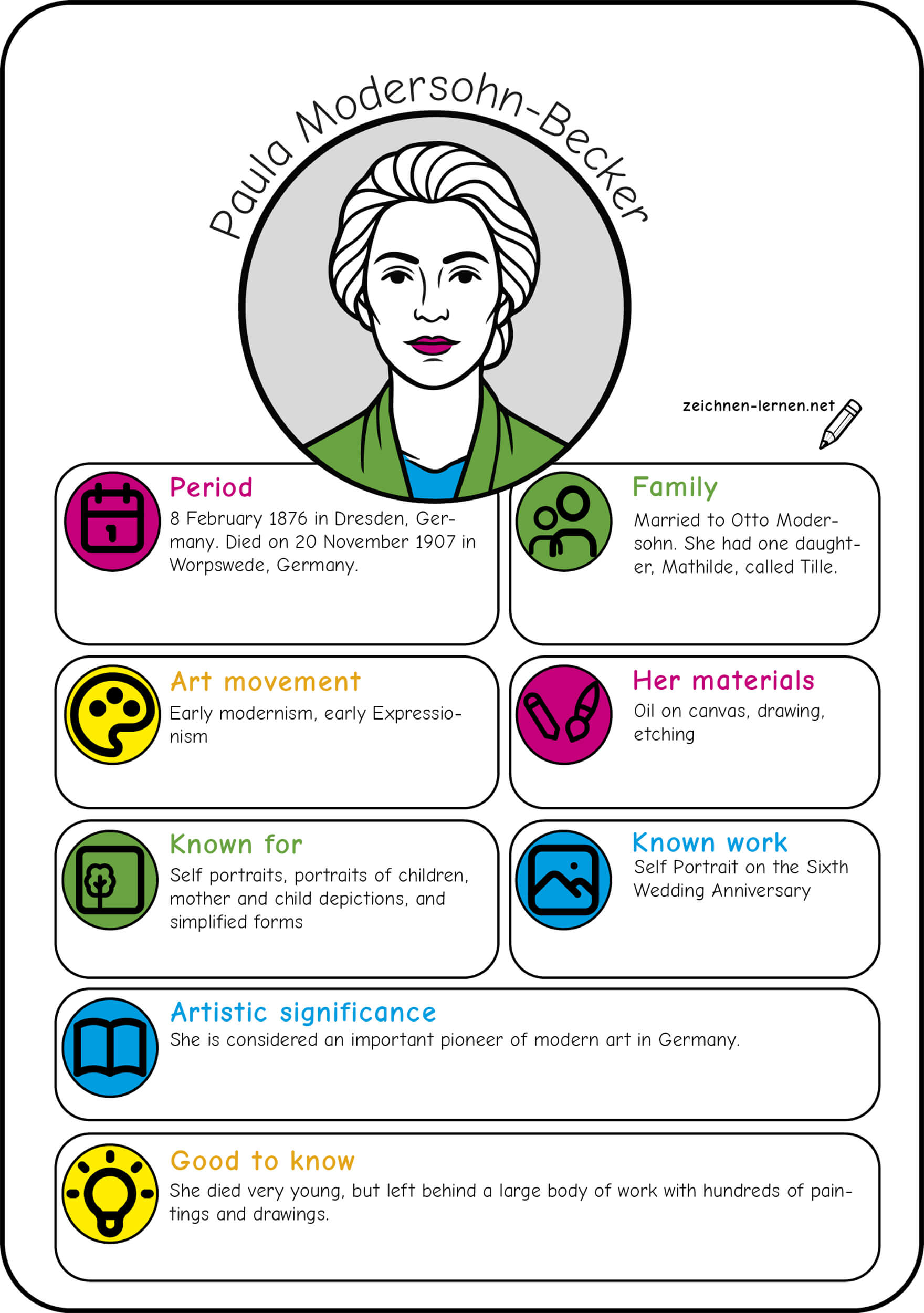
Expressionism flourished primarily during the first two decades of the 20th century. Important centers were located in German-speaking regions, particularly in Dresden, Berlin, and Munich. The era was marked by cultural unrest, social tensions, and a desire for artistic renewal.
Key Milestones
Groups such as Die Brücke and Der Blaue Reiter broke new ground beyond Naturalism and Impressionism. Color was used independently, form was simplified, and representation was often deliberately intensified. As a result, art became more of an expression of inner states and spiritual attitudes.
Influential Artists
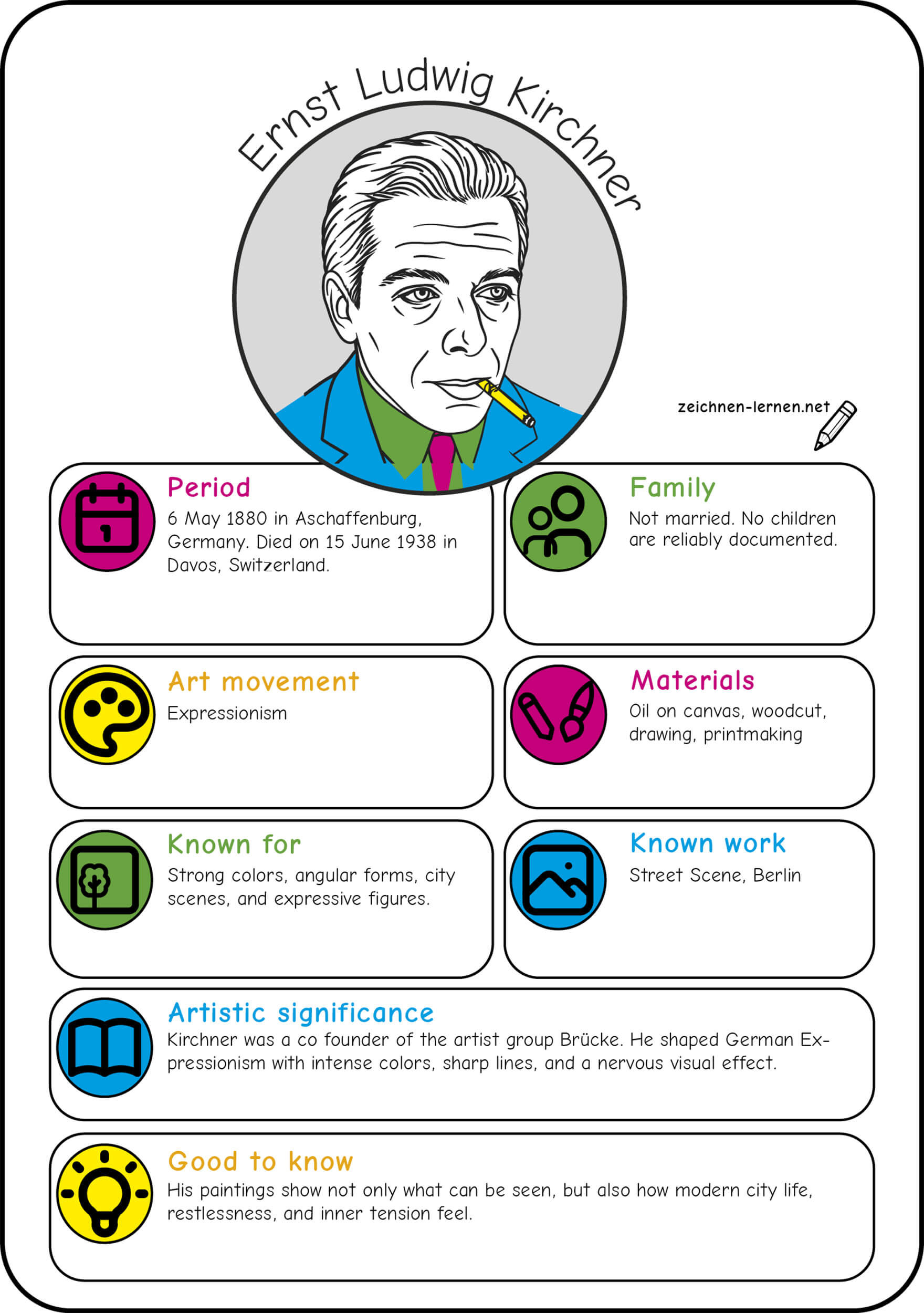
Ernst Ludwig Kirchner, Emil Nolde, Franz Marc and Wassily Kandinsky are among the most important figures of Expressionism. Although their works differed significantly, they were united by a search for heightened expression. Both representational and increasingly abstract forms emerged during this era.
Famous key works
- Munch, The Scream
Famous because the motif has become one of the most powerful visual symbols of modern anxiety and existential turmoil. - Kirchner, Street, Berlin
Famous because urban nervousness, intense color, and distorted figures are exemplified here. - Franz Marc, Blue Horse I
Well-known because the color, animal motif, and spiritual intensity have remained particularly prominent in the public consciousness.
Connoisseur’s gems
- Nolde, The Last Supper
A connoisseur’s gem because religious tradition and Expressionist color intensity collide with unusual directness. - Heckel, Fränzi Reclining
A connoisseur’s gem because figurative painting, woodcut-like thinking, and painterly simplification are closely intertwined. - Kandinsky, Improvisations
A connoisseur’s gem because the path from Expressionist expression to abstraction is particularly evident here.
Typical Materials and Media
Oil painting was widely used because of its intense colors and impasto effect. Woodcut, however, was particularly important because its rough, angular texture was well suited to the Expressionist aim of form. Lithography and etching were also widely employed because printmaking could disseminate images and ideas more quickly while also producing a sharp, immediate impact.
Impact on the Era
Expressionism served as a counter-movement to bourgeois rigidity and mere external representation. Inner turmoil, experiences of crisis, and emotional intensity were made visible. Art thus became a means of intense subjective expression and spiritual upheaval.
Summary
| Key Features | Materials and Resources | Well-known Artists | Well-known Artworks |
| Strong Emotions Take Center Stage | Oil on Canvas | Ernst Ludwig Kirchner | Ernst Ludwig Kirchner: Street Scene in Berlin |
| Colors often appear vivid, unnatural, and intense | Woodcut | Wassily Kandinsky | Wassily Kandinsky: Composition VII |
| Shapes are simplified, distorted, or angular | Drawing | Franz Marc | Franz Marc: The Large Blue Horses |
| Reality is not depicted realistically, but experienced internally | Printmaking | Emil Nolde | Emil Nolde: The Last Supper |
| Common themes include fear, the big city, nature, loneliness, war, and social hardship | Watercolor | Edvard Munch | Edvard Munch: The Scream |
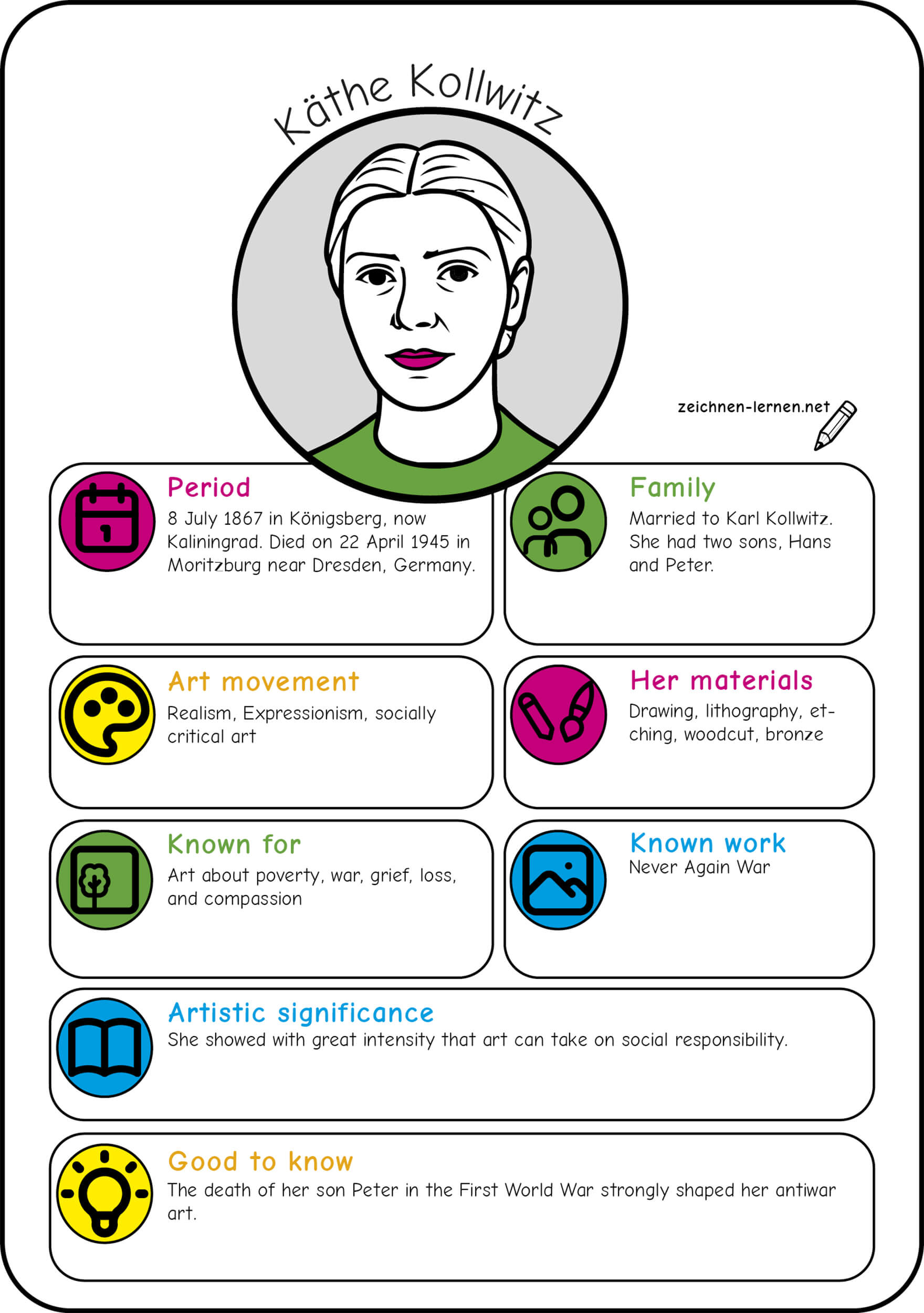
| The brushstrokes often appear visible, direct, and energetic | Strong color contrasts | Käthe Kollwitz | Käthe Kollwitz: No More War |
| Hard lines and simplified forms |