
Antiquity
Antiquity forms the foundation of many later European artistic concepts. Greek and Roman art, in particular, shaped standards of scale, proportion, the depiction of the human form, architectural styles, and the understanding of public representation. Many later eras consciously drew upon these models.
➡ General information on Art History and Artistic Periods
➡ Overview of art periods from antiquity to the modern era
The Laocoön Group
Time Period
In the context of art history, “Antiquity” generally refers to the period spanning from Greek art around the 8th century B.C. to the Roman Empire. Within this long period, a distinction is usually made between Archaic, Classical, and Hellenistic developments. Under Rome, numerous Greek forms were adopted, modified, and disseminated throughout the empire.
Key Milestones
Among the most important milestones are the development of Greek temple architecture, the evolution of idealized free-standing figures, and the classical formal rigor of the 5th century BCE. The Parthenon in Athens became a symbol of moderation, order, and balanced proportions. In Roman art, portraiture, state reliefs, and monumental architecture also gained particular significance.
Influential Artists
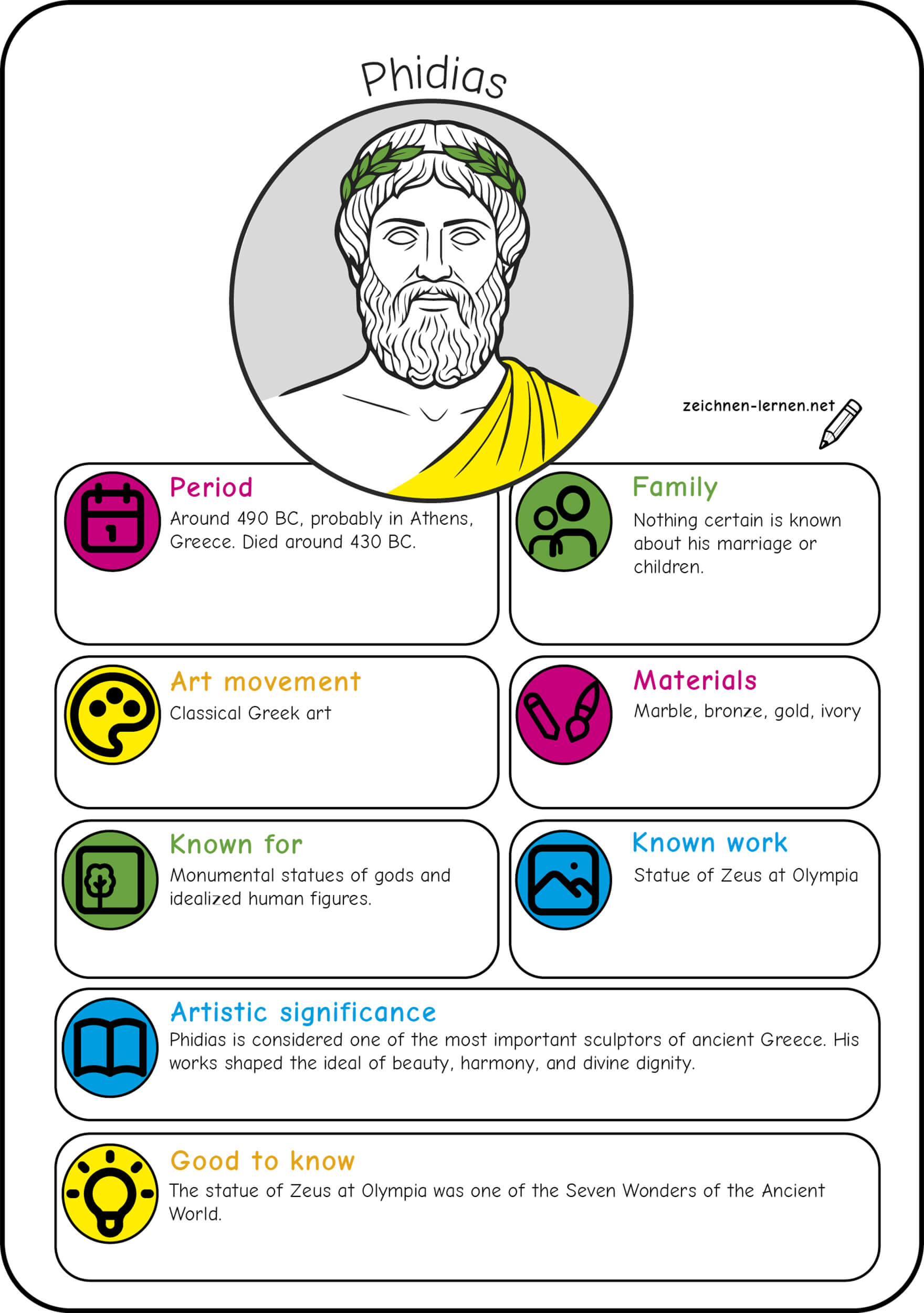
Phidias is considered one of the central figures of classical Greek art. Polykleitos became famous above all for his theory of proportion and his canon. Praxiteles is associated with a softer and more elegant conception of the figure. In Roman art, the names of individual artists usually receded into the background, while the political and representational function of the works came to the fore.
Famous key works
- Parthenon, Athens
Famous because it particularly clearly illustrates Greek temple architecture, classical proportions, and the ideal of politically charged sacred architecture. - Doryphoros by Polykleitos
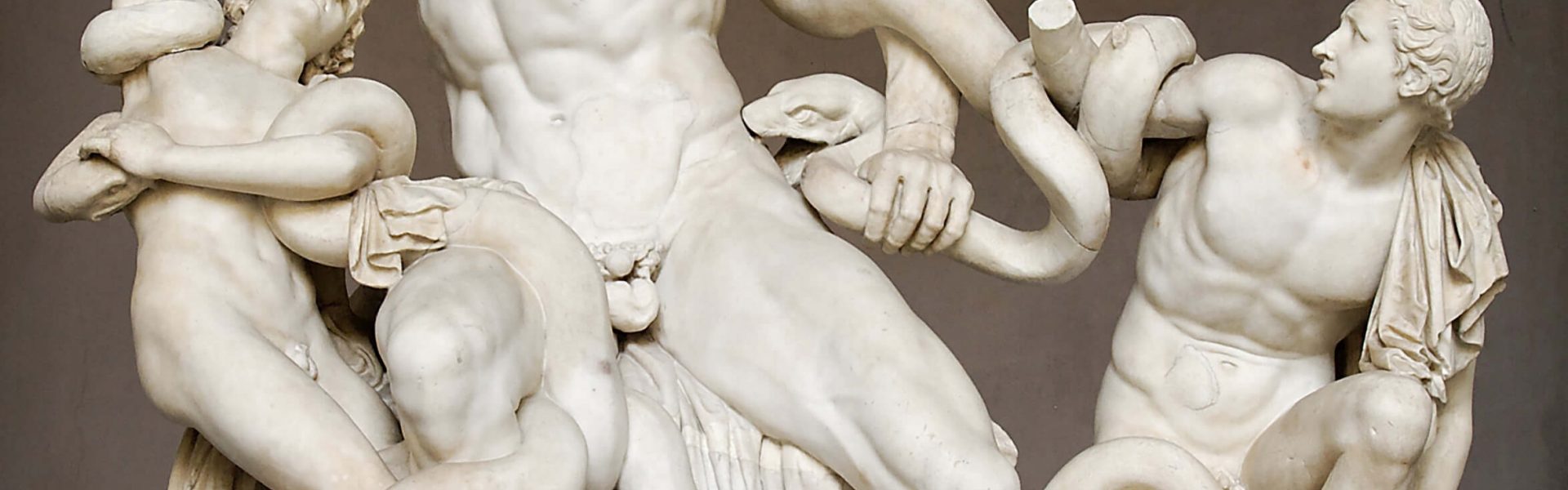
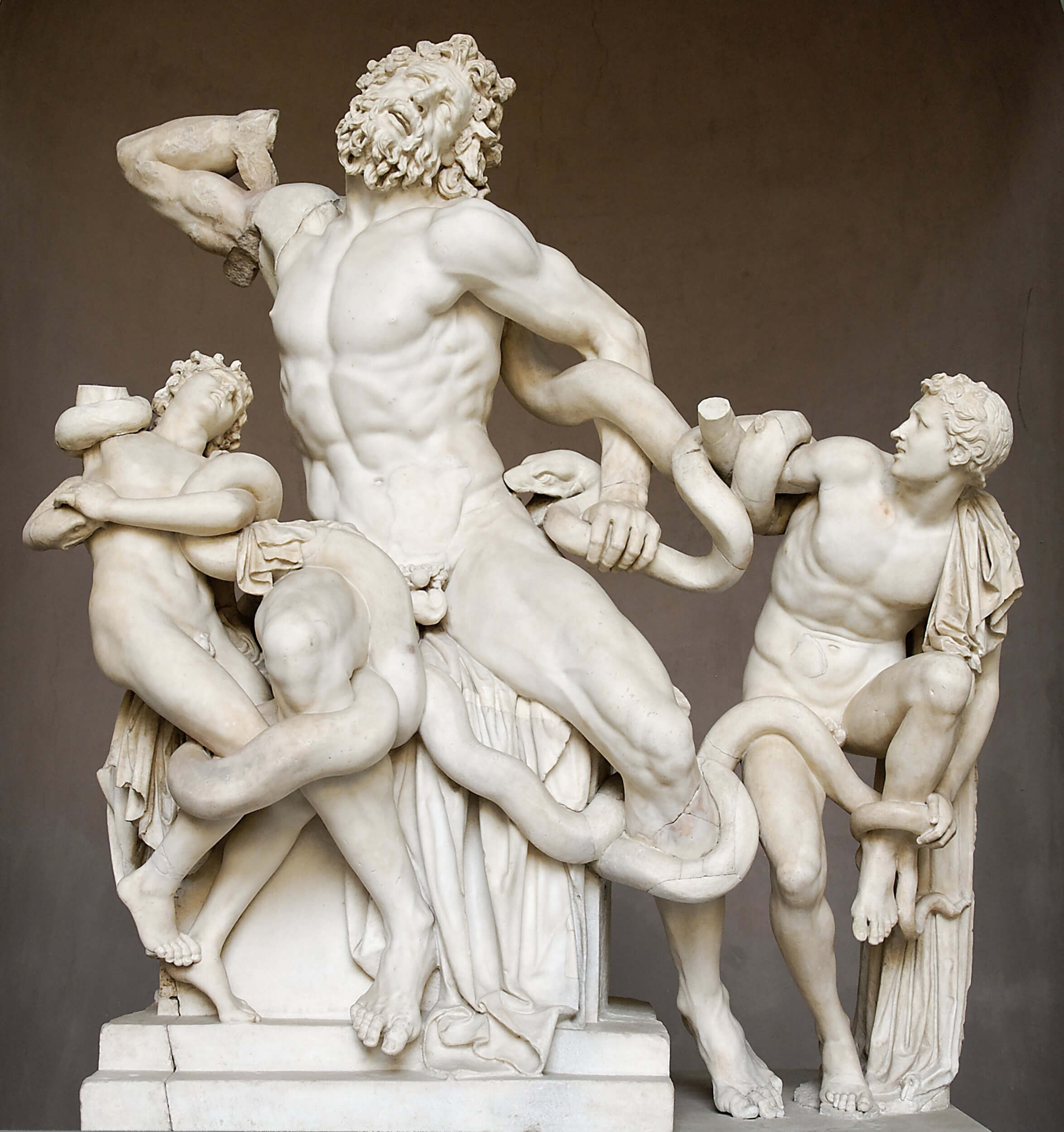
Famous because this figure exemplifies the perfect fusion of proportion, pose, and the classical ideal of the human body. - Laocoön Group
Famous because, like almost no other work, it reveals the dramatic side of Hellenistic sculpture and had a profound influence on the Renaissance and Baroque periods.
Gems for Connoisseurs
- Riace Bronzes
A gem for connoisseurs because they vividly illustrate the lost grandeur of Greek bronze sculpture. - Boxer at Rest
A connoisseur’s gem because here it is not ideal smoothness but exhaustion, vulnerability, and psychological presence that come to the fore. - Alexander Mosaic from Pompeii
A connoisseur’s gem because here Greek artistic ideals and Roman tradition come together in exceptional quality.
Typical Materials and Media
Marble was preferred because it allowed for durability, precision, and idealized form. Bronze was particularly important for large freestanding sculptures because it permitted finer projections and more dynamic poses. Ceramics were central to vase painting because they were widespread in everyday life and simultaneously served as a medium for depicting myths, rituals, and social scenes. Mosaics and frescoes were particularly valued in the Roman world because they allowed walls and floors to be decorated in a durable and representative manner.
Impact on the Era
Ancient art was closely linked to religion, public life, and political order. Images of gods, temples, and public monuments made power, cults, and social values visible. At the same time, a body of forms was created that was still regarded as exemplary centuries later.
Summary
| Key Characteristics | Materials and Media | Famous Artists | Famous Works of Art |
| Ideal of Beauty, Harmony, and Balanced Proportions | Marble | Phidias | Statue of Zeus at Olympia |
| Gods, heroes, myths, and rulers as major motifs | Bronze | Praxiteles | Discus Thrower |
| Bodies are often depicted in an idealized manner | Clay | Polykleitos | Doryphoros |
| Architecture featuring columns, temples, and clear orders | Mosaic | Myron | Laocoön Group |
| Art serves religion, power, memory, and public representation | Fresco | Venus de Milo | |
| Gold and ivory in particularly precious works |