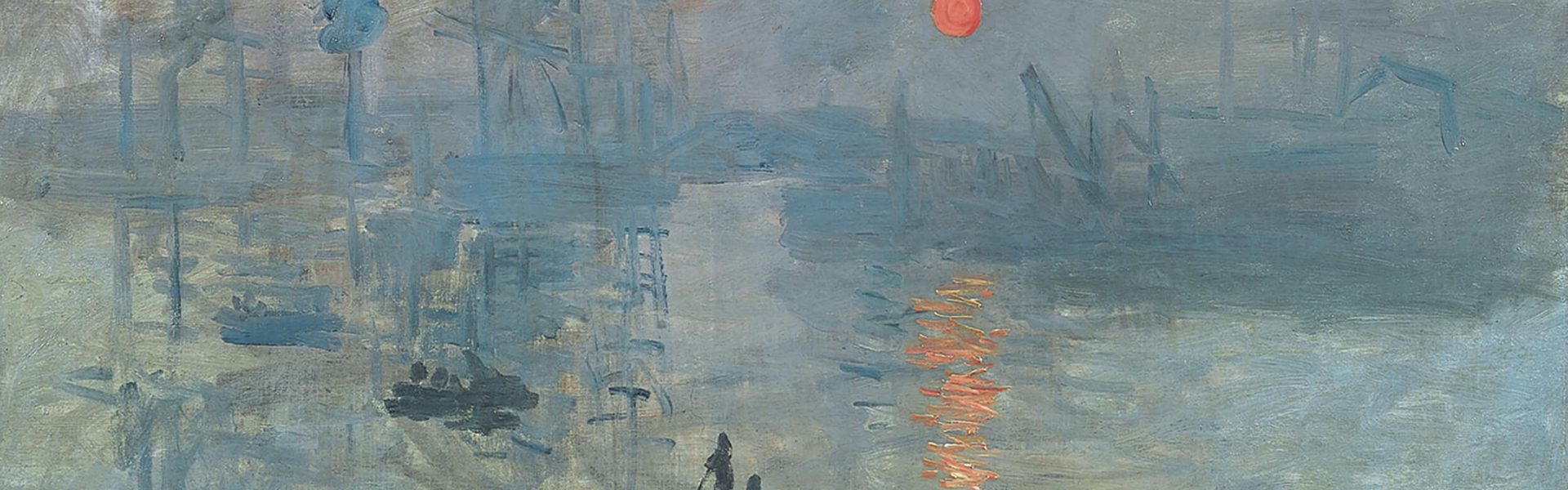

Impressionism
Impressionism fundamentally transformed painting by placing greater emphasis on fleeting impressions, shifting light, and immediate perception than on clear contours and defined forms. The visible modern world, with its new movements and atmospheres, became a central theme in art. This shifted the focus from fixed representation to the moment of seeing.
➡ General information on Art History and Artistic Periods
➡ Overview of art periods from antiquity to the modern era
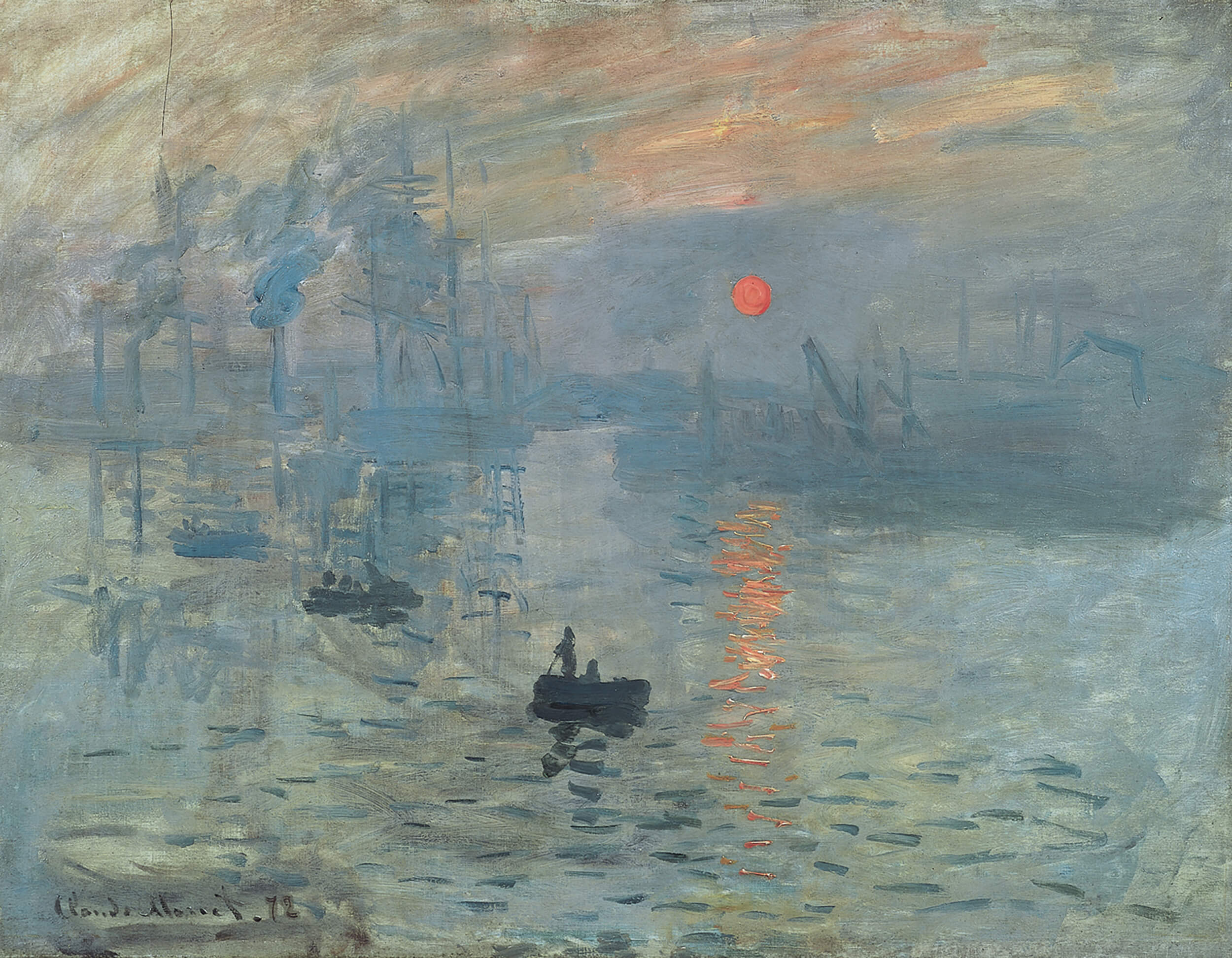
Claude Monet – Impression, Sunrise // Impression, soleil levant
Period
Impressionism is generally dated to the period between approximately 1867 and 1886. Its most significant phase took place in France, from where it spread to other countries. The movement was closely linked to urban transformation, new forms of leisure, and a changing modern sensibility.
Key Milestones
Of particular significance was the first exhibition of the Impressionists in 1874. Open-air painting, loose brushwork, and the depiction of changing light conditions became characteristic features. Train stations, boulevards, river landscapes, and scenes of modern life became favored motifs.
Influential Artists
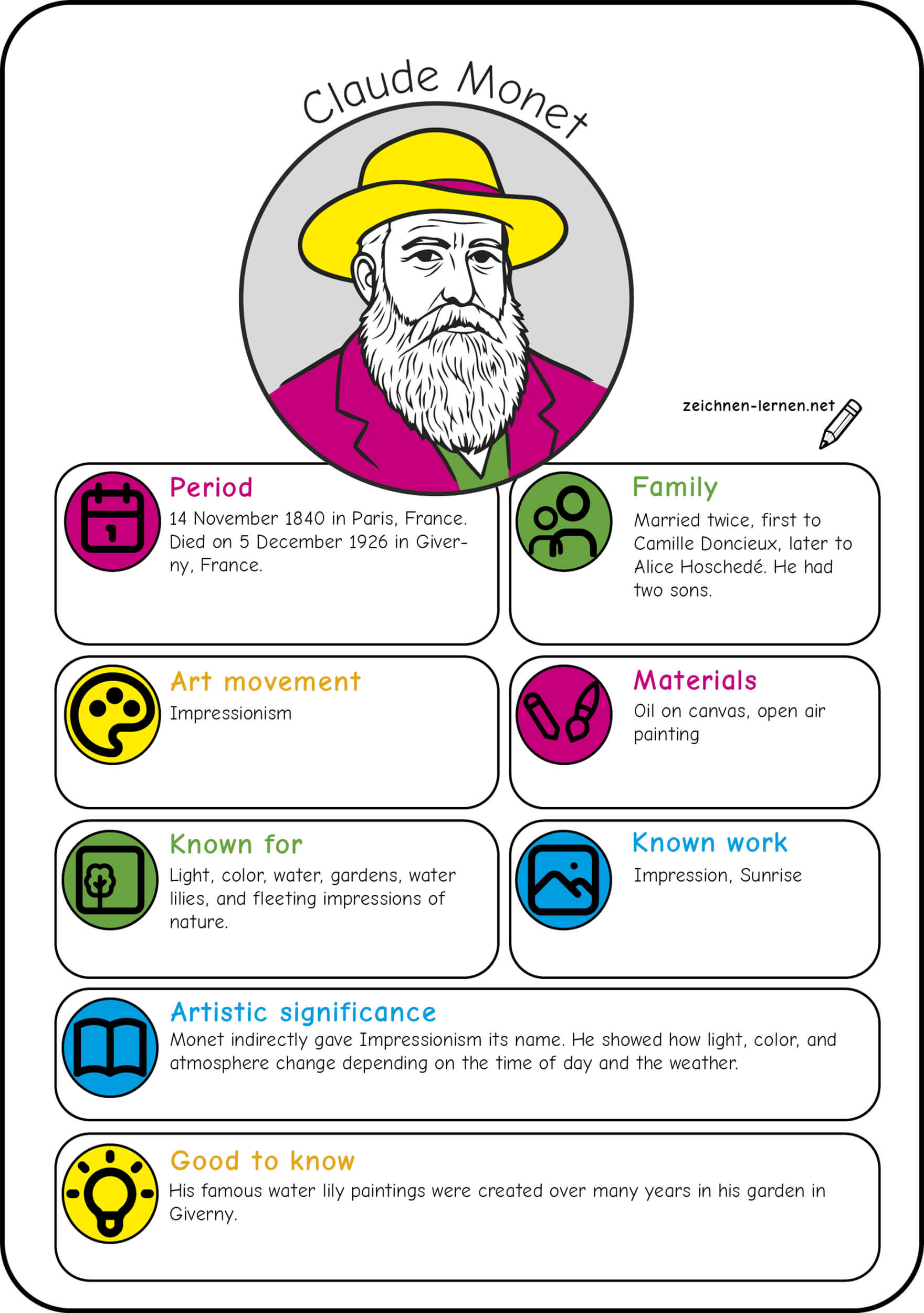
Claude Monet became a central figure of the movement. Pierre-Auguste Renoir, Edgar Degas, and Camille Pissarro each shaped Impressionism in their own way. What they had in common was a greater focus on visual impression and the atmosphere of the moment.
Notable Key Works
- Monet, Impression, Sunrise
Notable because the name of the entire movement was derived from this work. - Renoir, Dance at the Moulin de la Galette
Famous because it exemplifies the convergence of modern leisure life, shifting light, and a loose painting style. - Monet, Water Lilies
Famous because the series illustrates the later development of Impressionism and its influence on Modernism.
Connoisseur’s Gems
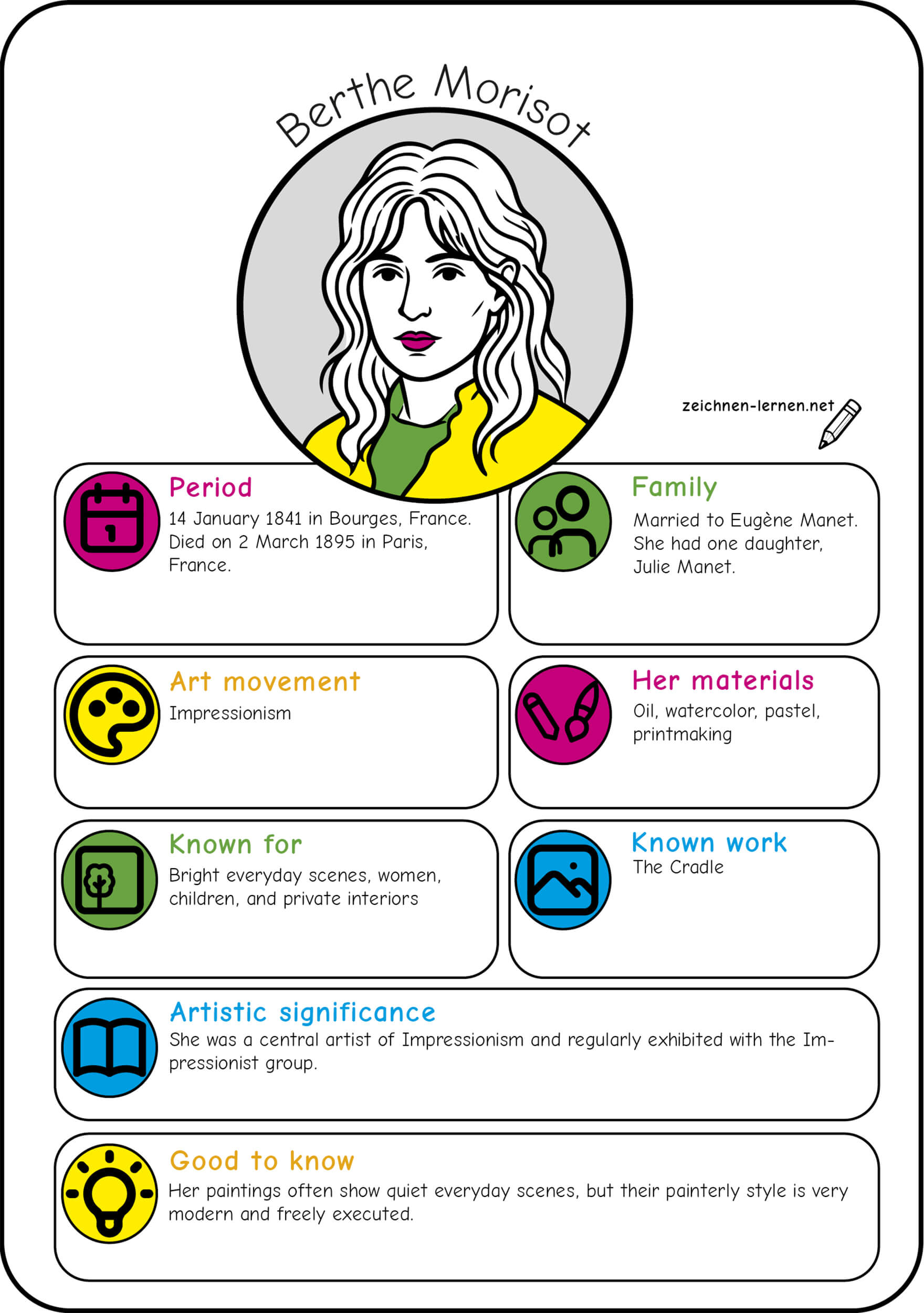
- Berthe Morisot, Cradle
A connoisseur’s gem because it combines an intimate interior scene with Impressionist lightness in an unusually delicate manner. - Pissarro, Boulevard Montmartre
A connoisseur’s gem because it captures modern city life in a way that is both serial and atmospheric. - Caillebotte, Street in Paris in Rainy Weather
A connoisseur’s gem because the transition between Impressionism and a more rigorous spatial organization is particularly compellingly visible.
Typical Materials and Media
Oil paint in tubes became essential because it made painting outdoors considerably easier. Canvas and portable easels facilitated working on location. The painting style became looser and faster, as the aim was to capture fleeting light and weather conditions immediately. Pastels were also valued because they allowed spontaneous effects of color and movement to be captured quickly.
Impact on the Era
Impressionism transformed the notion of what a painting could achieve. The focus shifted from smooth, defined forms to perception, light, and atmosphere. Consequently, modern everyday life came to be recognized as more worthy of artistic representation, and the academic conception of art was fundamentally challenged.
Summary
| Key Features | Materials and Resources | Notable Artists | Notable Artworks |
| A Fleeting Impression of a Moment | Oil on canvas | Claude Monet | Claude Monet: Impression, Sunrise and Water Lilies |
| Light, color, and atmosphere take center stage | Pastel | Pierre Auguste Renoir | Pierre Auguste Renoir: Dance at the Moulin de la Galette |
| Loose, visible brushstrokes | Plein air painting | Edgar Degas | Edgar Degas: The Ballet Class |
| Painting outdoors | Bright color palette | Camille Pissarro | Camille Pissarro: Boulevard Montmartre at Night |
| Everyday life, leisure, nature, and city life | Short brushstrokes | Berthe Morisot | Berthe Morisot: The Cradle |
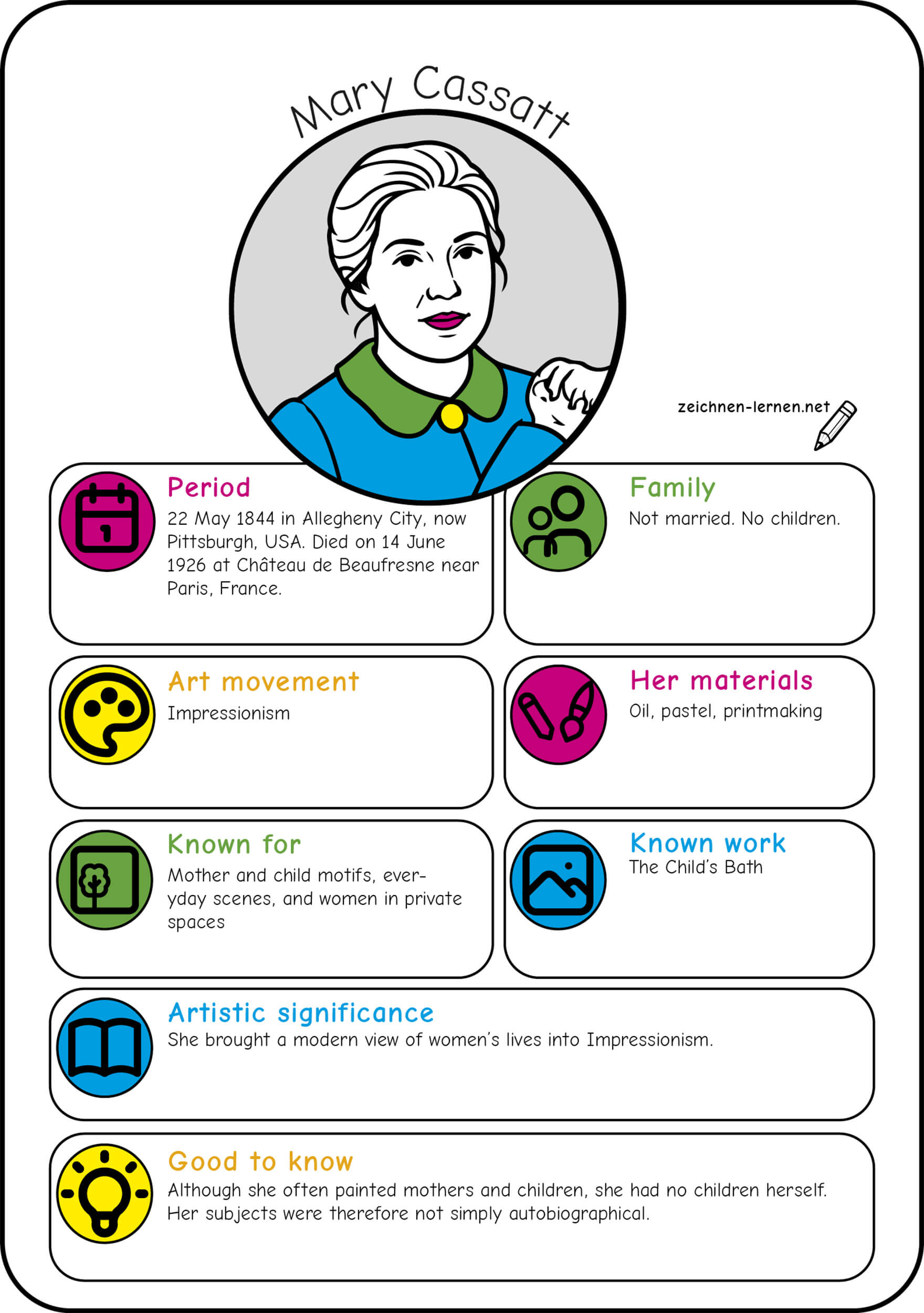
| Contours become softer and less important | Series painting | Mary Cassatt | Mary Cassatt: The Child’s Bath |
| Quick sketches |