Regular practice is the key to continuously improving your drawing skills. Drawing every day is a simple yet effective way to practice contours, three-dimensionality, and shading. This routine not only provides a structured way to make progress, but also strengthens your understanding of forms and your own creative style by improving hand-eye coordination.
Practice Routines: Learn to Draw Through Daily Practice
The tips on this website can only help you if you make drawing a regular part of your daily routine—in other words, if you establish practice routines. The more you practice, the better you’ll get—whether it’s drawing, math, writing, or other skills. Progress is only possible through continuous practice.
Here you’ll find motivation and practice materials to help you stick with it.
Get feedback
If you’d like, you can (even as a guest) visit the forum (German) or via email to get feedback on your exercises.
30 Days, 30 Templates: Sketching Made Easy
For this series of exercises, I’m providing photo templates for 30 days that are ideal for both beginners and advanced students. The subjects are varied and range from simple objects like everyday items to more complex scenes that require closer attention to detail.
Download the practice schedule
Here you can download and print a schedule with the various photo templates and set your own goals:
➡ Download and print the PDF here
Download photo templates
You can view or download the photo templates included in the PDF separately here:
- Green Apple
- Whole watermelon
- Standing banana
- Red bell pepper
- Grazing rhino
- Sandy beach with a view of the sea
- Fruit bowl from above
- Burning candle
- Red Tulip
- Giraffe Head
- Lying bell pepper with stem facing forward
- Half a mushroom
- Waking meerkat
- Railroad tracks stretching into the horizon
- Quartered bell peppers with seeds
- Swimming swan from behind
- Standing rooster
- One whole kiwi and half a kiwi
- Sunflower blossom from the front
- Squirrel eating in a tree, front view
- Lighthouse on the coast overlooking the sea
- Lying lemon
- Dandelion with a blurred background
- Horse grazing, viewed from the side
- Raccoon on all fours
- Daisy in bloom
- Half a lemon
- Zebra running from the side
- Bitten slice of watermelon
- Mountain panorama in the Rocky Mountains
These photos are protected by copyright and may only be used for personal or educational purposes, but not for commercial use.
You can also find these and other photo templates available for download on my blog (German) and as inspiration.
Set your personal challenge
Depending on what your personal goals are, you can adjust the focus of your daily exercise routines. Here are five main goals you can pursue.
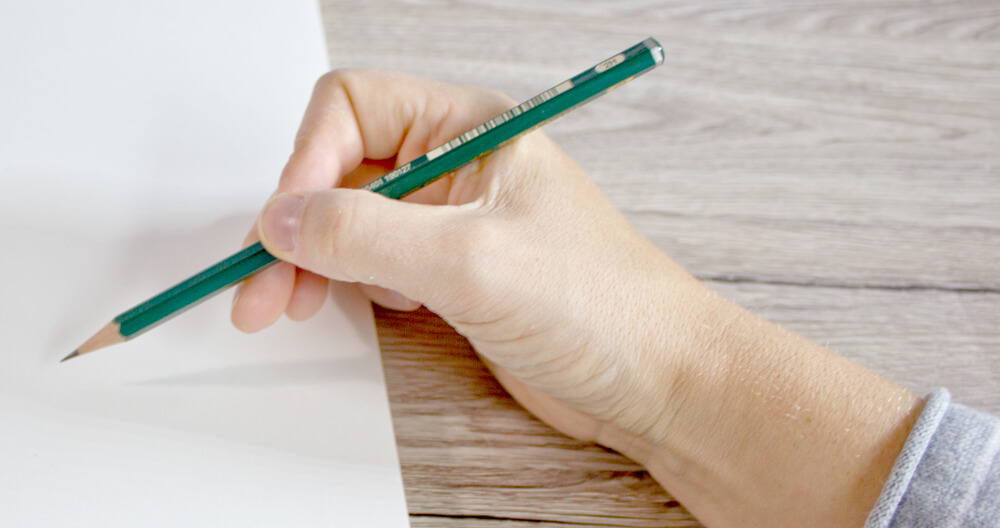
1. Intuitive Sketching
In the first phase of the exercise, the focus is on transferring the reference images by feel. The goal is to grasp the motifs as a whole and sketch them freely. This phase helps develop the ability to quickly recognize shapes and proportions and translate them onto paper.
2. Space and Perspective
In the second phase, we focus specifically on depicting three-dimensionality. By analyzing perspectives and depth relationships, you will learn how to render objects realistically. This step improves your spatial awareness and your ability to convey volume in a drawing.
3. Shading and Light Sources
The next step in the practice plan focuses on light and shadow. By applying strategic shading, you can add depth and expression to your drawings. Learn to analyze light sources and apply shading in a way that looks natural and highlights the three-dimensionality of your subjects.
4. Coloring
These templates are also great for practicing coloring. Experiment with color schemes, try out different materials like markers or colored pencils, and add a personal touch to your drawings with color. Your color choices don’t necessarily have to match the original; what’s important is that the overall look is harmonious.
5. Additional Challenge: Time Limit
Depending on the scope of your task (color studies generally take longer than simple sketches), set different time limits for yourself and stick to them so you can focus as effectively as possible on what’s essential.
If you know you only have 15 minutes for your sketch, you’re less likely to get lost in unnecessary details.
Possible time limits per drawing exercise include:
- Max. 5 minutes
- Max. 15 minutes
- Max. 30 minutes
- Max. 1 hour
Conclusion: Practice Makes Perfect
Drawing every day offers an ideal opportunity to specifically improve your drawing techniques and develop a routine that fosters both creativity and skill. Whether you’re a beginner or already have experience, these exercises will help you take your skills to the next level.
Drawing “Challenges”
On social media, there are often drawing challenges, contests, or mutual encouragement to draw regularly. Examples include “Mermay” and “Inktober.”
My forum (German) also offers such regular exercises. These include, for example, drawing horses or flowers based on photo templates, or creative tasks like the Fairy Tale Drawing Marathon, in which ideas based on fairy tale themes are brought to life.