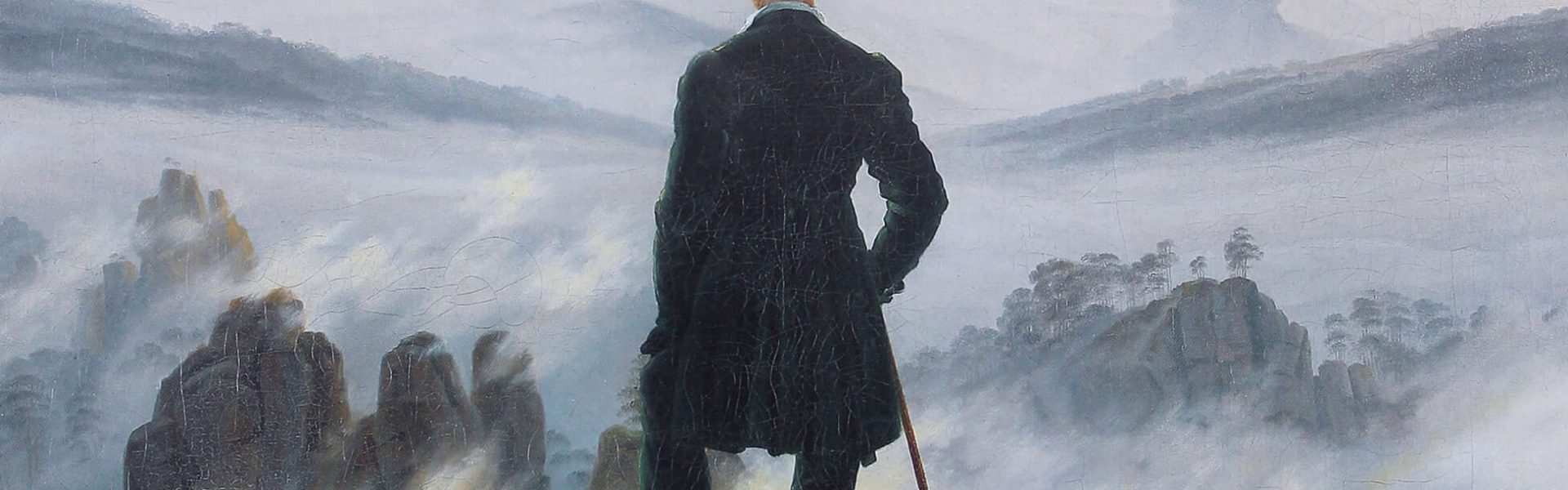

Romanticism
Romanticism countered the order of Classicism with a stronger emphasis on emotion, the experience of nature, inner life, and imagination. The sublime, the mysterious, and the historical took on new significance. The art of this period often focused on emotional mood and subjective experience.
➡ General information on Art History and Artistic Periods
➡ Overview of art periods from antiquity to the modern era
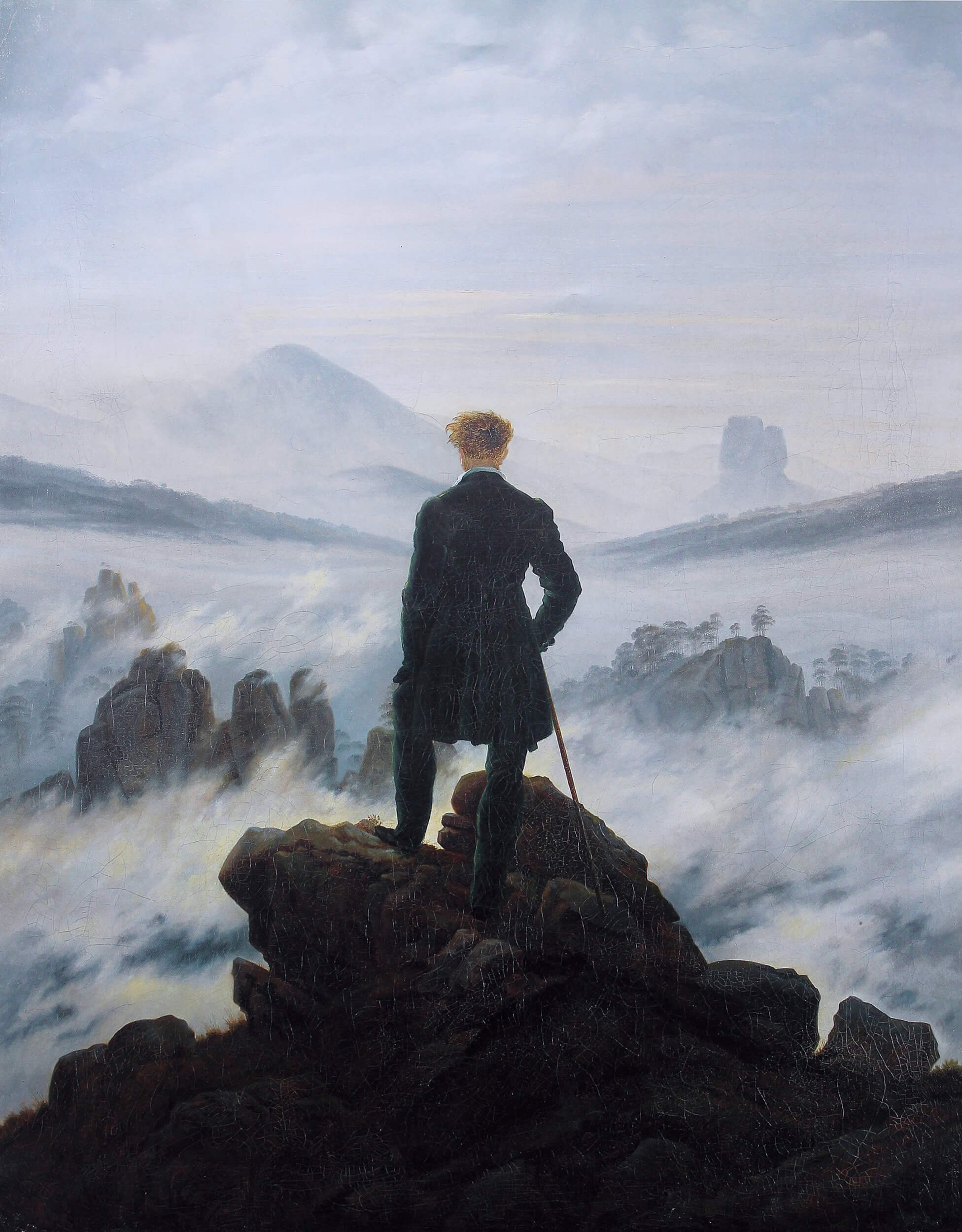
Caspar David Friedrich – Wanderer above the Sea of Fog
Time Period
The Romantic period spanned from the late 18th century to around the mid-19th century. It developed differently in various countries and manifested itself in painting, literature, and music, each with its own distinct focus. Despite regional differences, it was united by a focus on emotion, nature, and historical depth.
Key Milestones
Key characteristics included the elevation of the sublime, the depiction of nature as a spiritual space, and an interest in history, ruins, night, and the distant. Nature was not merely observed but understood as a vehicle for inner experience. At the same time, imagination, longing, and the uncanny came to the fore.
Influential Artists
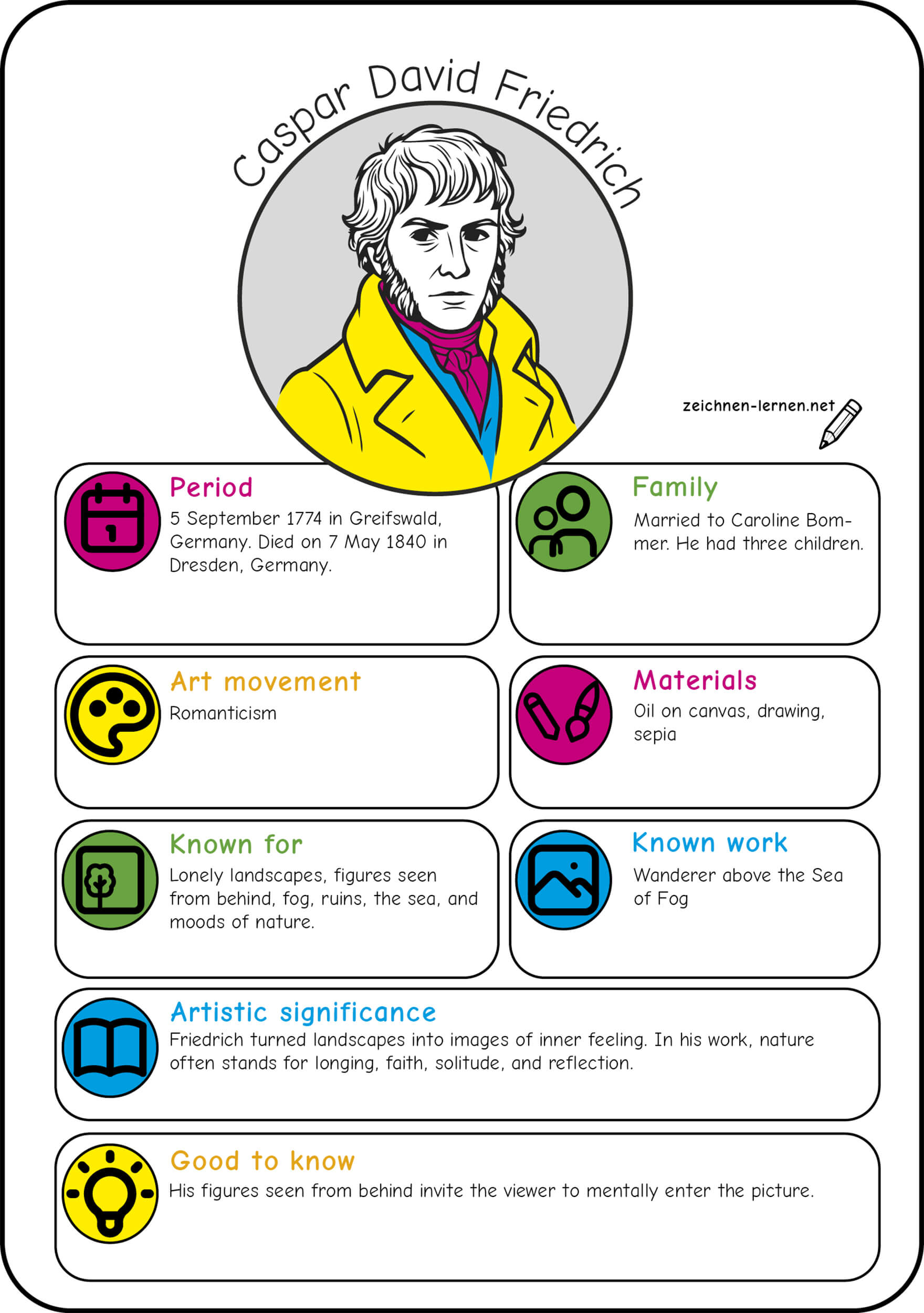
Caspar David Friedrich epitomizes the quiet, spiritually charged landscape of German Romanticism. William Turner developed a particularly atmospheric and light-oriented visual language. Eugène Delacroix represented a more passionate and dynamic expression of Romantic art. What these artists have in common is their emphasis on subjective impact and intense pictorial atmosphere.
Famous key works
- Friedrich, Wanderer Above the Sea of Fog
Famous because the work has become a model of Romantic nature observation and inner self-assurance. - Géricault, The Raft of the Medusa
Famous because it combines historical catastrophe, pathos, and political explosiveness in a monumental form. - Delacroix, Liberty Leading the People
Famous because the work has become, far beyond the realm of art, the visual symbol of revolution and political freedom.
Connoisseur’s gems
- Turner, Rain, Steam, and Speed
A connoisseur’s gem because nature, technology, and painterly resolution are brought together here at the highest level. - Runge, The Morning
A connoisseur’s gem because nature, symbolism, and romantic ideals appear in an unusually concentrated form. - Friedrich, Abbey in the Oak Forest
A connoisseur’s gem because transience, stillness, and spiritual gravity are rendered without dramatic exaggeration.
Typical Materials and Media
Oil painting remained the primary medium because it allowed for the nuanced depiction of lighting, atmosphere, and vast natural landscapes. Watercolor and drawing gained in importance as travel, the study of nature, and the spontaneous capture of weather and light became more common. Printmaking also played a significant role, as it enabled the wider dissemination of Romantic imagery.
Impact on the Era
Romanticism responded to rationalization, industrialization, and political upheavals with a stronger turn toward nature, inner life, and historical imagination. It reinforced individuality, longing, and emotional interpretive power. Art thus became a space of intellectual and spiritual intensity.
Summary
| Key Features | Materials and Resources | Well-known Artists | Well-known Artworks |
| Emotion, Longing, and Inner Reflection | Oil on canvas | Caspar David Friedrich | Caspar David Friedrich: Wanderer Above the Sea of Fog and The Ice Sea |
| Nature as a Mirror of the Soul | Drawing | Joseph Mallord William Turner | William Turner: The Fighting Temeraire and Snowstorm: Hannibal Crossing the Alps |
| Loneliness, Fog, Ruins, Night, and Infinity | Watercolor | Eugène Delacroix | Eugène Delacroix: Liberty Leading the People |
| Interest in mystery, dreams, and the past | Sepia | Johann Heinrich Füssli | Johann Heinrich Füssli: The Nightmare |
| Humans often appear small in the face of nature | Landscape painting | Francisco de Goya | Francisco de Goya: The Sleep of Reason Produces Monsters |
| Landscape as a Conveyor of Mood | Atmospheric Lighting | Philipp Otto Runge | Philipp Otto Runge: The Hülsenbeck Children |
| Symbolic Motifs |