
Art in the 20th and 21st Centuries: What defines art today?
Art in the 20th and 21st centuries is particularly diverse. While certain rules, techniques, and motifs often took center stage in the past, art in the modern and contemporary eras has become increasingly free.
Artists no longer wanted merely to depict reality, but also to give visible form to ideas, feelings, criticism, and experimentation. That is why today there is no single art movement, but rather many different forms existing side by side.
Painting, photography, sculpture, installation, performance, video, and digital art are all now naturally part of the art world.
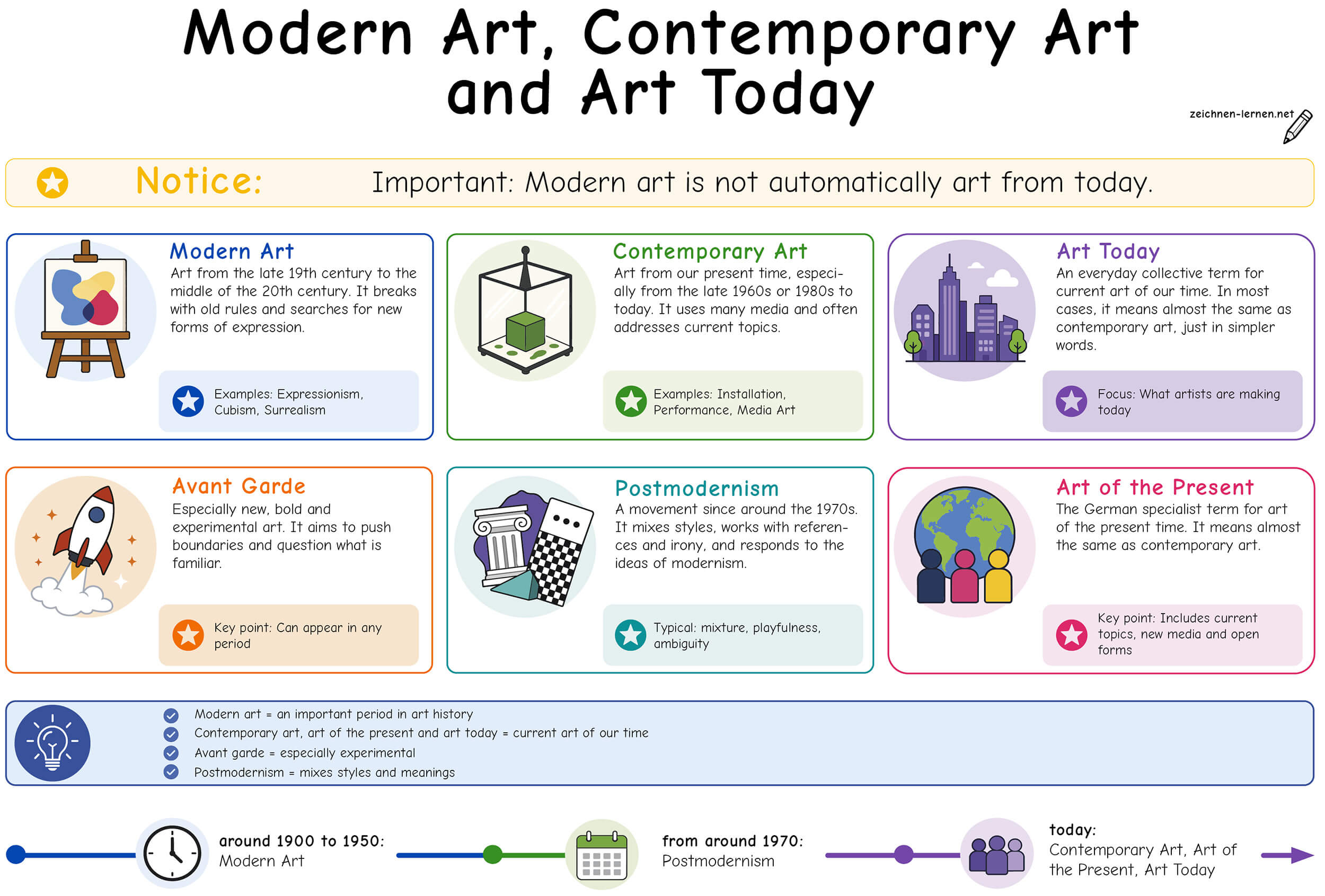
💡 Contemporary art overview as a PDF
What changed in the 20th century?
At the beginning of the 20th century, art changed very rapidly. The world became more modern, cities grew, technology and industry developed at a rapid pace, and political crises shaped people’s lives. As a result, many artists sought new forms of expression.
Numerous new art movements emerged, for example:
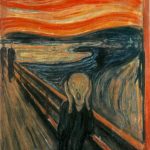
Expressionism
Emotions, colors, and bold forms took center stage. Reality was not depicted realistically, but deliberately altered.
| Key characteristics | Materials and techniques | Notable artists | Notable works of art |
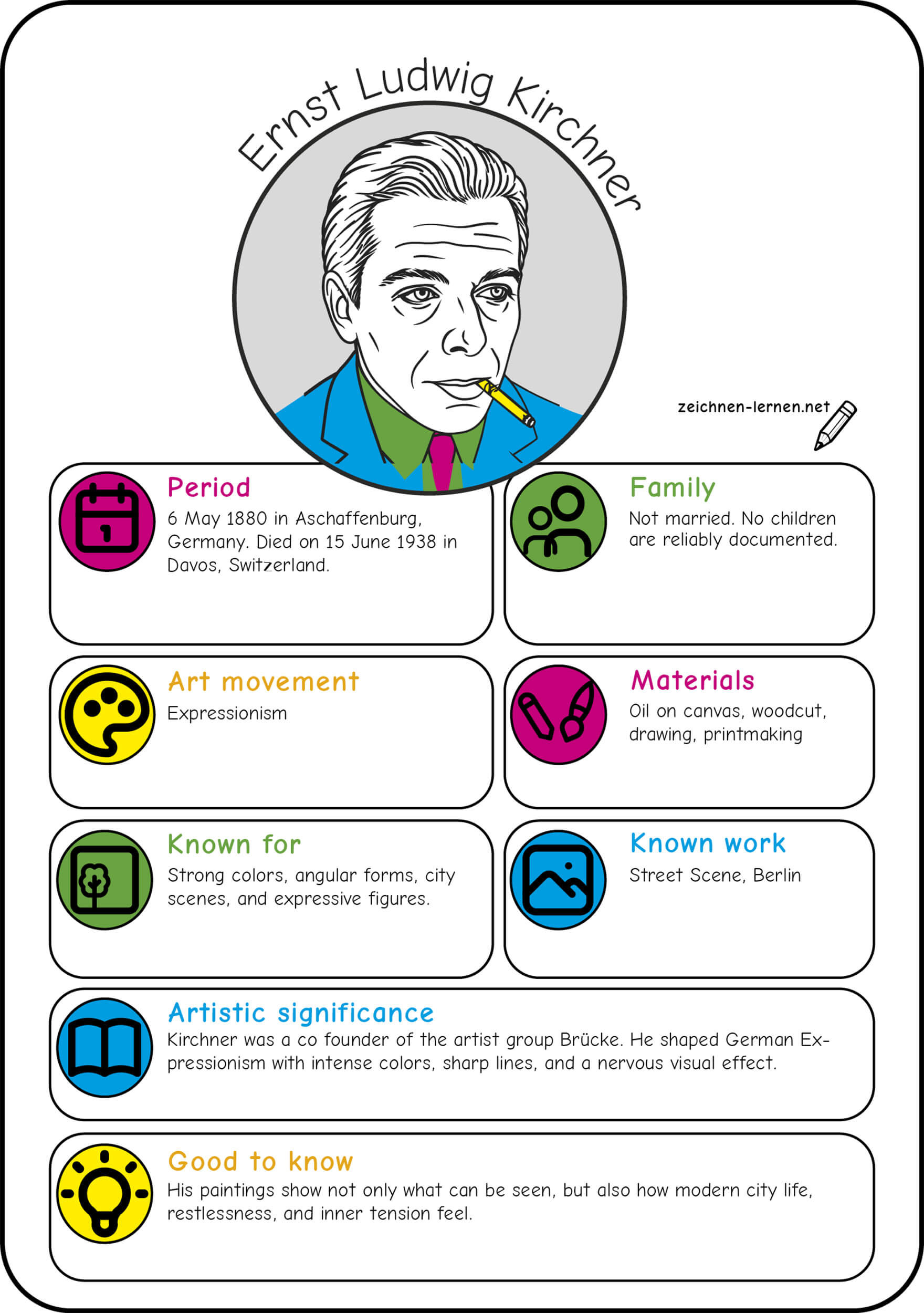
| Strong emotions take center stage | Oil on canvas | Ernst Ludwig Kirchner | Ernst Ludwig Kirchner: Street Scene in Berlin |
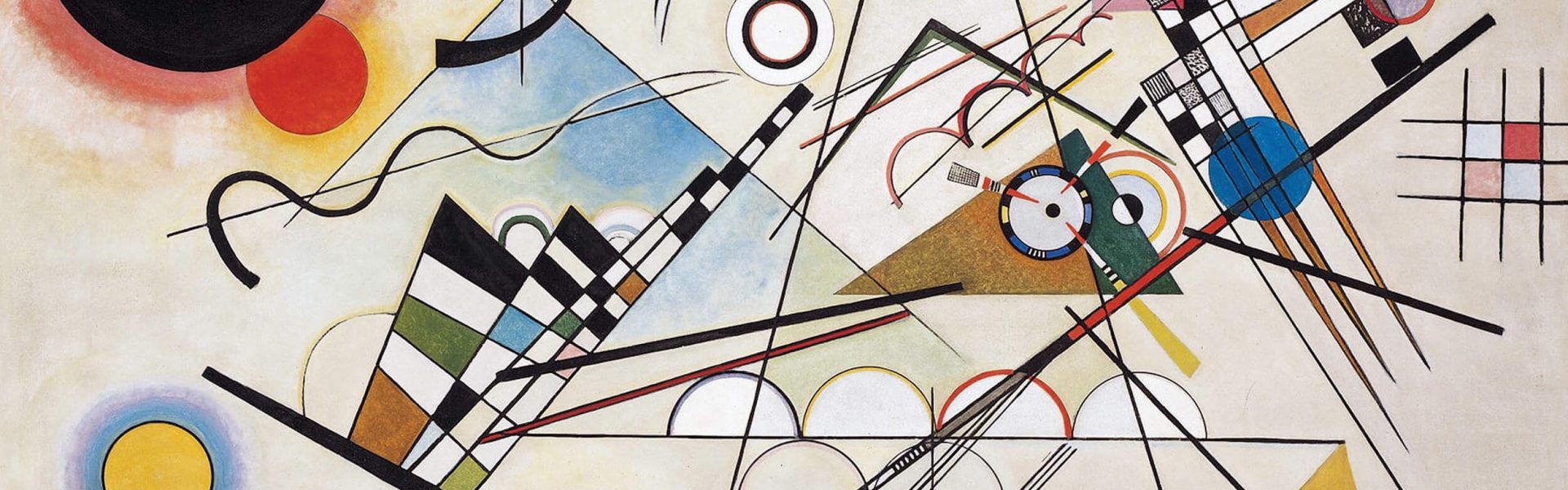
| Colors often appear vivid, unnatural, and dynamic | Woodcut | Wassily Kandinsky | Wassily Kandinsky: Composition VII |
| Shapes are simplified, distorted, or angular | Drawing | Franz Marc | Franz Marc: The Large Blue Horses |
| Reality is not depicted realistically, but experienced internally | Printmaking | Emil Nolde | Emil Nolde: The Last Supper |
| Common themes include fear, the big city, nature, loneliness, war, and social hardship | Watercolor | Edvard Munch | Edvard Munch: The Scream |
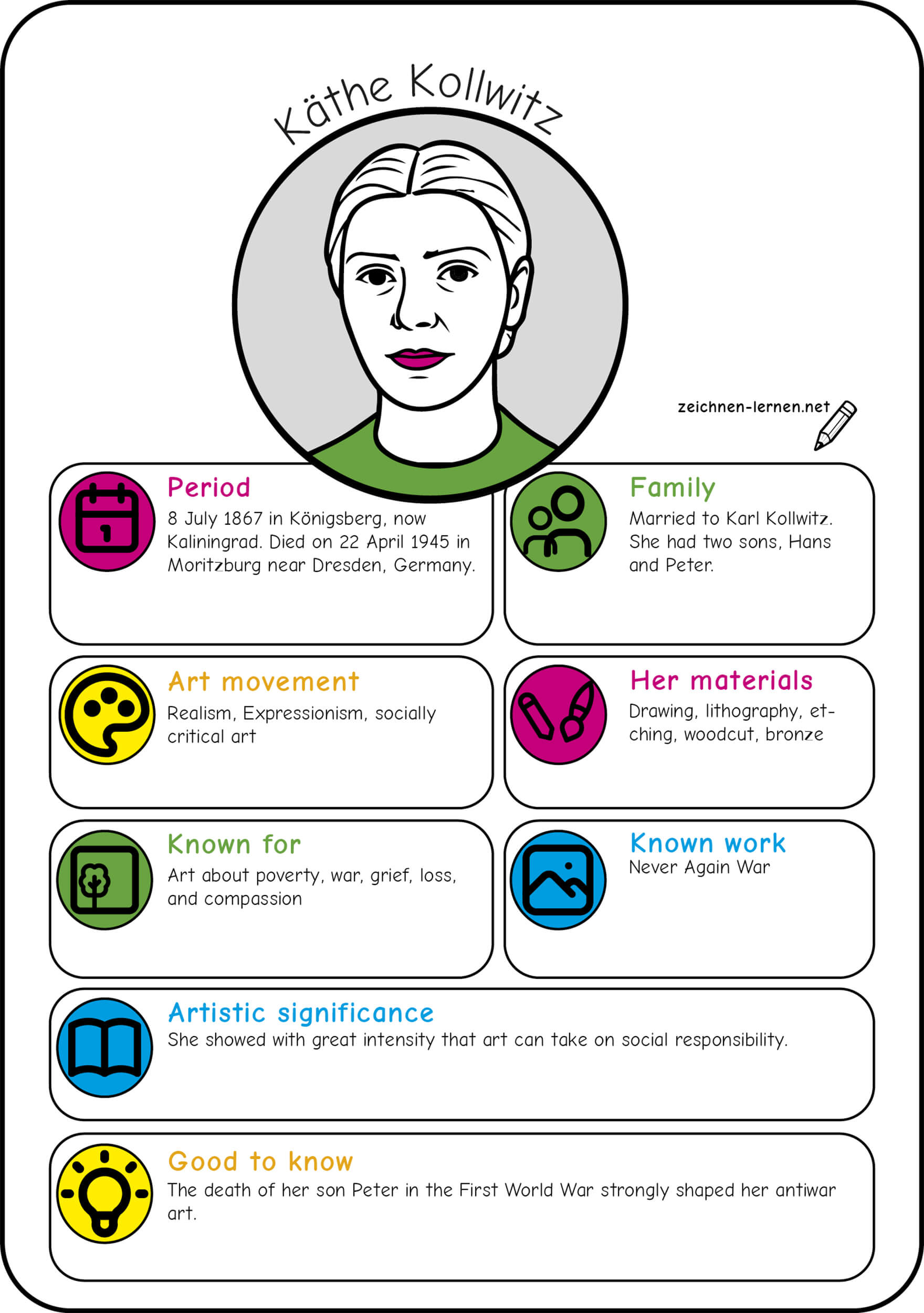
| The brushstrokes often appear visible, direct, and energetic | Strong color contrasts | Käthe Kollwitz | Käthe Kollwitz: No More War |
| Hard lines and simplified forms |
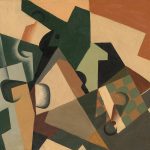
Cubism
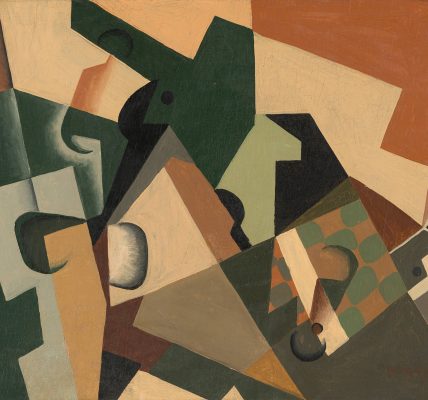
Objects and people were broken down into geometric shapes and depicted from various angles.
| Key Characteristics | Materials and Techniques | Notable Artists | Notable Artworks |
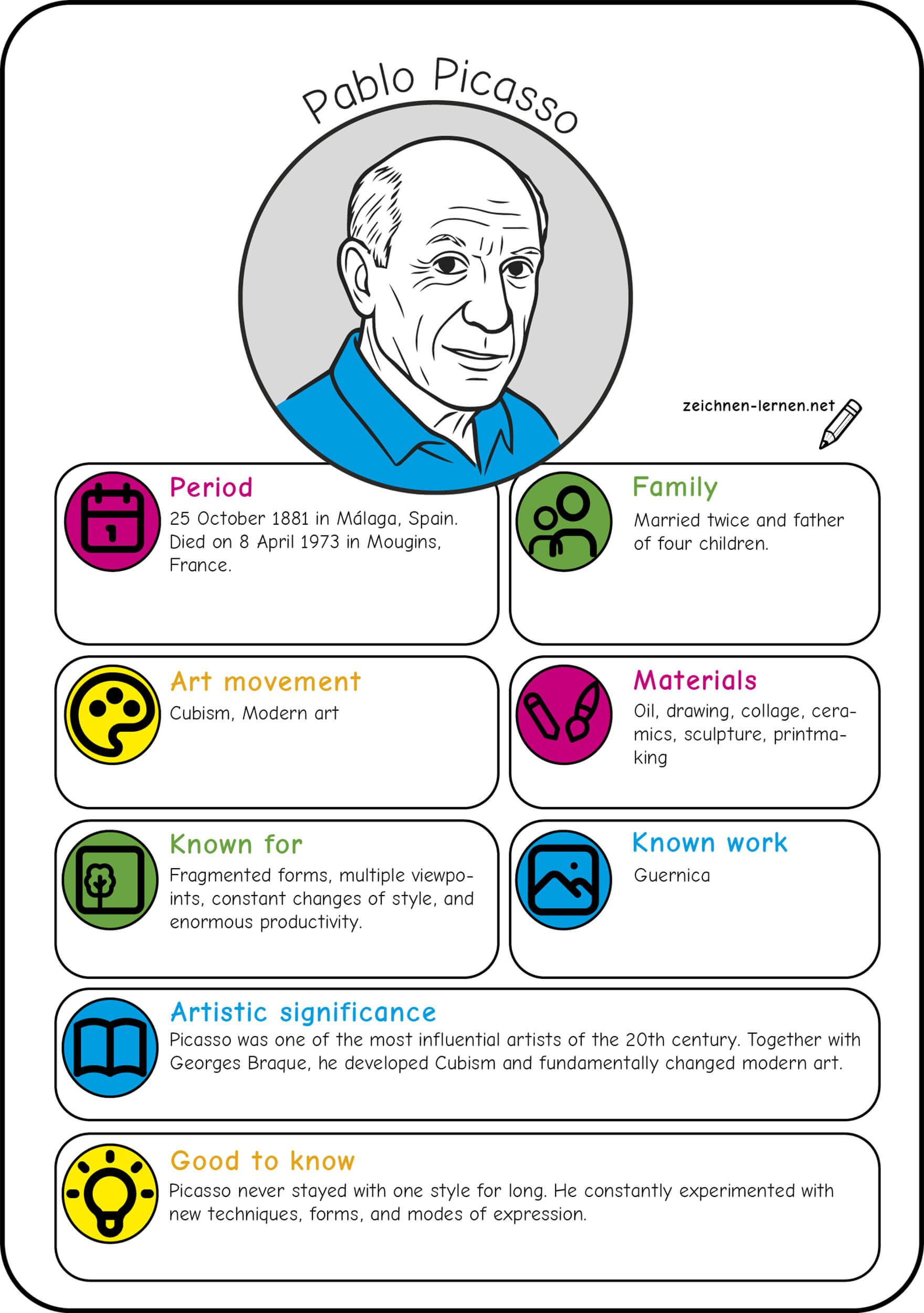
| Objects and figures are broken down into geometric shapes | Oil on canvas | Pablo Picasso | Pablo Picasso: Guernica |
| Multiple perspectives appear simultaneously in the image | Drawing | Georges Braque | Georges Braque: Houses in L’Estaque |
| Space and perspective are reconstructed | Collage | Juan Gris | Juan Gris: Portrait of Picasso |
| People, instruments, bottles, newspapers, and everyday objects are common motifs | Newsprint | María Blanchard | María Blanchard: La comulgante |
| Early Cubism often appears restrained in color | Wallpaper scraps | Fernand Léger | Fernand Léger: The City |
| Later, collages, text, and patterns are added | Typography | ||
| Simplified shapes such as cubes, cones, cylinders, and planes |
Dadaism
This movement deliberately challenged traditional art. It employed nonsense, irony, and provocation.
| Key Characteristics | Materials and Media | Notable Artists | Notable Artworks |
| Rejection of Traditional Artistic Rules | Newspaper Clippings | Marcel Duchamp | Marcel Duchamp: Fountain |
| Emerged as a reaction to World War I | Found objects | Hugo Ball | Hugo Ball: Caravan |
| Criticism of war, the bourgeoisie, politics, and the art world | Typography | Jean Arp | Jean Arp: Collage according to the laws of chance |
| Common techniques include collage, photomontage, found objects, language, and performance | Collage | Sophie Taeuber Arp | Sophie Taeuber Arp: Dada Head |
| Humor, irony, and protest are very important | Photomontage | Raoul Hausmann | Raoul Hausmann: The Spirit of Our Time (Mechanical Head) |
| Ready-made objects | |||
| Performance and sound poems |
Surrealism
Dreams, imagination, and the unconscious took center stage. Many works appear enigmatic and surprising.
Here, artists either completely or partially dispensed with recognizable motifs. Colors, lines, and shapes became the subject matter themselves.
| Key Characteristics | Materials and Media | Well-Known Artists | Well-Known Artworks |
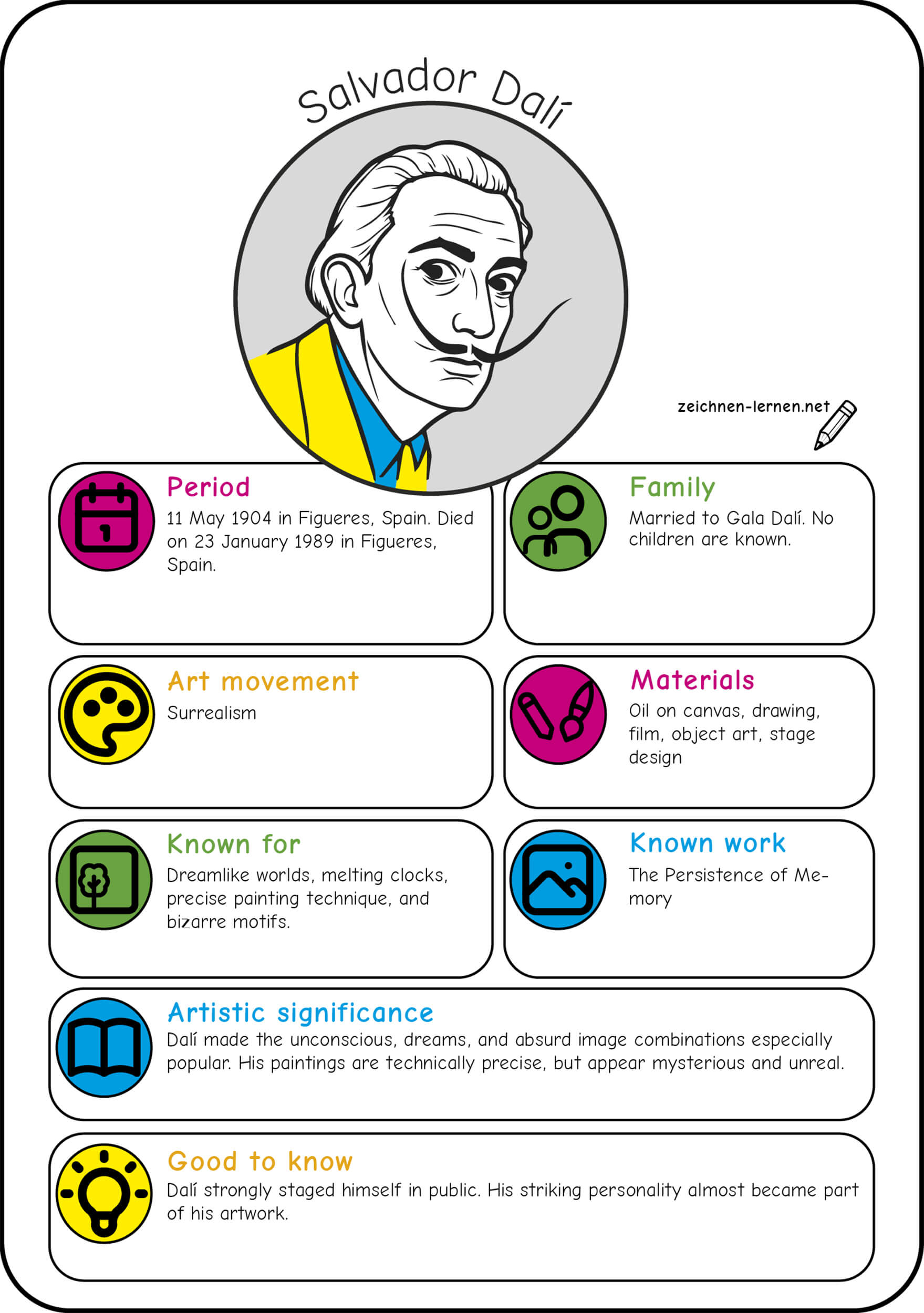
| Dreams, imagination, and the unconscious take center stage | Oil on canvas | Salvador Dalí | Salvador Dalí: The Persistence of Memory |
| Objects are combined in unusual ways | Drawing | René Magritte | René Magritte: The Treachery of Images |
| Images often appear enigmatic, magical, or dreamlike | Collage | Max Ernst | Max Ernst: The Whole City |
| Real objects appear in impossible situations | Frottage | Joan Miró | Joan Miró: The Carnival of Harlequin |
| Chance and automatic methods play a role | Photography | Leonora Carrington | Leonora Carrington: Self-Portrait |
| Common themes include dreams, fear, desire, transformation, and mystery | Object art | Remedios Varo | Remedios Varo: La creación de las aves |
| Dreamlike pictorial spaces | Dorothea Tanning | Dorothea Tanning: Birthday |
|
| Realistic painting technique with surreal motifs |
Pop Art
Everyday objects, advertising, comics, and popular culture became part of art. The boundary between high culture and everyday life was deliberately blurred.
| Key Characteristics | Materials and Media | Well-Known Artists | Well-Known Artworks |
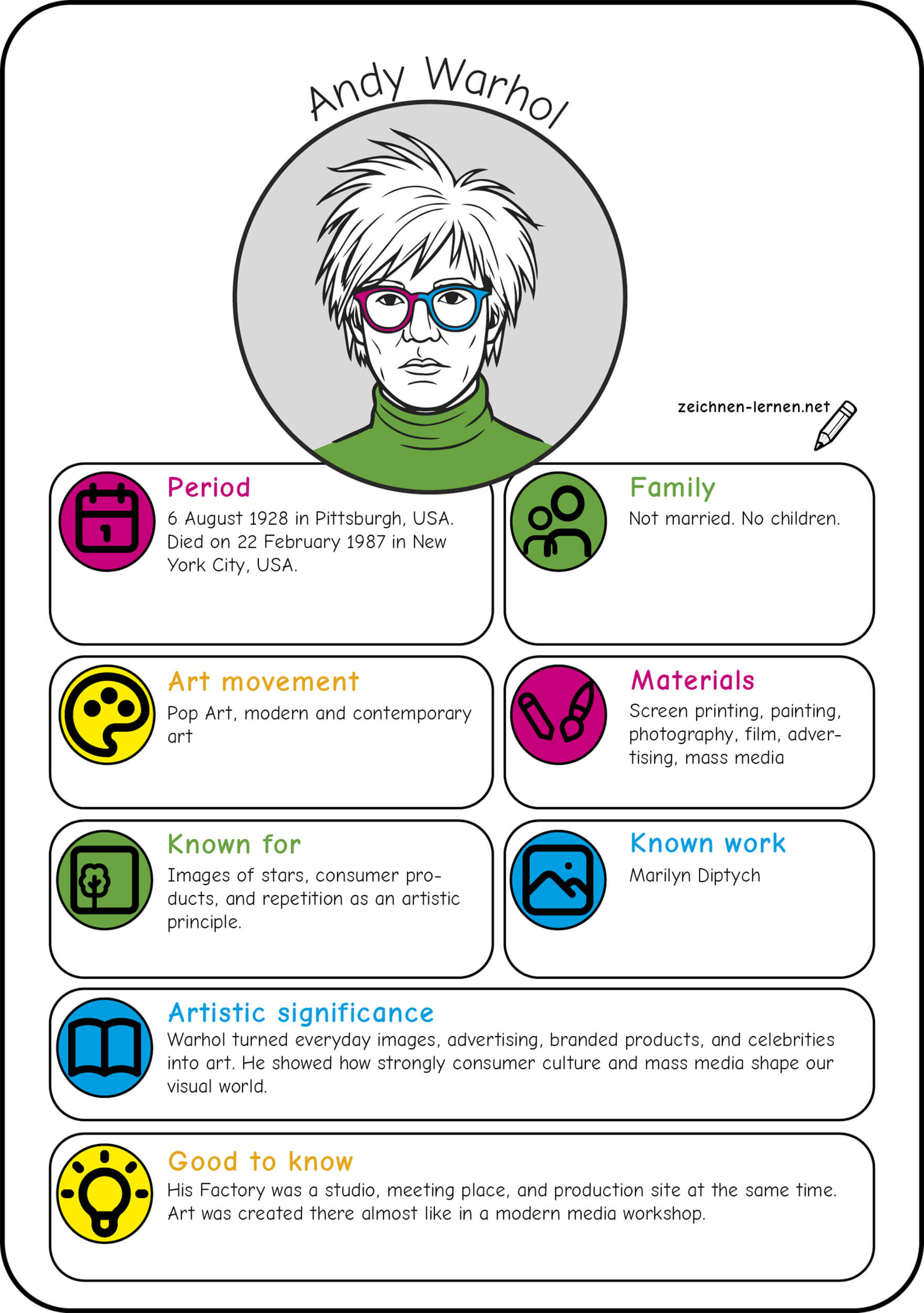
| Motifs drawn from advertising, comics, consumer culture, and mass media | Silkscreen printing | Andy Warhol | Andy Warhol: Campbell’s Soup Cans |
| Everyday products become artistic motifs | Acrylic paint | Roy Lichtenstein | Roy Lichtenstein: Whaam! |
| Stars, brands, packaging, and newspaper images are featured | Oil | Claes Oldenburg | Claes Oldenburg: Floor Burger |
| Frequent repetition of images | Collage | Richard Hamilton | Richard Hamilton: Just what is it that makes today’s homes so different, so appealing? |
| Clear forms, strong colors, and striking impact | Photography | James Rosenquist | James Rosenquist: F-111 |
| The boundary between art and consumerism is often questioned | Advertising images | Marisol Escobar | Marisol Escobar: The Party |
| Comic halftone dots | |||
| Series and reruns |
What makes 21st-century art unique?
Today’s art is open, international, and often highly experimental. It is not just about beautiful images, but frequently also about raising questions and sparking discussions. Artists explore themes such as:
- Power structures and criticism of institutions
- The body and perception
- Technology, artificial intelligence, and virtual realities
- Everyday culture and pop culture
- Space, architecture, and public spaces
- Politics and society
- Media and digitalization
- Consumption and globalization
- Memory and history
- Environment and climate
- Identity and gender
- Migration and cultural belonging
Furthermore, many works are no longer created solely with brushes and canvas. Artists also work with light, sound, film, computers, found objects, or artificial intelligence.
What forms of art exist today?
Contemporary art encompasses many forms of expression:
Installation
A work of art that encompasses an entire space. Visitors can often walk through it or experience the work from different perspectives.
| Key Characteristics | Materials and Media | Notable Artists | Notable Artworks |
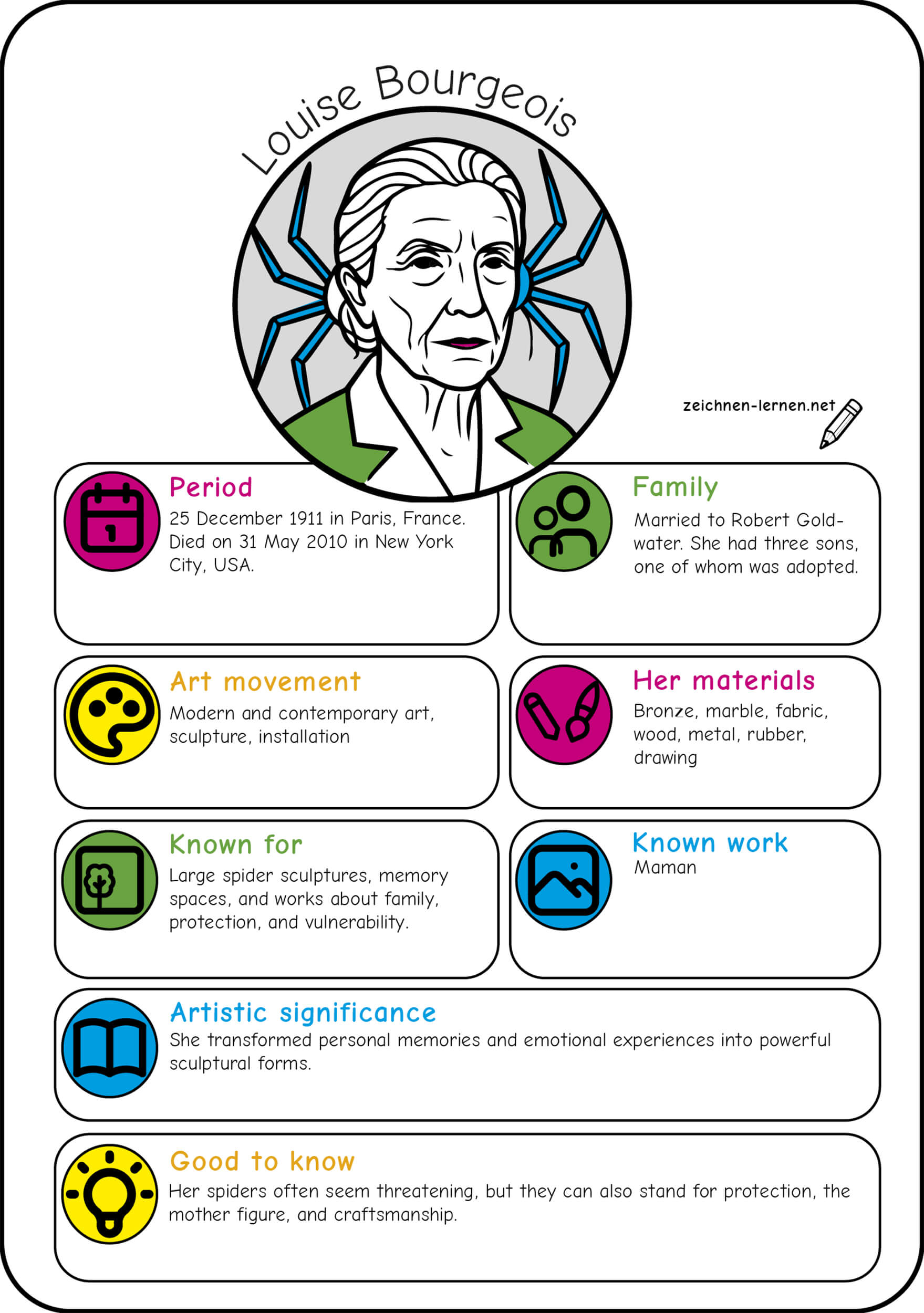
| The artwork occupies an entire space or site | Everyday objects | Louise Bourgeois | Louise Bourgeois: Maman |
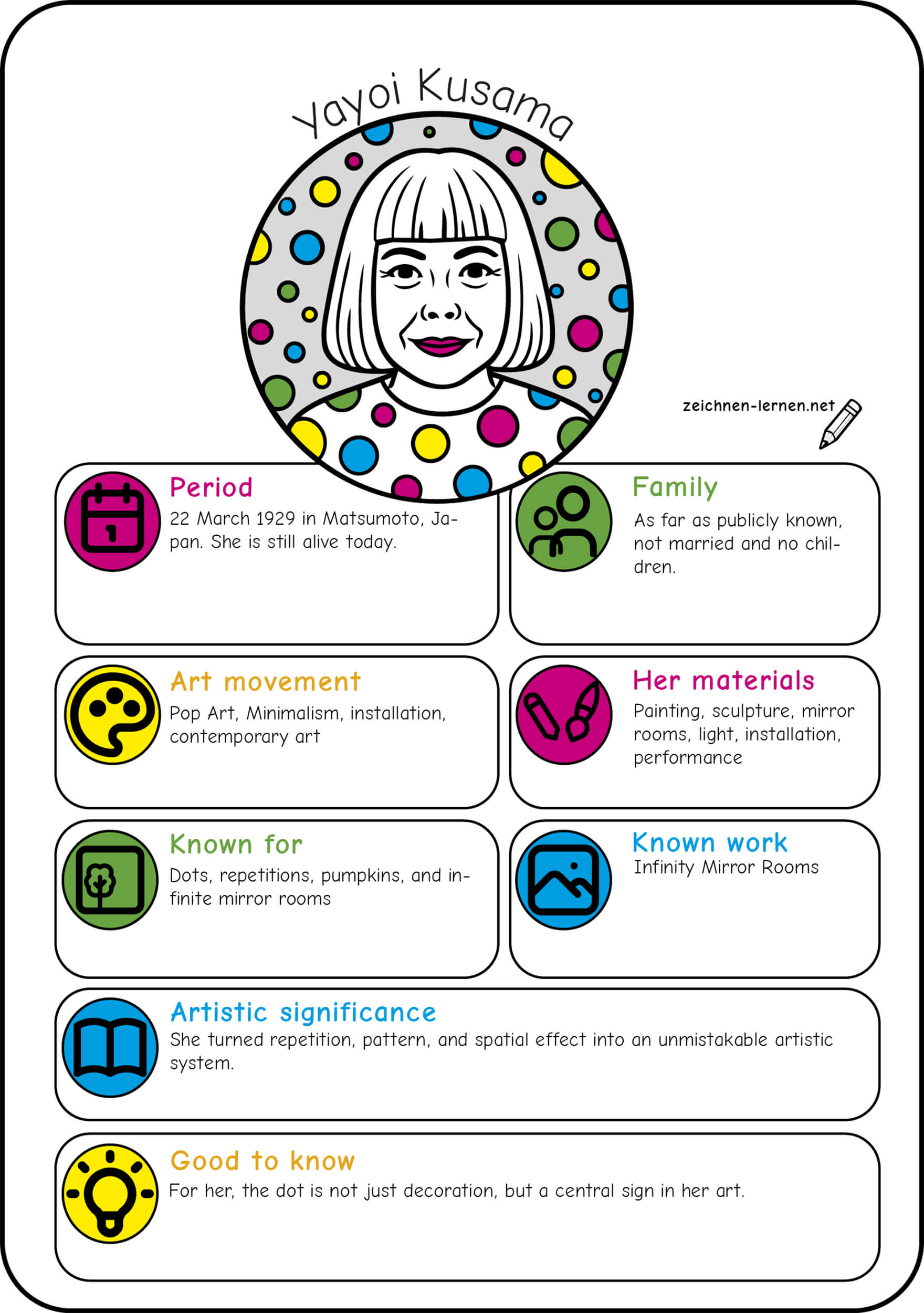
| Visitors can often move around within the artwork | Light, sound, video | Yayoi Kusama | Yayoi Kusama: Infinity Mirror Rooms |
| Space, light, sound, objects, and atmosphere belong together | Fabric, wood, metal, glass | Joseph Beuys | Joseph Beuys: Plight |
| The work can consist of many different materials | Found objects | Olafur Eliasson | Olafur Eliasson: The Weather Project |
| The effect arises from the on-site experience | Projections | Ann Hamilton | Ann Hamilton: The Event of a Thread |
| The boundary between image, object, and space is often dissolved | Spatial design | Rebecca Horn | Rebecca Horn: Concert for Anarchy |
| Ai Weiwei | Ai Weiwei: Sunflower Seeds |
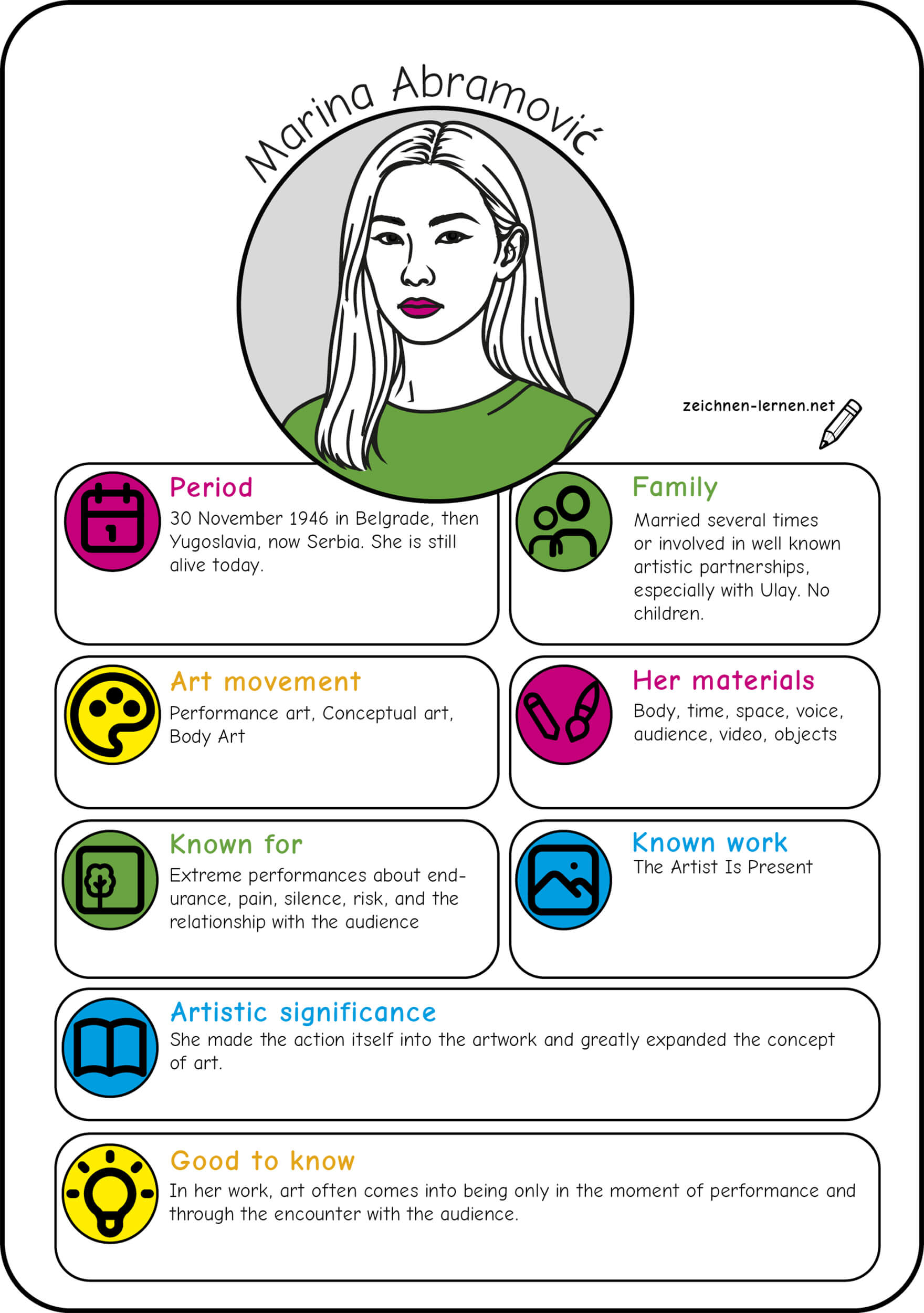
Performance
Here, the action itself becomes a work of art. The body, movement, and time play an important role.
| Key Characteristics | Materials and Media | Notable Artists | Notable Artworks |
| The action itself is the artwork | Body, voice, movement | Marina Abramović | Marina Abramović: The Artist Is Present |
| Body, time, and space are central components | Time | Ulay | Ulay: Relation in Time |
| The work often takes place live | Space | Yoko Ono | Yoko Ono: Cut Piece |
| The audience can play an important role | Audience | Joseph Beuys | Joseph Beuys: How to Explain Pictures to a Dead Hare |
| It often deals with boundaries, endurance, identity, the body, and society | Clothing | Carolee Schneemann | Carolee Schneemann: Interior Scroll |
| Performance can be planned, but it can also appear spontaneous and unique | Objects | Chris Burden | Chris Burden: Shoot |
| Video recording | |||
| Repetition and ritual |
Video Art
Moving images are used artistically, often with sound, projections, or multiple screens.
| Key Characteristics | Materials and Media | Notable Artists | Notable Artworks |
| Moving images are used as an artistic medium | Camera, video, sound | Nam June Paik | Nam June Paik: TV Buddha |
| It’s not just about the film’s plot, but about image, time, sound, and perception | Monitor, projection, multi-channel projection | Bill Viola | Bill Viola: The Crossing |
| Videos can be shown on monitors, screens, or in rooms | Editing | Pipilotti Rist | Pipilotti Rist: Ever Is Over All |
| Common themes include media, the body, identity, memory, and society | Screen installation | Bruce Nauman | Bruce Nauman: Clown Torture |
| Video art can be documentary, experimental, or installation-based | Archival material | Dara Birnbaum | Dara Birnbaum: Technology Transformation: Wonder Woman |
| The passage of time is part of the artwork | Digital editing | Joan Jonas | Joan Jonas: Vertical Roll |
Street Art
Art in public spaces, such as on building walls or in cities. It can be political, decorative, or provocative.
| Key Characteristics | Materials and Media | Well-Known Artists | Well-Known Artworks |
| Art in Public Spaces | Spray Paint | Banksy | Banksy: Girl with Balloon |
| Walls, streets, bridges, and facades become canvases | Stencils | Keith Haring | Keith Haring: Crack is Wack |
| Common themes include politics, society, identity, and protest | Marker | Jean-Michel Basquiat | Jean-Michel Basquiat: Untitled (Skull) |
| Works are often direct, understandable, and eye-catching | Posters, stickers, murals | Shepard Fairey | Shepard Fairey: Hope |
| Street art can be created legally or illegally | Paste | JR | JR: Women Are Heroes |
| It is often ephemeral because it can be painted over or removed | Chalk | Os Gêmeos | Os Gêmeos: O Conto do Vento |
| Lettering | |||
| Public Space |

Digital Art
Art is created using digital tools, for example on a computer, as animation, or in virtual spaces.
| Key Characteristics | Materials and Media | Well-Known Artists | Well-Known Artworks |
| Art is created using digital tools or digital systems | Computer, software, graphics tablet | Vera Molnár | Vera Molnár: Interruptions |
| Computers, software, algorithms, or data can be part of the work | Code, data | Frieder Nake | Frieder Nake: Hommage à Paul Klee |
| Works can be interactive, animated, or virtual | Animation | Lynn Hershman Leeson | Lynn Hershman Leeson: Lorna |
| Common themes include technology, identity, networks, artificial intelligence, and virtual spaces | 3D modeling | Refik Anadol | Refik Anadol: Machine Hallucinations |
| Digital art can appear online, in a museum, or as a projection | Virtual Reality, Augmented Reality | Rafael Lozano Hemmer | Rafael Lozano Hemmer: Pulse Room |
| The work is often not just a fixed object, but a process | Artificial Intelligence | Casey Reas | Casey Reas: Software Structures |
| Interactive Media | Manfred Mohr | Manfred Mohr: P-197 |
Conceptual Art
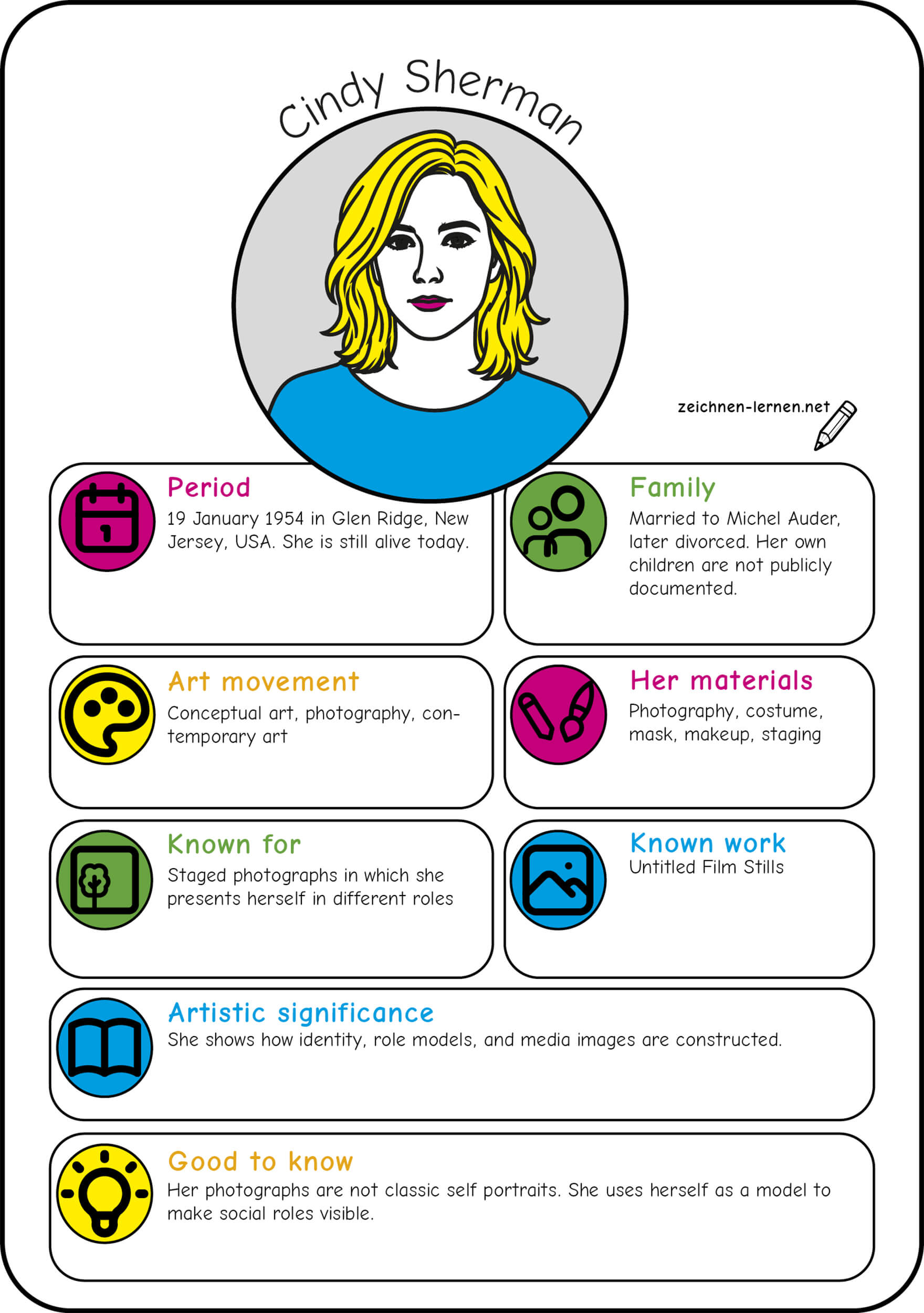
Here, the idea takes center stage. The actual artwork may appear simple, but it possesses a deeper conceptual level.
| Key Characteristics | Materials and Media | Notable Artists | Notable Artworks |
| The idea is more important than the physically crafted object | Language, text panels | Marcel Duchamp | Marcel Duchamp: Fountain |
| Art can consist of text, instructions, documentation, or action | Photographs, documents | Joseph Kosuth | Joseph Kosuth: One and Three Chairs |
| The visible work can appear very simple | Instructions, actions | Sol LeWitt | Sol LeWitt: Wall Drawings |
| Questions, thought, and meaning take center stage | Everyday objects | Yoko Ono | Yoko Ono: Grapefruit |
| People often ask: What is art, anyway? | Archival material | On Kawara | On Kawara: Today Series |
| Conceptual art can be critical, political, or philosophical | Maps, diagrams | Adrian Piper | Adrian Piper: Catalysis |
| Installations | Cindy Sherman | Cindy Sherman: Untitled Film Stills |
Does art still have to be beautiful today?
Not necessarily. Many modern and contemporary artists don’t just want to showcase beauty; they also want to raise questions or evoke emotions. A work of art can be unsettling, shocking, moving, or thought-provoking. That is precisely what makes today’s art so exciting for many people.
Why is contemporary art sometimes hard to understand?
Many people initially find modern and contemporary art unfamiliar. This is often because it’s not always immediately clear what is being depicted or what the work is about. It often helps to ask yourself:
- What exactly do I see?
- What materials were used?
- What mood does it create?
- What idea might be behind it?
- What message is the artist trying to convey?
Contemporary art thus invites you to look more closely and develop your own thoughts.
Conclusion on Art Today
Art in the 20th and 21st centuries is characterized by freedom, diversity, and experimentation. There are no longer any fixed rules about what art can be. That is precisely why today’s art is so exciting. It presents not only images, but also ideas, attitudes, and new ways of thinking.