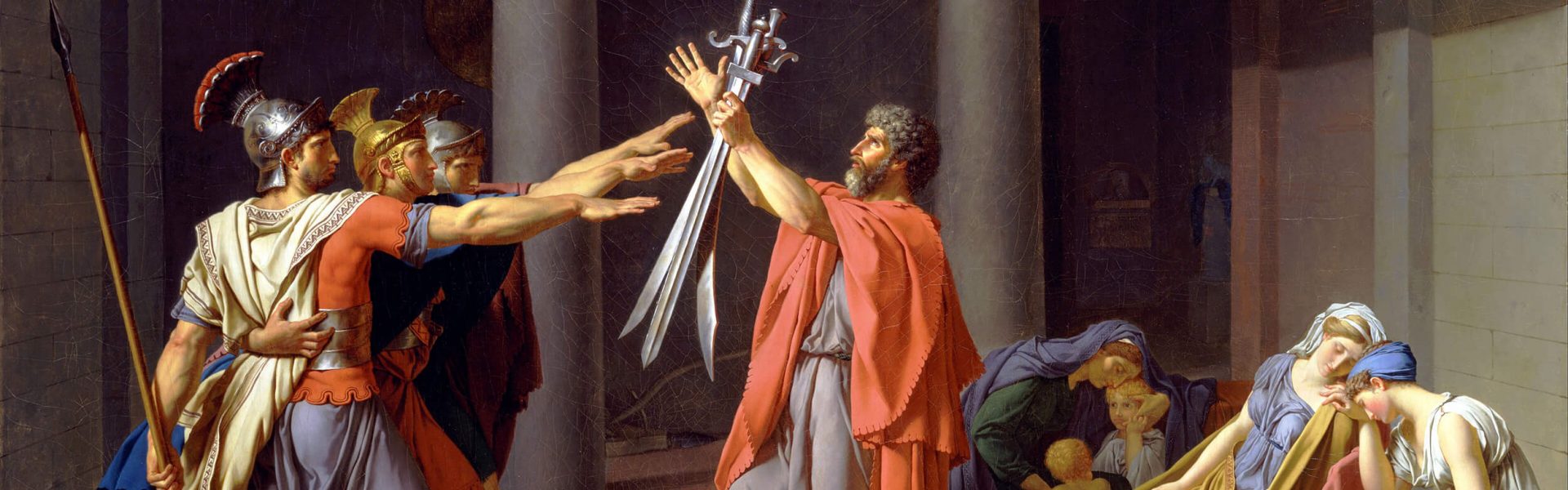

Classicism
Classicism turned once again to antiquity, but with greater rigor, clarity, and moral significance. In contrast to the playful lightness of the Rococo, a more serious and orderly style emerged. Art was now frequently associated with virtue, moderation, and civic ideals.
➡ General information on Art History and Artistic Periods
➡ Overview of art periods from antiquity to the modern era
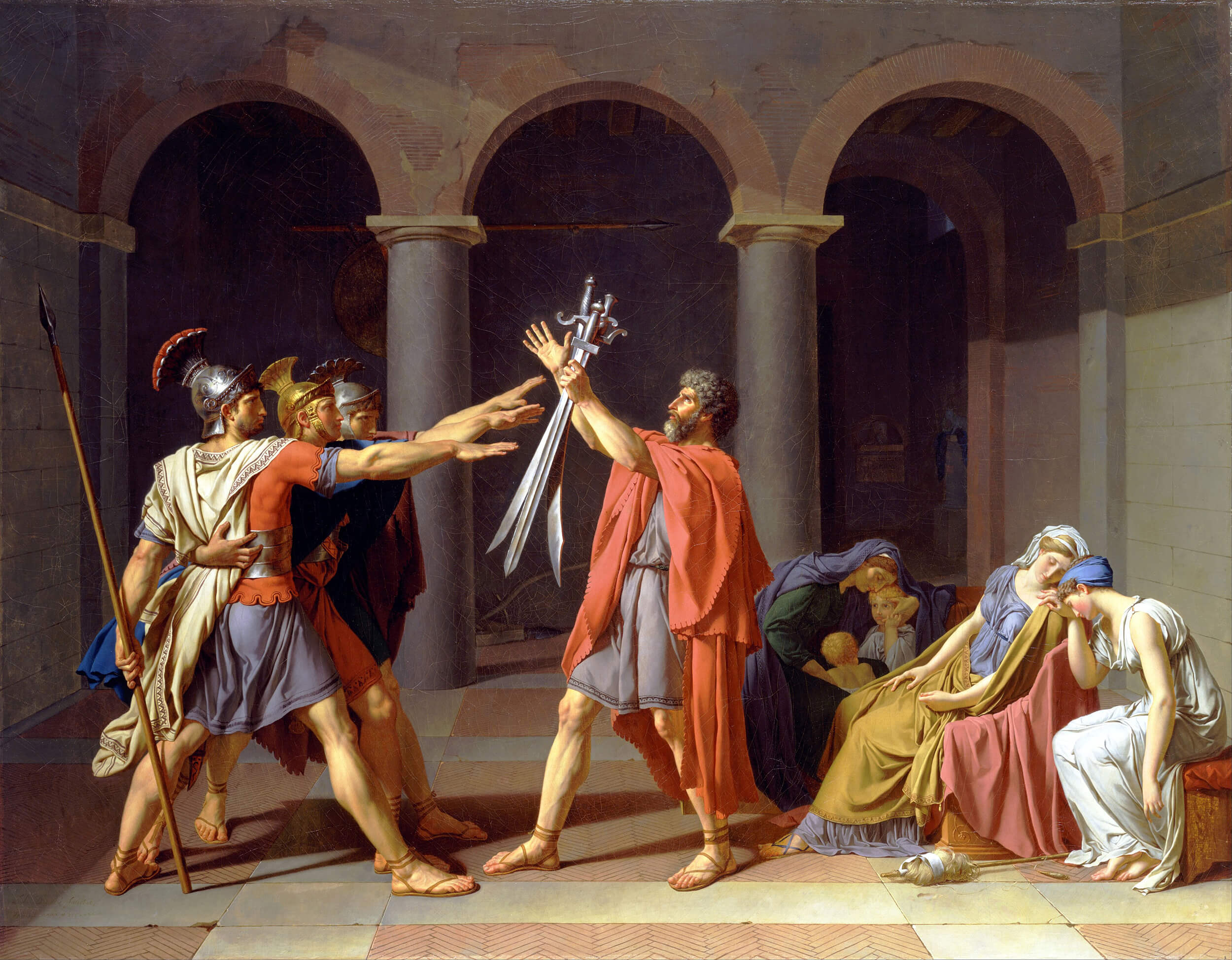
Jacques-Louis David – The Oath of the Horatii
Time Period
Classicism began around the second half of the 18th century and lasted into the first half of the 19th century. The era was closely linked to the Enlightenment, archaeological discoveries, and political upheavals. France and Italy, in particular, became important centers of Classicist art.
Key Milestones
The rediscovery of ancient models, the excavations of Pompeii and Herculaneum, and the growing importance of archaeological accuracy were decisive factors. A clear, orderly, and line-based formal language was favored. Historical subjects and morally charged depictions gained significant prominence.
Influential Artists
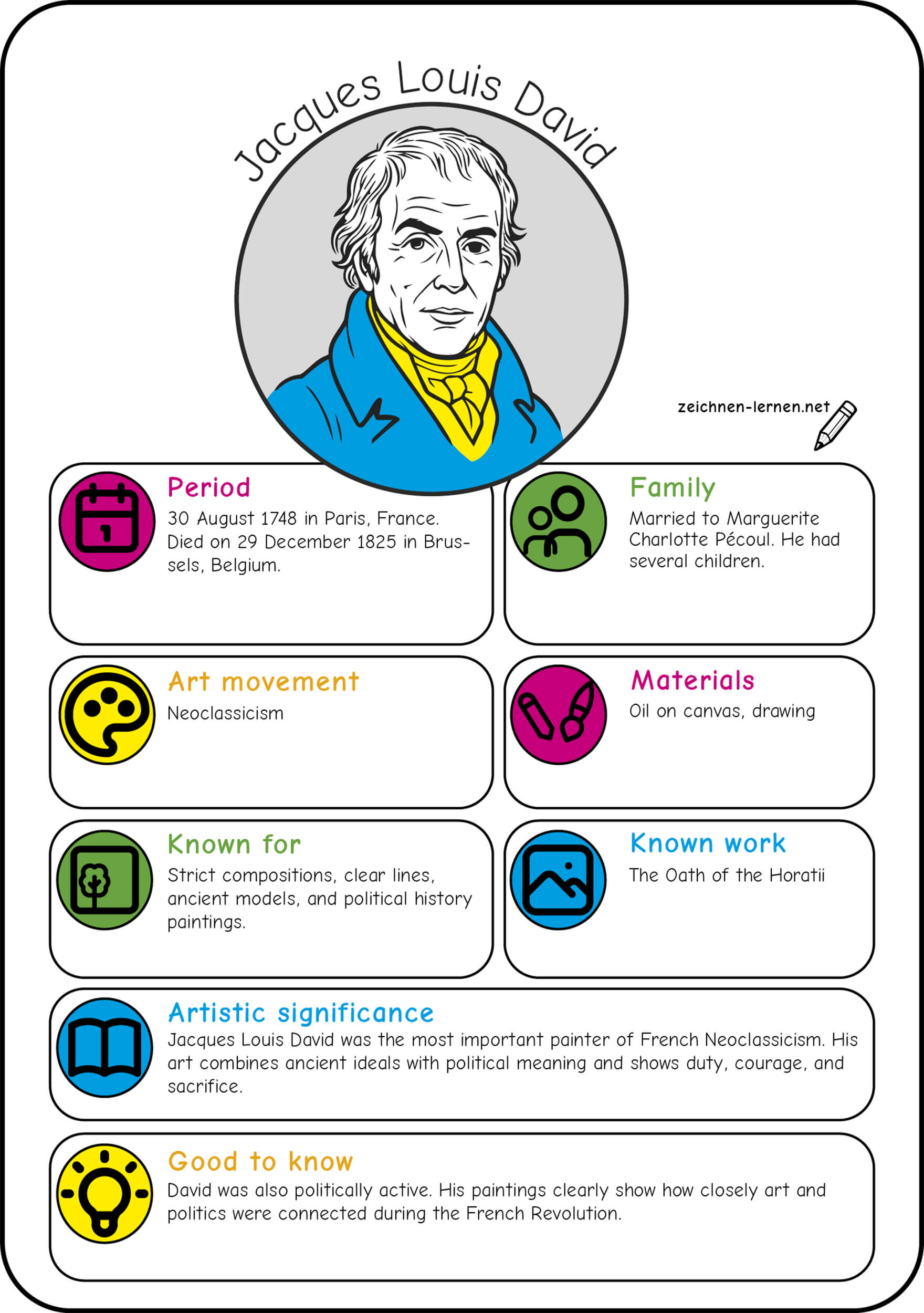
Jacques Louis David became the leading representative of Neoclassical painting. Antonio Canova shaped sculpture with his focus on antiquity and formal clarity. In architecture, a return to column orders, clear volumes, and strictly structured facades became evident.
Famous key works
- David, The Oath of the Horatii
Famous because the work has become the epitome of classical order, moral rigor, and political imagery. - David, The Death of Marat
Famous because it combines an antique-inspired form with a revolutionary present with unusual sharpness. - Canova, Cupid and Psyche
Famous because the sculpture vividly illustrates the smooth ideal form and the classical orientation of Classicism.
Connoisseur’s Gems
- Ingres, Valpinçon Bather
A connoisseur’s gem because here, classical lines and a sensual conception of the body are in very delicate balance. - Kauffman, Cornelia, Mother of the Gracchi
A connoisseur’s gem because the moral educational program of Classicism becomes visible in a female-oriented iconography of virtue. - Canova, Pauline Borghese as Venus Victrix
A connoisseur’s gem because ancient form, portraiture, and contemporary representation are surprisingly closely intertwined.
Typical Materials and Media
Oil on canvas was preferred because it allowed historical and moral subjects to be rendered in a clear, smooth, and controlled manner. Marble was ideal for sculpture because artists deliberately sought to connect with ancient models. In architecture, stone, stucco, and strictly structured forms dominated, as truth, proportion, and order were regarded as guiding principles.
Impact on the Era
Classicism was closely linked to the Enlightenment, political thought, and republican ideals of virtue. Art became a means of education, discipline, and the establishment of historical models. As a result, it took on a stronger moral and political function than in the courtly world of the Rococo.
Summary
| Key Features | Materials and Resources | Notable Artists | Notable Artworks |
| Inspiration from Antiquity | Oil on canvas | Jacques Louis David | Jacques Louis David: The Oath of the Horatii |
| Clear lines and calm composition | Drawing | Antonio Canova | Antonio Canova: Cupid and Psyche |
| Rigorous compositions | Marble | Jean Auguste Dominique Ingres | Jean Auguste Dominique Ingres: The Grand Odalisque |
| Morality, Duty, Reason, and Heroism | Bronze | Angelika Kauffmann | Angelika Kauffmann: Cornelia, Mother of the Gracchi |
| Less playful than Rococo | Clear contours | Bertel Thorvaldsen | Bertel Thorvaldsen: Jason with the Golden Fleece |
| Often historical, mythological, or political themes | Ancient ideals of the human form | ||
| Symmetrical composition |