
Bauhaus and Functional Modernism
With the Bauhaus, art became more closely linked to architecture, craftsmanship, design, and industrial production. The focus was no longer solely on individual works of art, but on a new form of design for everyday life. This marked the beginning of a fundamental shift in the understanding of art and form.
➡ General information on Art History and Artistic Periods
➡ Overview of art periods from antiquity to the modern era
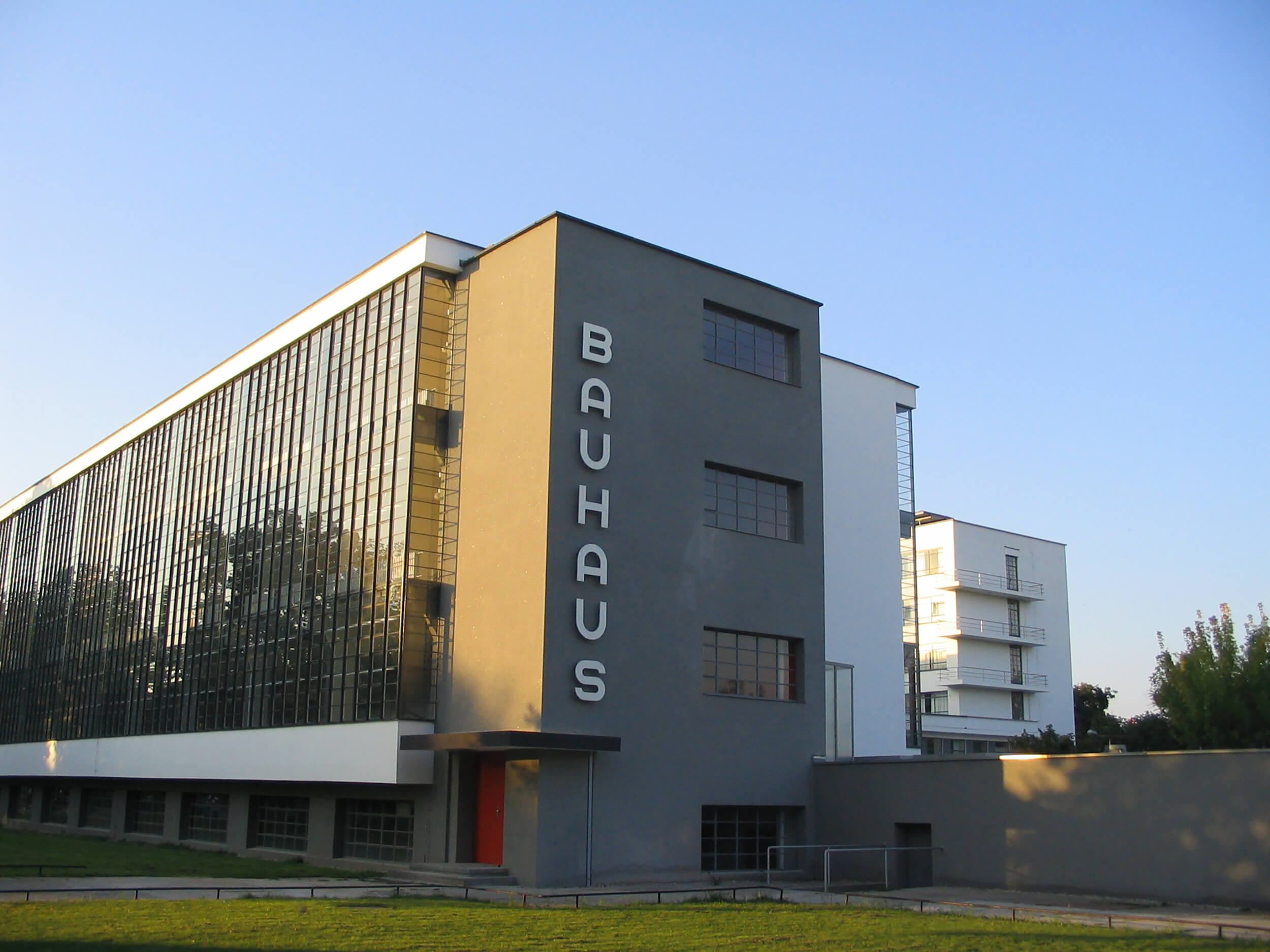
Main Building in Dessau // Dessau Main Building
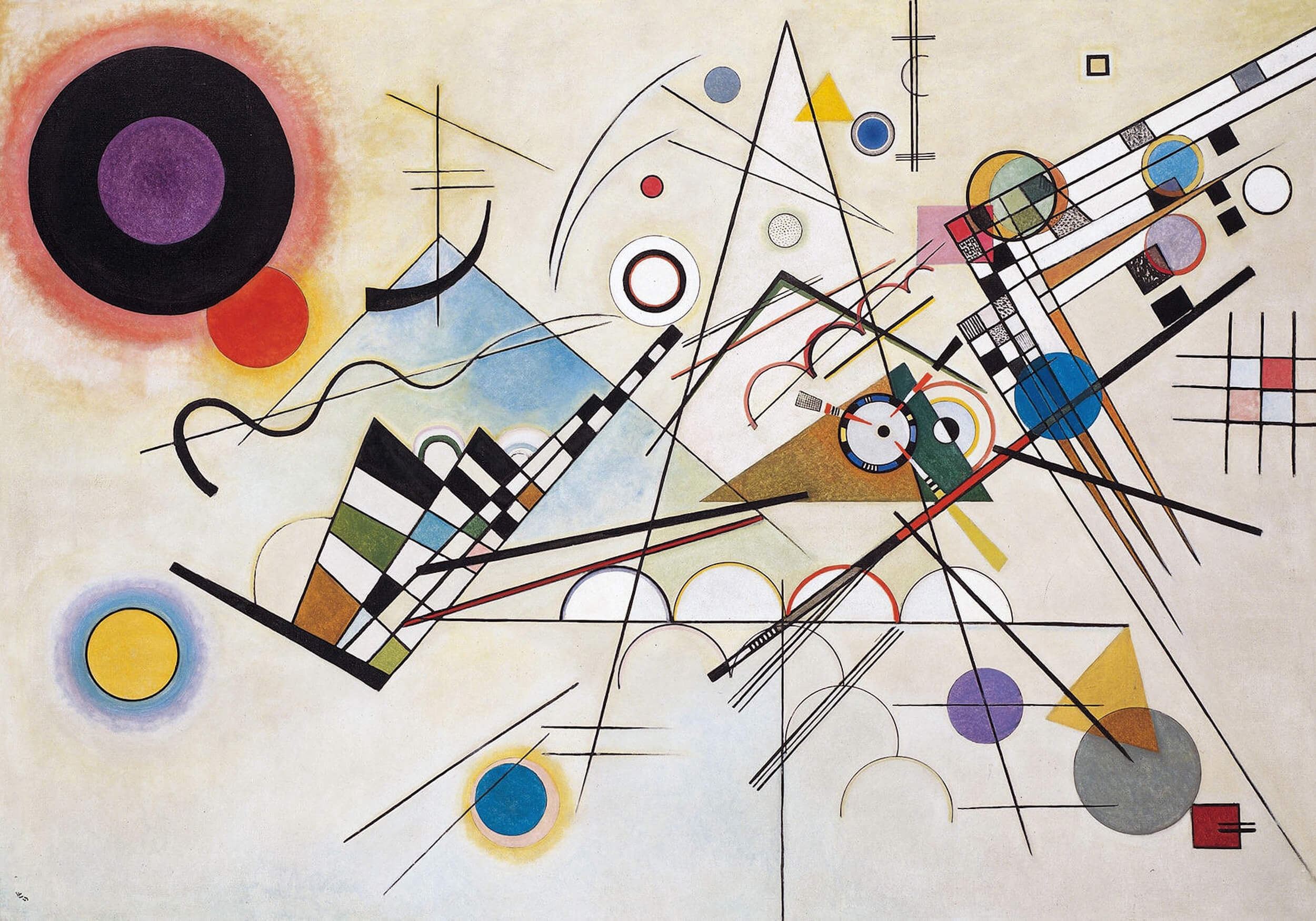
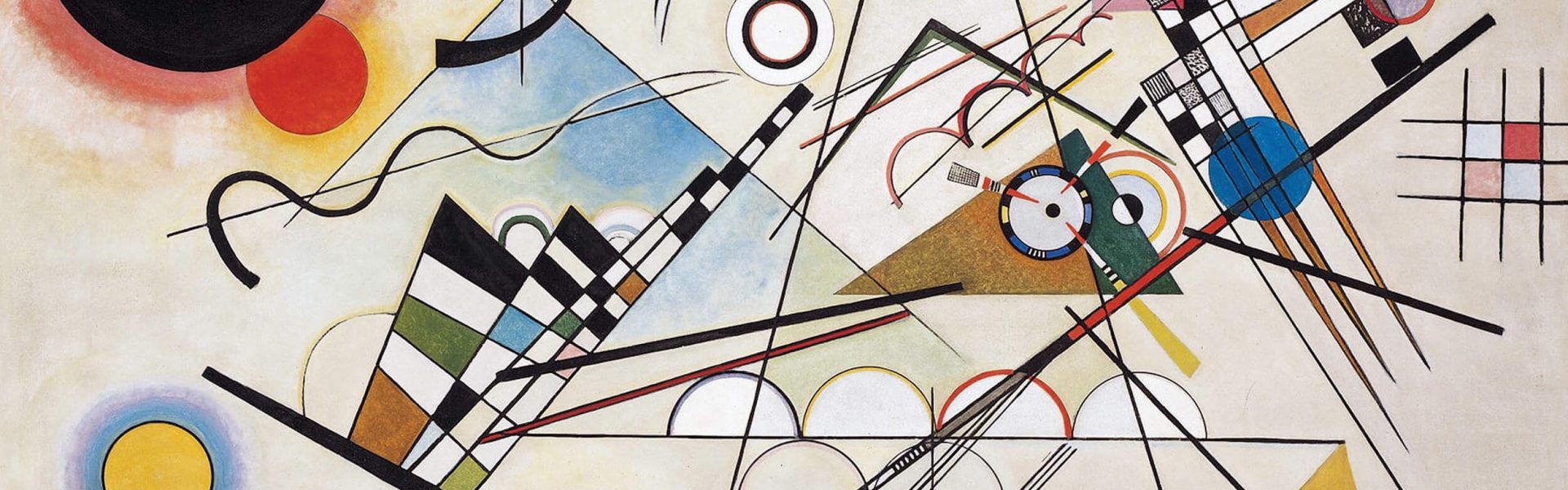
Wassily Kandinsky – Composition VIII
Time Period
The Bauhaus existed from 1919 to 1933 in Weimar, Dessau, and Berlin. Although its active period was relatively short, its significance was extraordinary. The school emerged during a phase of social and creative reorientation following World War I.
Key Milestones
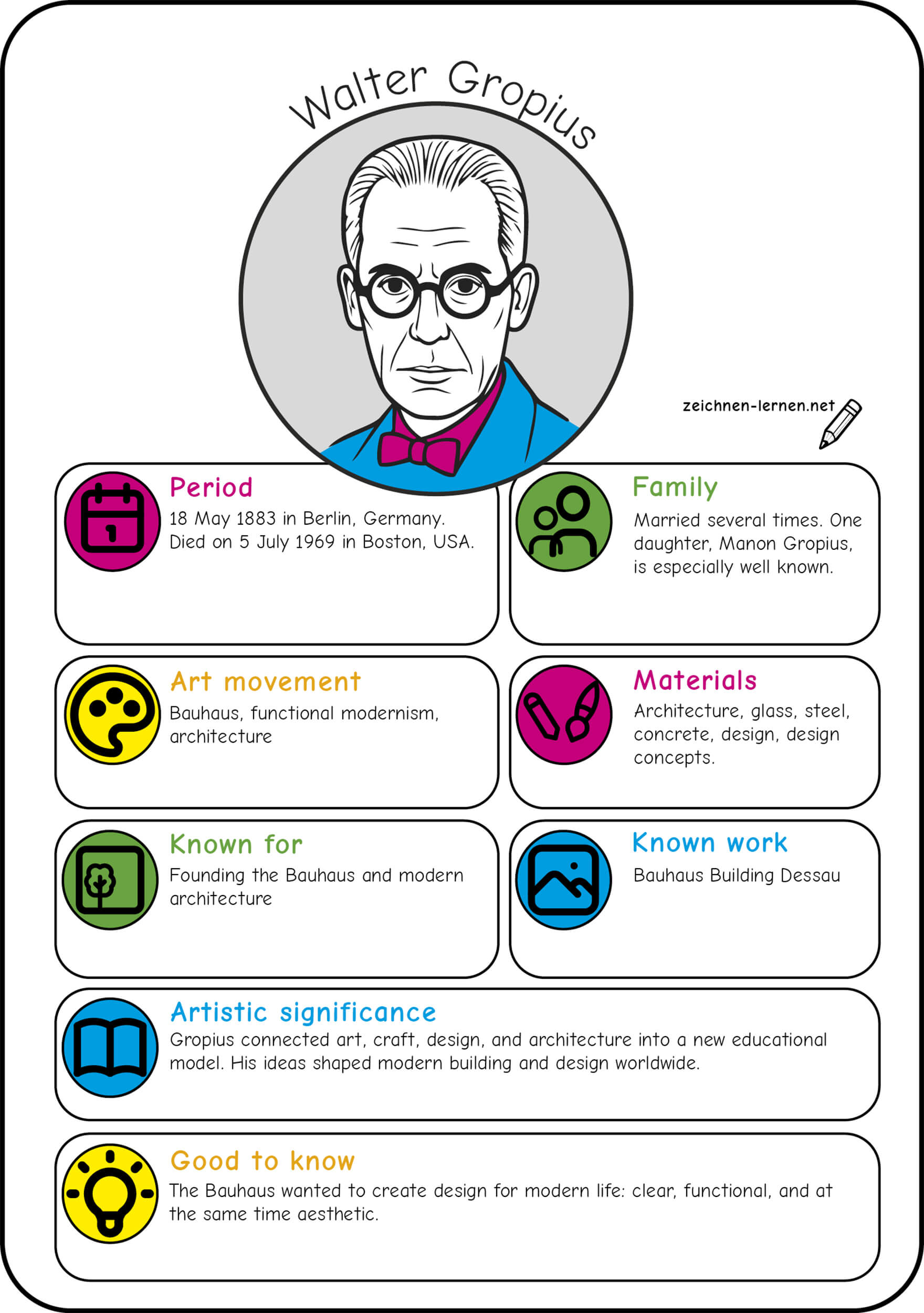
Of central importance was its founding by Walter Gropius in 1919. Art, craftsmanship, typography, product design, and architecture were brought together in a new way. A design philosophy was developed that focused on clarity, function, and fundamental formal principles.
Influential Artists
Walter Gropius, Paul Klee, Wassily Kandinsky, Marcel Breuer and Ludwig Mies van der Rohe are among the defining figures of the Bauhaus. They worked in different fields but were united by a shared quest for new order, functionality, and design precision. This gave the school a profile that remains influential to this day.

Famous key works
- Bauhaus building in Dessau by Walter Gropius
Famous because the building itself became a manifesto of function, transparency, and modern design. - Wassily Chair by Marcel Breuer
Famous because it represents tubular steel furniture in a classic form that remains recognizable to this day. - Wagenfeld Lamp
Famous because it vividly embodies the Bauhaus ideals of clear form, function, and industrial reproducibility.
Connoisseur’s Gems
- Marianne Brandt, Teapot
A connoisseur’s gem because metalwork, geometry, and practical function come together here with unusual precision. - Gunta Stölzl, Slit Tapestry Red Green
A connoisseur’s gem because textiles at the Bauhaus did not remain a decorative side subject, but became an independent laboratory of modern surface design. - Josef Albers, Modular Tables
A connoisseur’s gem because function, color, and the modular concept are particularly concentrated and visible here.
Typical Materials and Methods
The Bauhaus consciously focused on materials. Tubular steel, glass, textiles, wood, metal, paper, and typography were evaluated not according to historical prestige, but according to function, manufacturability, and formal clarity. This is precisely why workshops for metalwork, weaving, furniture making, and printing became so important. The Bauhaus used materials that were particularly suited to modern everyday life, mass production, and clear design.
Impact on the Era
The Bauhaus transformed the understanding of how design could be effective in modern society. Art was understood not only as a realm of high culture, but also as a task of everyday life, production, and the built environment. Its impact therefore extended far into architecture, design, education, and visual culture.
Summary
| Key Characteristics | Materials and Media | Notable Artists | Notable Artworks |
| Form Follows Function | Glass | Walter Gropius | Walter Gropius: Bauhaus Building in Dessau |
| Clear, simple, and practical design | Steel, concrete | Marcel Breuer | Marcel Breuer: Wassily Chair |
| Combination of art, craftsmanship, technology, and architecture | Wood | Oskar Schlemmer | Oskar Schlemmer: Triadic Ballet |
| Geometric shapes and minimalist design | Textiles | Paul Klee | Paul Klee: Studies in color and form |
| Design for Modern Life | Typography | Anni Albers | Anni Albers: Textile Works |
| Less Ornament, More Function and Clarity | Product Design | Wassily Kandinsky | Wassily Kandinsky: Composition VIII |
| Architectural Models | Frida Kahlo | Frida Kahlo: The Two Fridas |
|
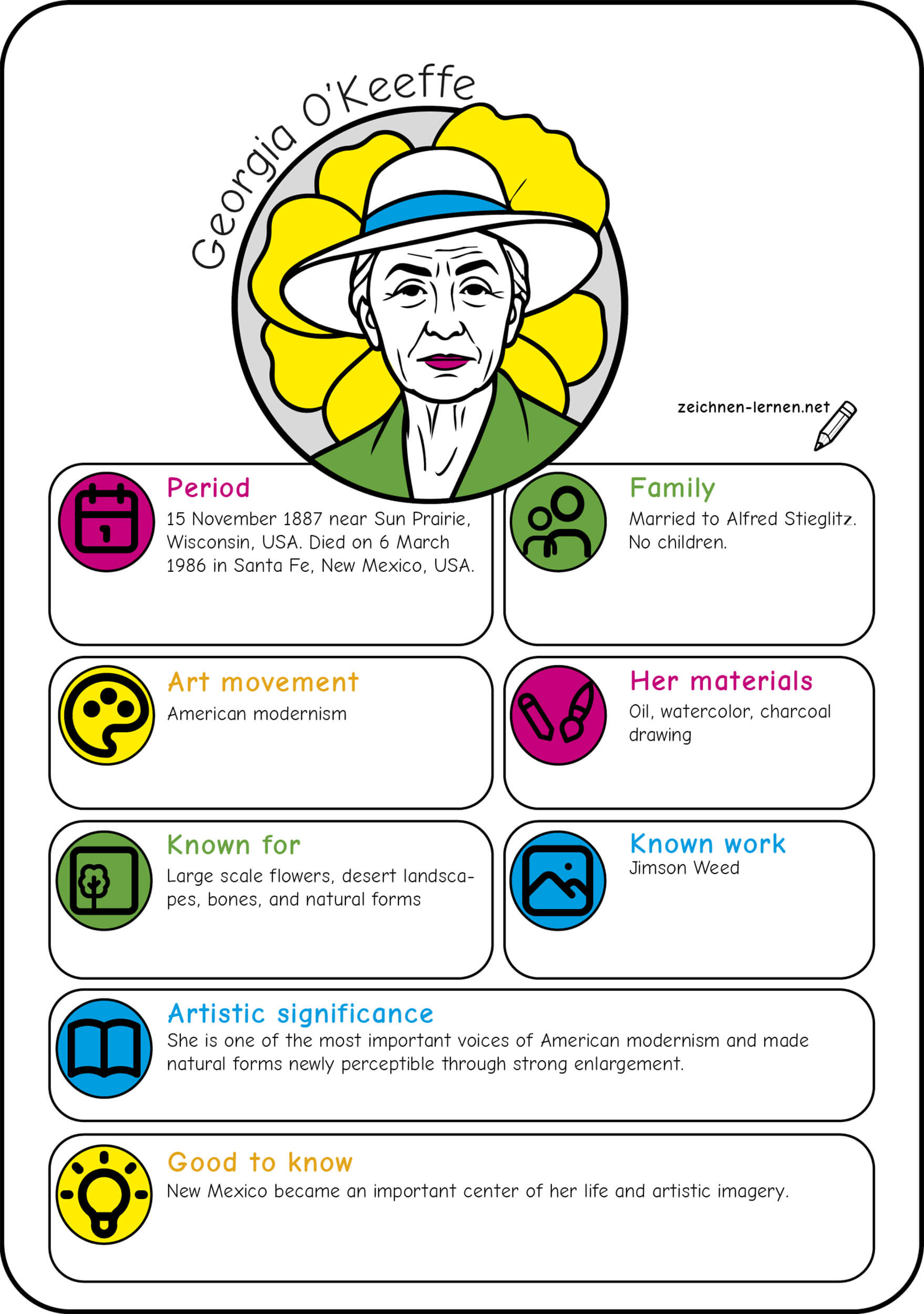
| Functional Furniture | Georgia O’Keeffe | Georgia O’Keeffe: Black Iris |