
Surrealism
Surrealism turned its attention to dreams, the unconscious, and the irrational. In the wake of war and crisis, faith in an order guided purely by reason was deeply shaken. Art therefore sought visual forms that lay beyond immediate reality and the logical order of everyday life.
➡ Généralités sur l’histoire de l’art et les époques artistiques
➡ Aperçu des époques artistiques de l’Antiquité à l’époque moderne
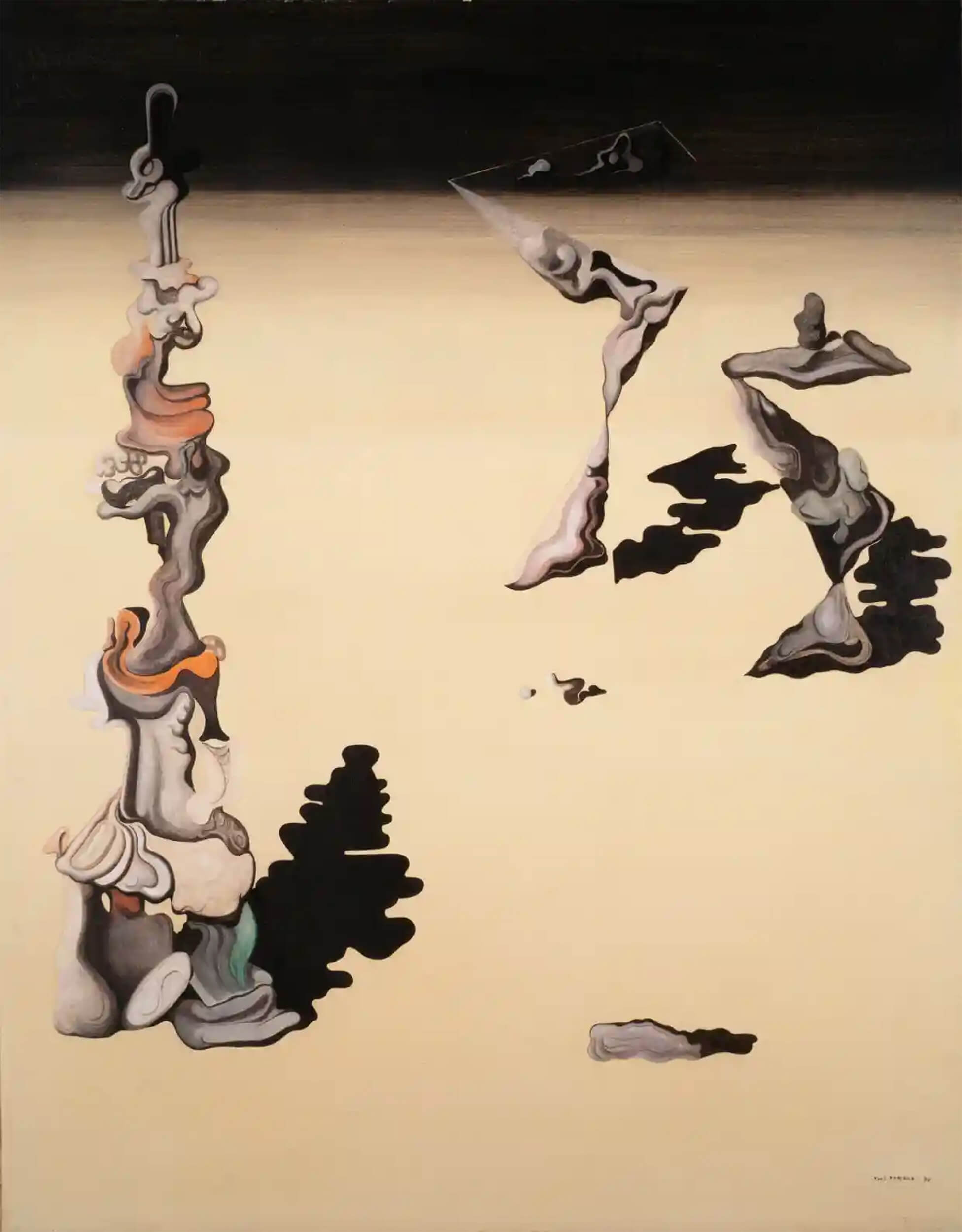
Yves Tanguy – Fraud in the Garden (1930)
Time Period
Surrealism began as a movement in 1924 and had a particularly strong influence on the interwar period. However, its ideas continued to have an impact far beyond that time. Paris became an important center of this movement, from which its ideas spread internationally.
Key Milestones
André Breton’s Surrealist Manifesto is considered the decisive starting point. Dream imagery, automatism, and free association became defining techniques. Reality and unreality, everyday life and imagination were connected in surprising ways.
Influential Artists
Salvador Dalí, Max Ernst, and René Magritte are among the best-known representatives of Surrealism. Joan Miró also developed his own distinctive visual language in close connection with the movement. Despite significant stylistic differences, these artists were united by an interest in the unconscious and in imagery beyond logical order.
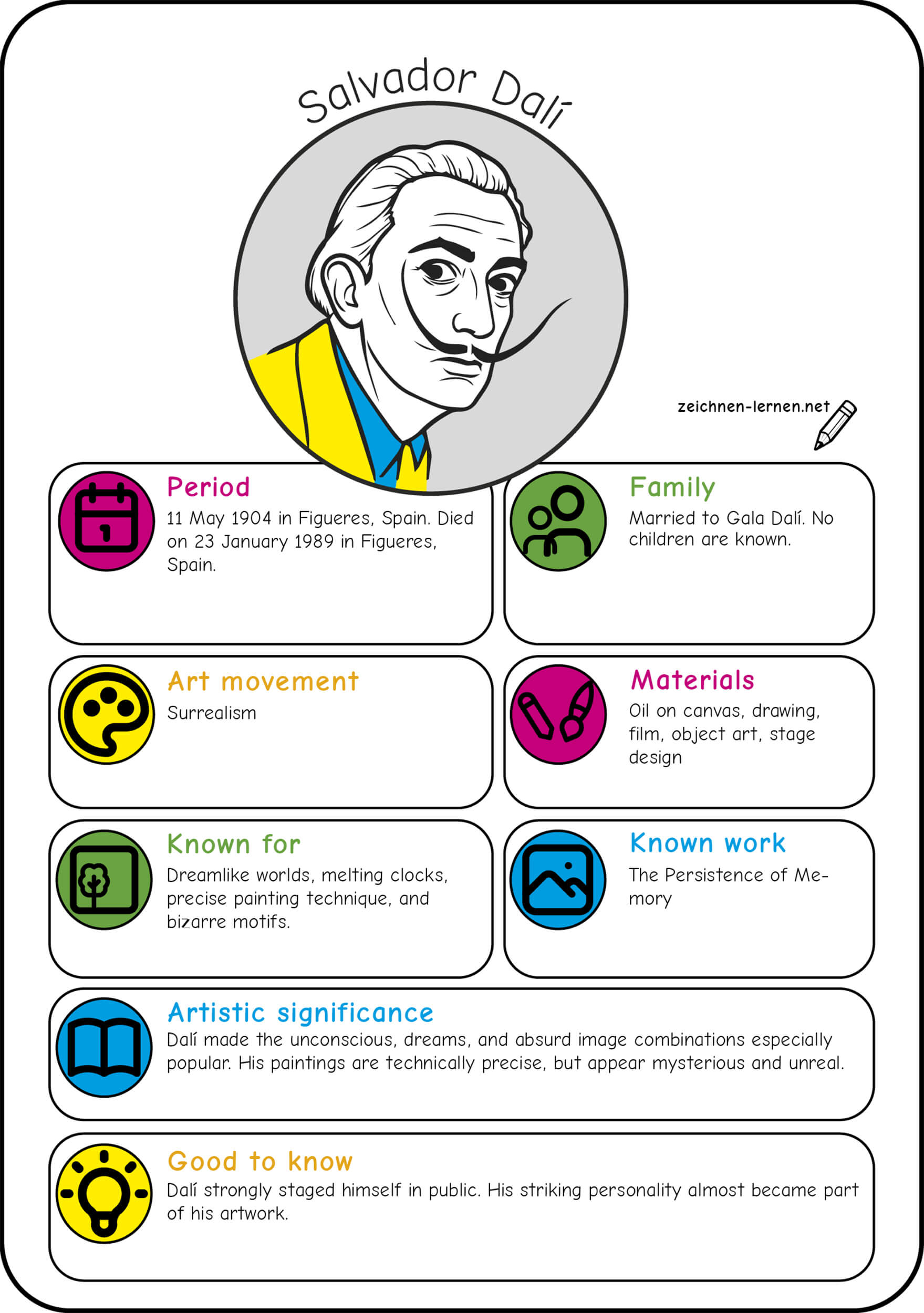
➡ En savoir plus sur les artistes célèbres
Famous key works
- Dalí, The Persistence of Memory
Well-known because the melting clocks have become a universally recognizable visual symbol of the surreal. - Magritte, The Treachery of Images
Famous because image, language, and reality are juxtaposed here in a way that was central to the 20th century. - Ernst, Celebes
Famous because dream logic, the concept of montage, and confusion converge in a striking form.
Connoisseur’s Gems
- Dalí, Metamorphosis of Narcissus
A connoisseur’s gem because the double image and psychological interpretation are particularly closely intertwined here. - Dorothea Tanning, Eine Kleine Nachtmusik
A connoisseur’s gem because here Surrealism appears not monumental, but quiet and unsettling. - Leonora Carrington, Self-Portrait
A connoisseur’s gem because here the feminine extension of the Surrealist cosmos emerges with particular independence.
Typical Materials and Media
Oil painting remained important because it allowed for a sharp contrast between detailed illusion and dreamlike unreality. In addition, experimental techniques such as frottage, décalcomanie, collage, and object assemblage were valued because chance, material traces, and unconscious image creation were explicitly sought. Surrealism thus significantly expanded the understanding of materials beyond traditional painting.
Impact on the Era
Surrealism responded to an era of profound uncertainty. It focused attention on inner images, the depths of the psyche, and the uncontrollable. As a result, the visual realm of art was considerably expanded, and the relationship between reality and imagination was redefined.
Summary
| Key Features | Materials and Media | Notable Artists | Notable Artworks |
| Dreams, imagination, and the unconscious take center stage | Oil on canvas | Salvador Dalí | Salvador Dalí: The Persistence of Memory |
| Objects are combined in unusual ways | Drawing | René Magritte | René Magritte: The Treachery of Images |
| Images often appear enigmatic, magical, or dreamlike | Collage | Max Ernst | Max Ernst: The Whole City |
| Real objects appear in impossible situations | Frottage | Joan Miró | Joan Miró: The Carnival of Harlequin |
| Chance and automatic methods play a role | Photography | Leonora Carrington | Leonora Carrington: Self-Portrait |
| Common themes include dreams, fear, desire, transformation, and mystery | Object art | Remedios Varo | Remedios Varo: La creación de las aves |
| Dreamlike pictorial spaces | Dorothea Tanning | Dorothea Tanning: Birthday |
|
| Realistic painting technique with surreal motifs |