
Romanesque
The Romanesque period is characterized by grand church buildings, clear formal systems, and highly symbolic iconography. Art, architecture, and sacred order were closely intertwined. The works of this period often appear cohesive, monumental, and focused on conveying a clear message.
➡ General information on Art History and Artistic Periods
➡ Overview of art periods from antiquity to the modern era
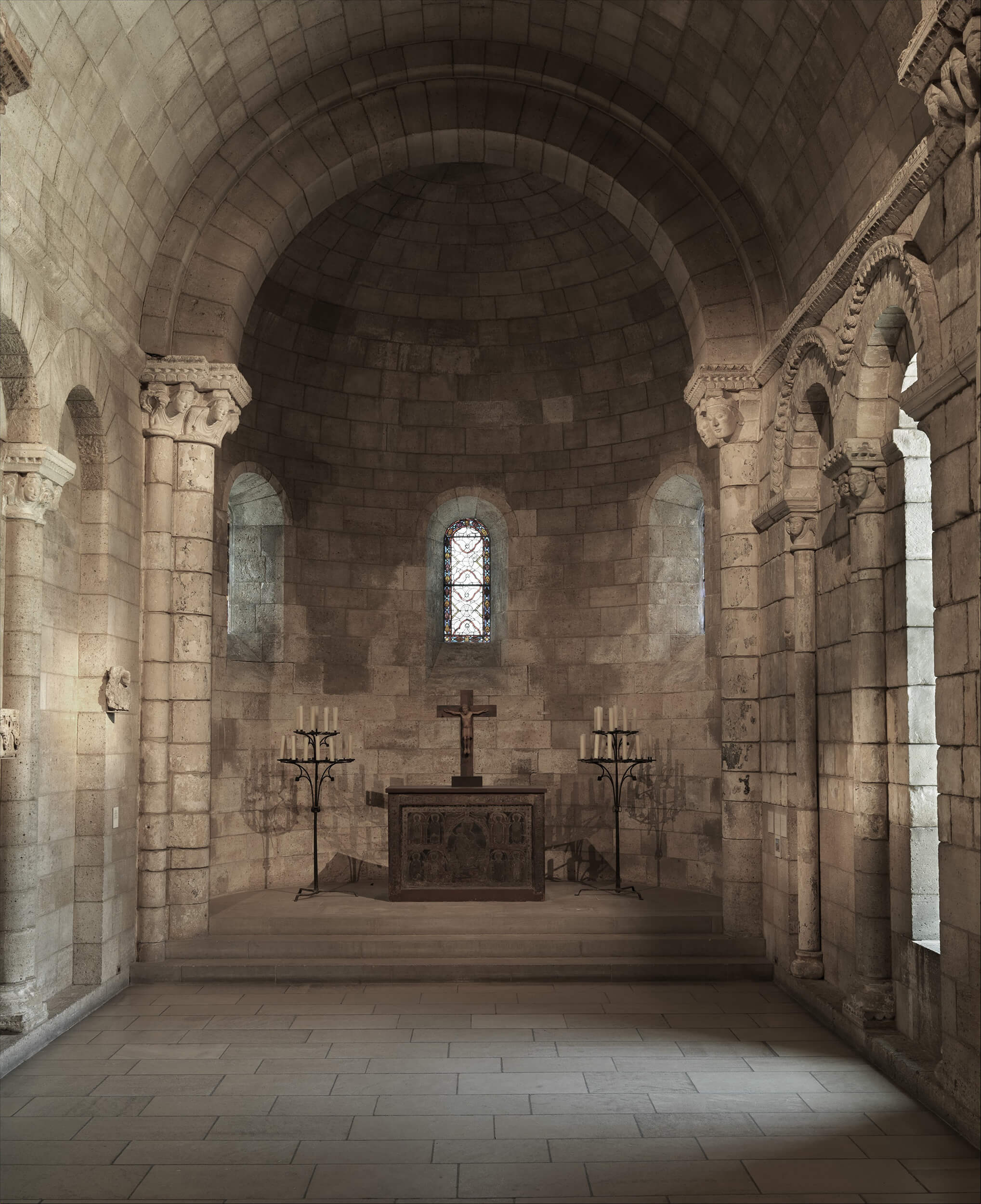
Chapel of Notre-Dame-du-Bourg in Langon
Period
In Europe, the Romanesque period is generally dated from approximately 1000 to 1150, with slight regional variations. It coincides with a phase of growing monastic culture, intense pilgrimage activity, and the increasing stabilization of Christian territories. In many regions of Europe, a clearly recognizable common stylistic language developed.
Key Milestones
Defining features include massive church interiors, round arches, wall paintings, tympanums, and sculpted capitals. Monasteries, relics, and pilgrimage routes became important cultural centers. Art remained closely tied to architecture and served largely to convey religious teachings and illustrations.
Influential Artists
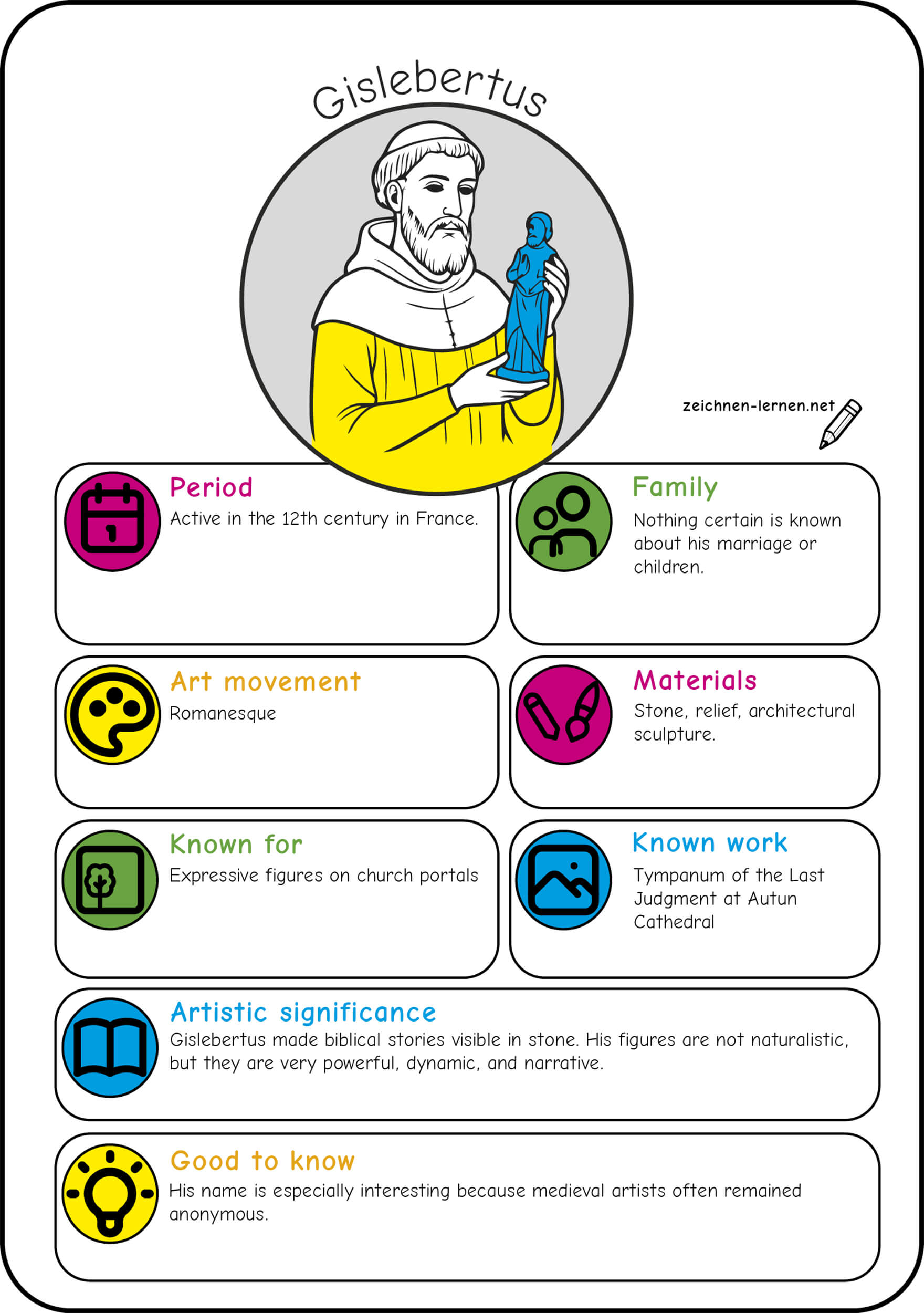
The names of individual artists from the Romanesque period have rarely been preserved. More significant were the master builders’ guilds and workshops, which worked collectively and spread their stylistic language across vast regions. The achievements of the era therefore lie less in individual authorship than in the development of a widely understood sacred visual language.
➡ More about well-known artists
Notable Masterpieces
- Bayeux Tapestry
Notable for bringing together history, power, and narrative in a monumental textile form. - Gero Cross
Famous because the monumental depiction of Christ had a profound influence on Romanesque sacred spaces and the new iconography of piety. - Reliquary of Saint Foy in Conques
Famous because it vividly illustrates the significance of the cult of relics, goldsmithing, and pilgrimage.
Connoisseur’s gems
- Spanish Romanesque crucifix from the Met
A connoisseur’s gem because the original polychrome paintwork shows how strongly Romanesque sculpture was originally conceived as polychrome. - St. Sernin in Toulouse
A connoisseur’s gem because the building exemplifies the convergence of architecture, pilgrimage, and liturgical function. - Tympanum of Autun depicting the Last Judgment
A connoisseur’s gem because the expressive power of Romanesque relief art is particularly striking here.
Typical Materials and Media
Stone was the primary material used in Romanesque architecture and architectural sculpture because massive walls, portals, and capitals were intended to be durable and visible from a distance. Wood was used for crucifixes and devotional images because it was easy to carve and paint. Frescoes and murals were preferred because large church interiors needed to be adorned with didactic pictorial programs. Goldsmithing remained important because reliquaries and altar furnishings were regarded as vessels of sacred presence.
Impact on the Era
Romanesque art structured church interiors and made religious content visible in a vivid form. It had an organizing, community-building, and identity-forming effect. In a largely Christian world, it became a central means of linking faith, authority, and spatial order.
Summary
| Key Features | Materials and Techniques | Notable Artists | Notable Artworks |
| Massive church buildings with thick walls | Stone, wood | Gislebertus | Tympanum of the Last Judgment in Autun |
| Round arches, small windows, and clean lines | Wall paintings, reliefs | Master of Cabestany | Speyer Cathedral |
| Religious iconography on portals and capitals | Bronze | Anonymous building huts and workshops | Worms Cathedral |
| Figures often appear austere, symbolic, and expressive | Glass | Sainte-Foy Abbey Church in Conques | |
| Art is meant to make biblical stories understandable | Architectural sculpture | Bayeux Tapestry | |
| Fear, judgment, sin, and salvation are important themes | Illuminated manuscripts |