
Early Middle Ages
With the transition from antiquity to the Middle Ages, themes, functions, and artistic concepts underwent fundamental changes. The focus shifted from the observation of nature in antiquity to Christian themes, symbolic forms, and sacred purposes. Art was now placed more firmly in the service of faith and liturgy.
➡ General information on Art History and Art Periods
➡ Overview of art periods from antiquity to the modern era

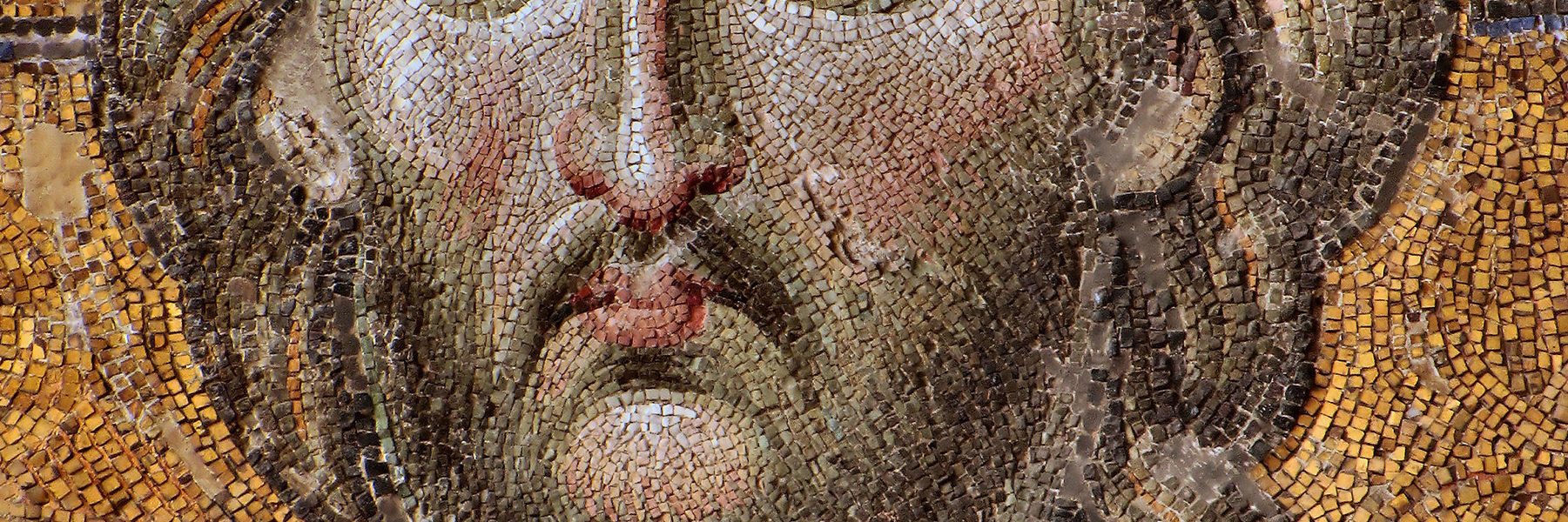
Christ Pantocrator Mosaic
Time Period
The Early Middle Ages roughly span the period from the 5th to the 10th century. It is characterized by the collapse of the Western Roman Empire, the spread of Christianity, and the emergence of new political and cultural spheres. During this phase, the role of art also underwent fundamental changes.
Key Milestones
Among the most important developments were the spread of monastic culture, the emergence of significant scriptoria, and the flourishing of book illumination. Manuscripts, reliquaries, and sacred furnishings took center stage to a greater extent than monumental individual works. The visual world was increasingly shaped by Christian symbolism.
Influential Artists
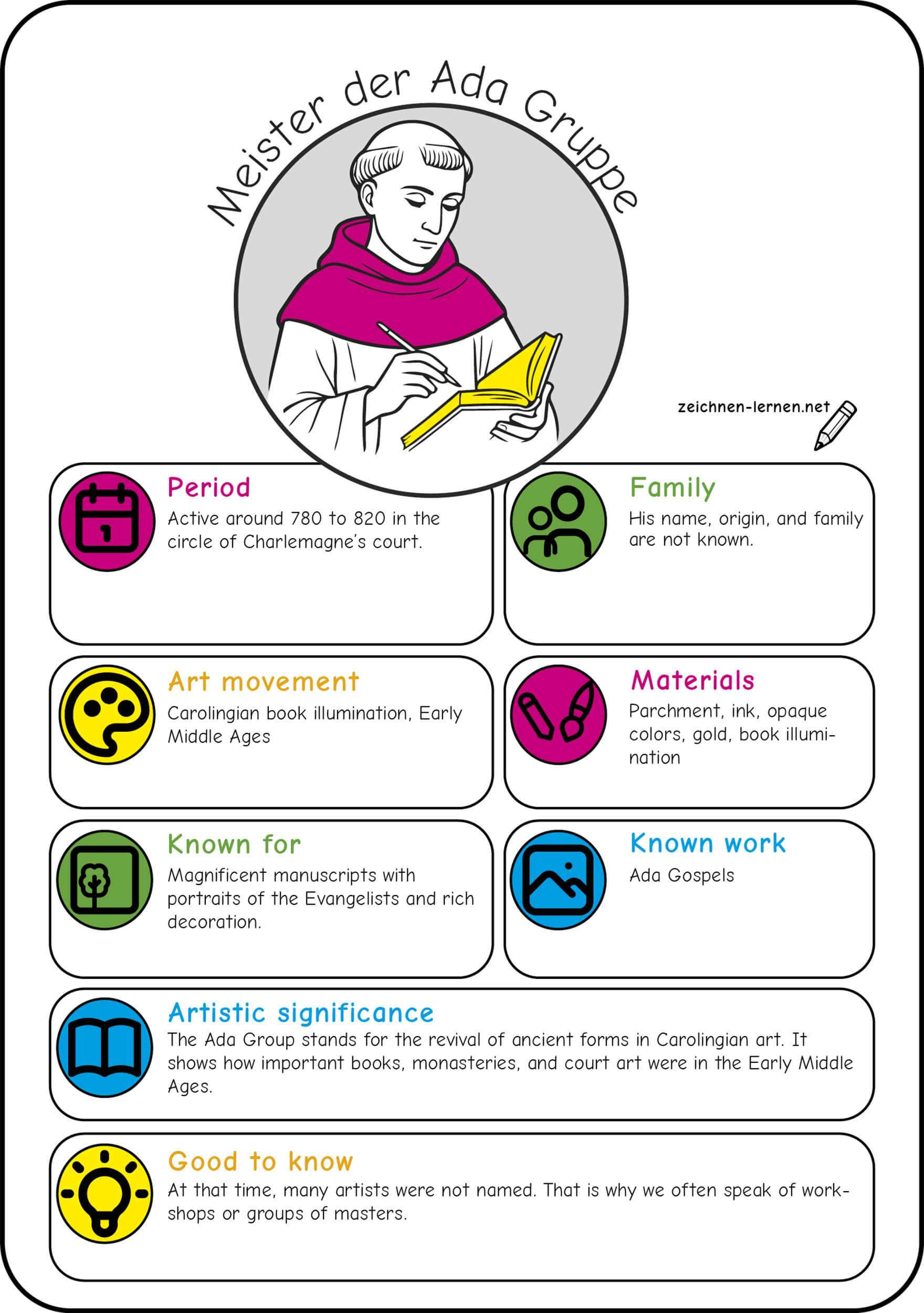
Individual artistic personalities tended to be less prominent during this period. More significant were workshops, monasteries, and courtly centers, where art was produced collaboratively. The notion of the individual artist as a prominent figure played hardly any role at all.
Notable Masterpieces
- Vienna Genesis
Notable because, as an early, lavishly illustrated Bible codex, it illustrates the transition from ancient iconography to Christian book culture. - Lindisfarne Gospels
Famous because it represents a particularly accomplished fusion of early medieval book art, ornamentation, and scriptural culture. - Book of Kells
Famous because it is one of Europe’s most renowned illuminated manuscripts and showcases Insular art in its purest form.
Connoisseur’s Gems
- Rabbula Gospels
A connoisseur’s gem because it masterfully combines early Christian pictorial narrative with luminous illumination. - Vienna Dioscurides
A connoisseur’s gem because the codex brings together ancient knowledge, illustration, and early Byzantine luxury production. - Sutton Hoo purse lid
A connoisseur’s gem because it clearly illustrates the significance of metalwork and ornamentation in early medieval elite culture.
Typical Materials and Media
Parchment or vellum was preferred because it was more durable and flexible than papyrus and allowed for richly illustrated codices. Inks made from soot or metal compounds, tempera, gold, and silver were used because the text and images were intended to appear at once precious, legible, and imbued with sacred significance. Ivory, enamel, and metal played a major role in liturgical objects because art was closely linked to worship and the veneration of relics.
Impact on the Era
Art in the early Middle Ages served primarily to instruct people in religious matters and to reinforce the Christian interpretation of the world. Images brought religious teachings to life and bolstered the authority of the Church and the ruling powers. In this way, art became an important vehicle for order, meaning, and spiritual guidance.
Summary
| Key Features | Materials and Resources | Notable Artists | Notable Artworks |
| Christian Themes Take Center Stage | Parchment | Masters of the Ada Group | Ada Gospel Book |
| Art is often religious and symbolic | Ink | Master of the Lorsch Gospel Book | Lorsch Gospel Book |
| Figures appear less naturalistic than in antiquity | Gold | Anonymous monastic workshops | Book of Kells |
| Monasteries and courts are important centers of art | Opaque pigments | Lindisfarne Gospels | |
| Illuminated manuscripts play a particularly important role | Ivory | Aachen Palatine Chapel | |
| Many artists remain anonymous | Metalwork |