
Realism
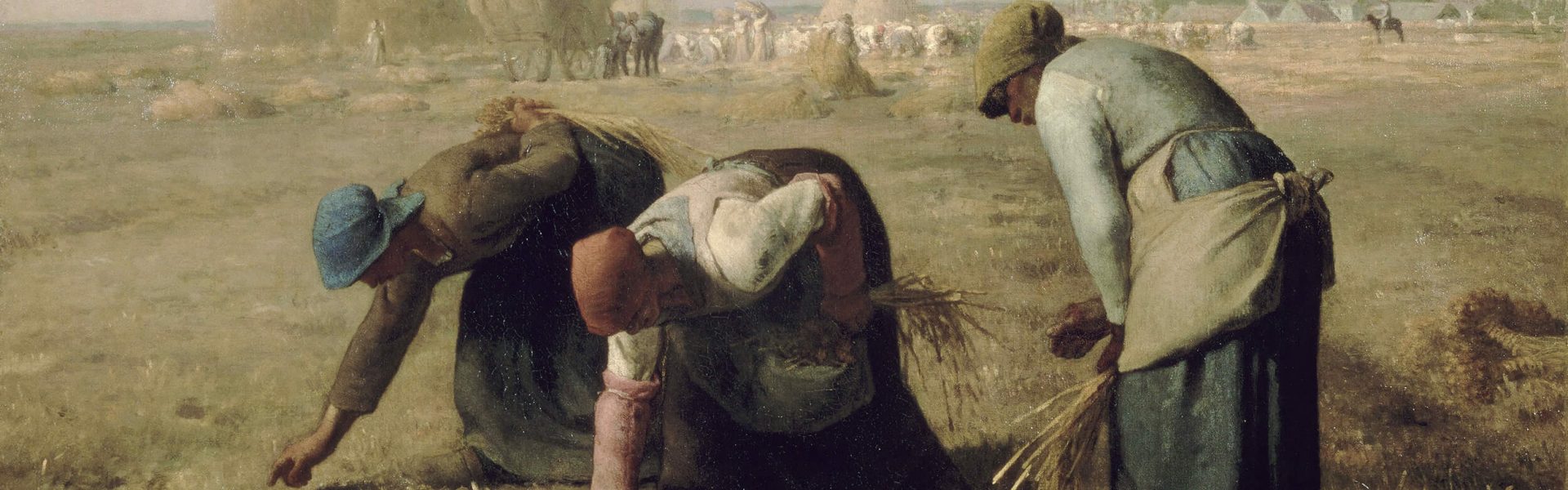
Realism deliberately focused on the reality of the present. Everyday life, work, social circumstances, and societal conditions were made the subject of art without any idealizing romanticization. This marked an important step toward a sober and socially conscious approach to imagery.
➡ General information on Art History and Artistic Periods
➡ Overview of art periods from antiquity to the modern era
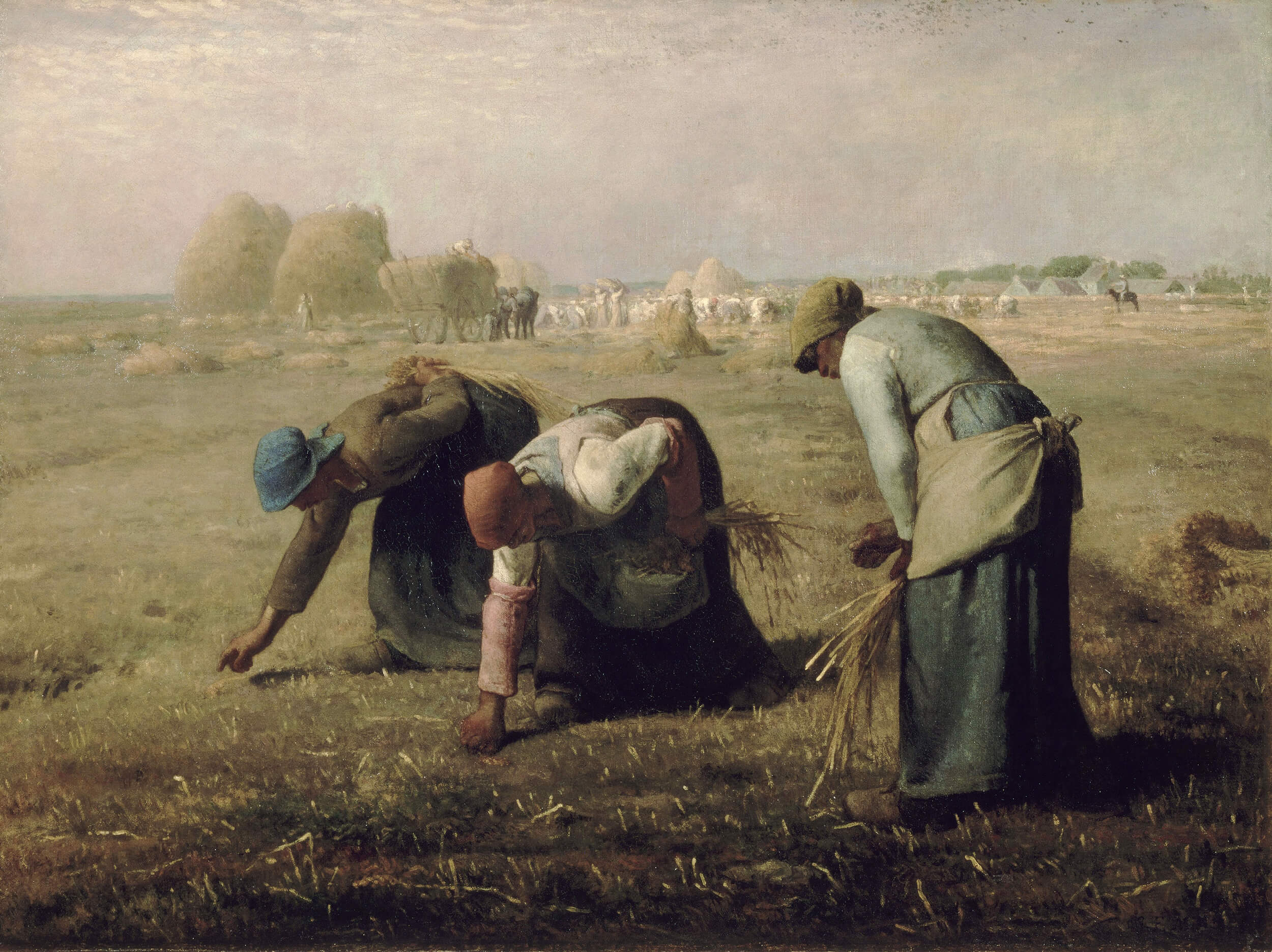
Jean-François Millet – The Gleaners
Time Period
Realism is primarily associated with the period between approximately 1850 and 1880. It developed against a backdrop of industrialization, social tensions, and a growing interest in the visible present. The art of this era turned away from idealized historical paintings and romantic exaggeration.
Key Milestones
A decisive factor was the conscious shift toward peasants, workers, landscapes, and the social conditions of the time. Historical heroic narratives lost significance, while contemporary motifs came more to the fore. Reality was not to be embellished, but rather depicted in a more objective and immediate manner.
Influential Artists
Gustave Courbet is considered one of the key figures of Realism. Jean François Millet became particularly well-known for his depictions of rural labor. Honoré Daumier also contributed significantly to this development with his sharp social observations. These artists made the present a subject of art with new clarity.

Famous key works
- Courbet, A Burial at Ornans
Famous for its monumental depiction of contemporary life without heroic idealization. - Millet, The Gleaners
Famous for its portrayal of rural labor with dignity, seriousness, and social acuity. - Manet, Olympia
Famous because the work radically transformed the conventions of the nude, the gaze, and the modern present.
Connoisseur’s gems
- Courbet, The Stone Breakers
A connoisseur’s gem because the social harshness of Realism was particularly concentrated in this work, which is now lost. - Daumier, Third-Class Carriage
A connoisseur’s gem because social observation and formal condensation go hand in hand. - Bonvin, Still Life with Simple Utensils
A connoisseur’s gem because realism could manifest itself not only in a socially vocal manner, but also quietly and precisely.
Typical Materials and Media
Oil on canvas remained central because it allowed for the convincing depiction of large-scale contemporary scenes and a heavy, textured quality. The palette knife and brush were sometimes used more visibly, as smooth, academic surfaces were deliberately avoided. Lithography and printmaking were important because they allowed for the rapid dissemination of social commentary, caricature, and political commentary.
Impact on the Era
Realism had a sobering and enlightening effect. It made social reality visible and brought previously overlooked aspects into focus. As a result, art gained greater social relevance and became a medium for critical perception of the contemporary era.
Summary
| Key Features | Materials and Resources | Notable Artists | Notable Artworks |
| Depiction of Visible Reality | Oil on canvas | Gustave Courbet | Gustave Courbet: A Burial at Ornans |
| Everyday life, work, and ordinary people become worthy of depiction | Drawing | Jean François Millet | Jean François Millet: The Gleaners |
| No idealization and no romantic glorification | Honoré Daumier | Honoré Daumier: The Third-Class Carriage |
|
| Social themes and social reality | Earth tones and natural colors | Rosa Bonheur | Rosa Bonheur: Horse Market |
| Close observation instead of myth or heroic tales | Large-format scenes of everyday life | Adolph von Menzel | Adolph von Menzel: The Iron Rolling Mill |
| Often sober, direct depiction | Objective composition |