
Famous Artists in Art History
Famous artists are not famous simply because they could “paint better” than others. Fame arises for several reasons: skill, new ideas, powerful works, patronage, historical circumstances, recognizability, collectors, museums, the art market, education, and sometimes even scandals or a particularly fascinating life story.
An artist often becomes historically significant not only because they created good works, but also because they changed or had a particularly strong influence on the art of their time.
💡 Download artist profiles as PDF files
Why are some artists better known than others?
Some artists became better known because they were working in the right place at the right time. Those who had access to royal courts, churches, wealthy patrons, art academies, or—later on—galleries were able to make their works more visible. Other artists only became famous long after their deaths, as later generations came to recognize their significance anew.
Artists usually became particularly well-known when several factors came together: a distinctive style, a famous masterpiece, a clear role in an artistic era, many surviving works, good documentation, and an influence on later artists.
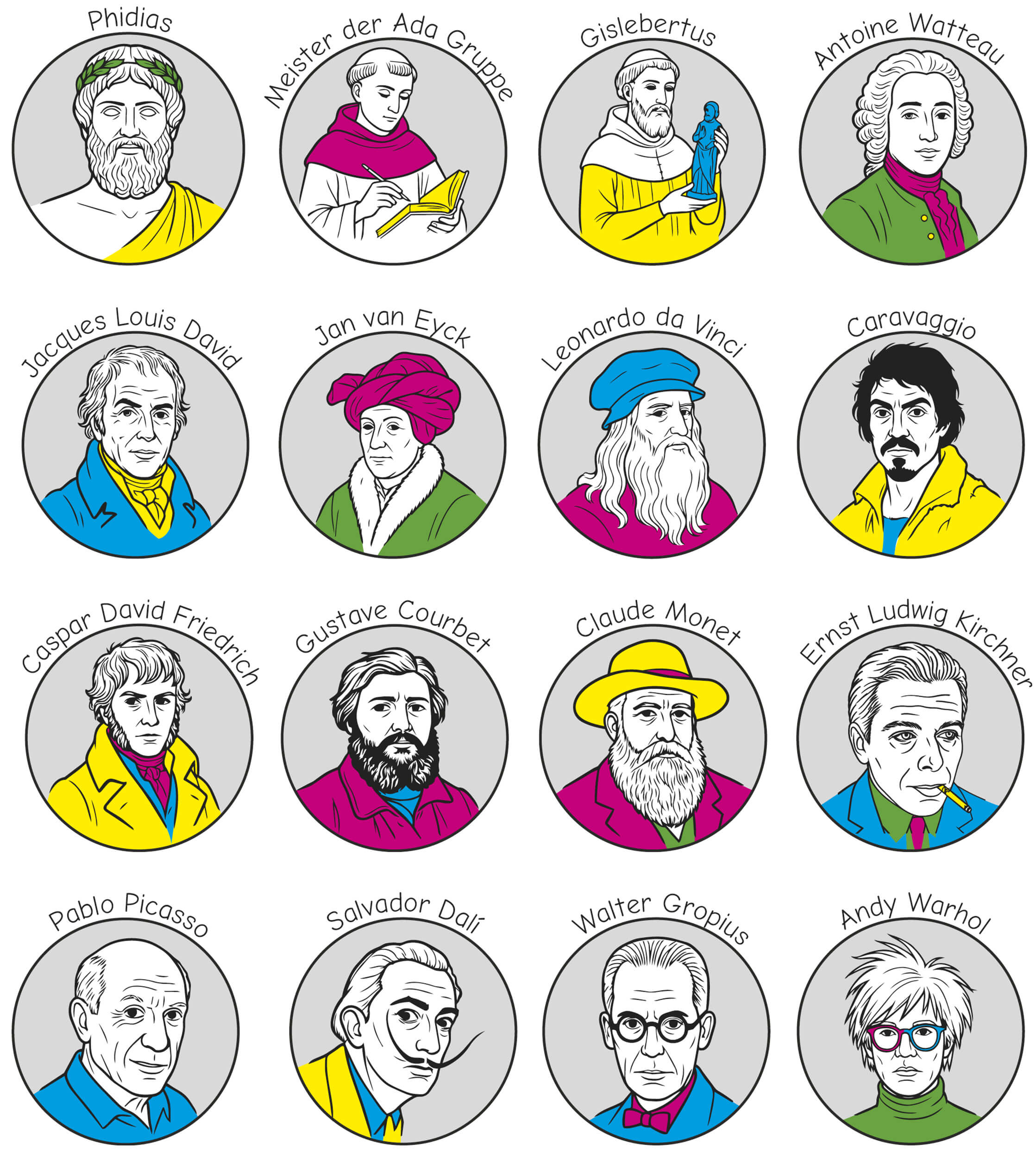
Leonardo da Vinci, for example, is not famous just because of the Mona Lisa. He embodies the ideal of the Renaissance: art, science, technology, anatomy, and the observation of nature all come together in his work. Picasso is not only known for having painted many pictures, but also for having profoundly transformed the concept of art in the 20th century. Van Gogh is not only famous for his sunflowers, but also for his expressive style and his tragic life story.
What makes an artist historically significant?
An artist is particularly significant when they bring to light something that has never been shown in that way before.
This could be a new technique, such as the perfected oil painting of Jan van Eyck. It could be a new visual effect, like the dramatic chiaroscuro of Caravaggio. It could be a new way of seeing, as with Monet, who prioritized light and atmosphere over precise contours. But it could also be a new attitude, as with Courbet, who painted ordinary people and everyday scenes on a large scale.
From an art-historical perspective, therefore, the question “Is this beautiful?” is not the only important one. Often more important is: “What did this work change? What did people see, think, or do differently afterward?”
What made artists famous?
1. Exceptional skill
Many famous artists mastered their craft to the highest degree. They were able to depict bodies, fabrics, light, space, movement, and emotions with remarkable realism.
Examples:
- Leonardo da Vinci had a keen eye for observing bodies, facial expressions, and atmosphere.
- Michelangelo combined anatomical accuracy with tremendous expressiveness.
- Jan van Eyck painted surfaces, light, and details with almost unbelievable precision.
- Albrecht Dürer demonstrated a technical mastery in drawing, copperplate engraving, and woodcut that was admired throughout Europe.
However, skill alone is not always enough. Many artists were technically very skilled but became less well-known because they did not pioneer a new direction or because their works were not as well preserved.
2. Through a new artistic vision
Some artists became famous because they did things differently than their predecessors.
- Giotto made figures in the Middle Ages more physical and human. His paintings appear more three-dimensional and emotional than many earlier depictions.
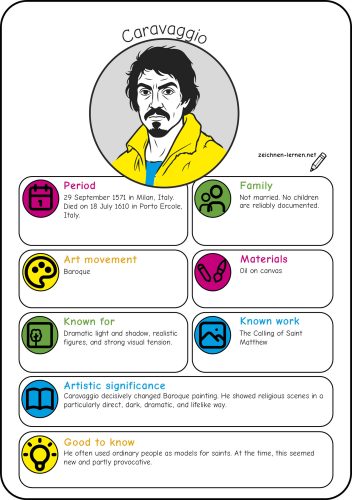
- Caravaggio painted saints not as ethereal and idealized, but as real people from everyday life. This was new, direct, and provocative.
- Monet did not paint the subject as a fixed form, but rather the fleeting impression of light, color, and atmosphere.
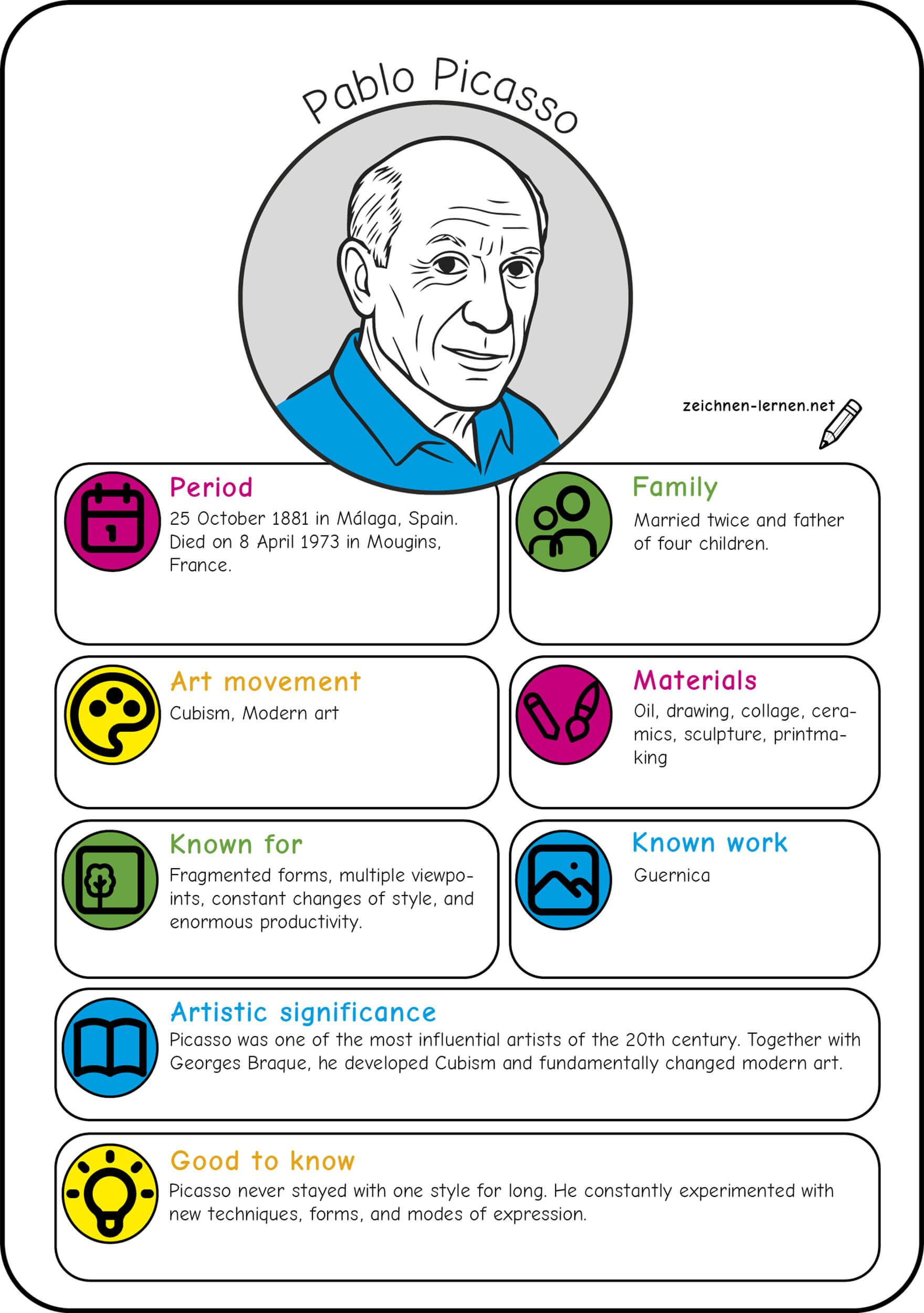
- Picasso broke forms down into different perspectives, thereby helping to develop Cubism.
Such artists are important because they not only continued art but also transformed it.
3. Through a distinctive style
An artist becomes better known when their works are instantly recognizable.
- Van Gogh is recognizable by his bold colors, dynamic brushstrokes, and intense atmosphere.
- Klimt is recognized by his use of gold, ornamentation, and decorative figures.
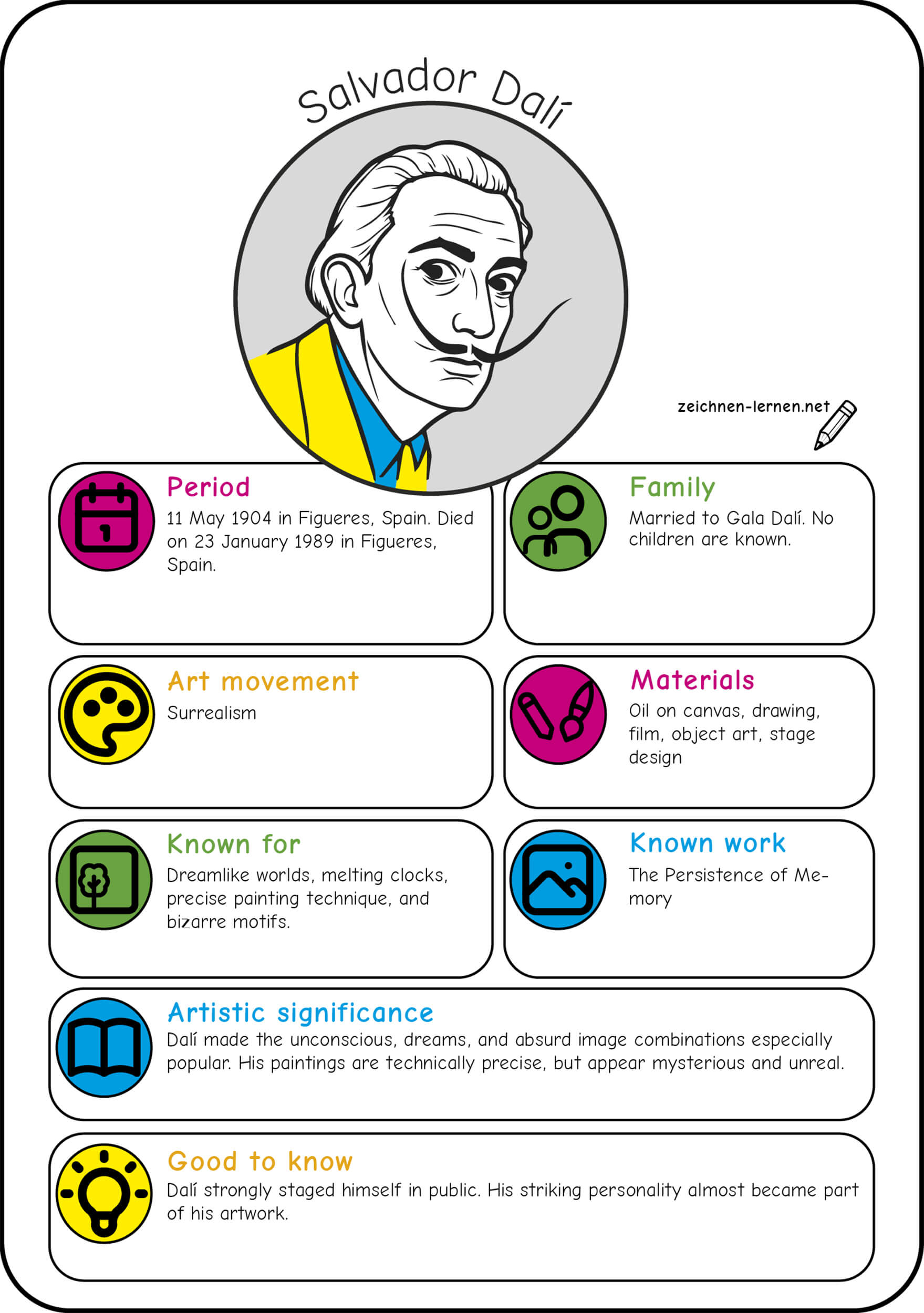
- Dalí is recognized by his dreamlike landscapes, melting clocks, and surreal motifs.
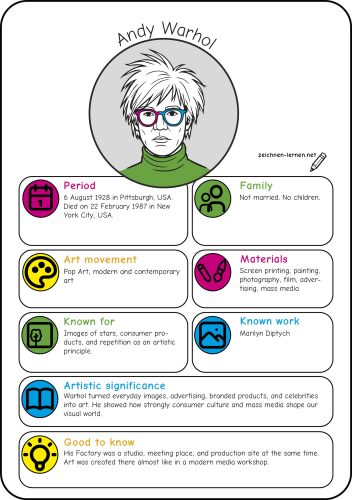
- Warhol is recognized by repetition, silkscreen printing, celebrities, and consumer products.
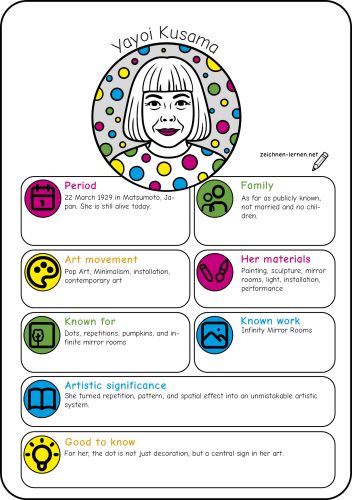
- Kusama is recognizable by dots, mirrored rooms, and pumpkins.
High recognizability is extremely helpful because it allows people to process images more quickly.
4. Through Famous Masterpieces
An artist’s fame often hinges on just a few extremely well-known works.
- Leonardo da Vinci: Mona Lisa and The Last Supper
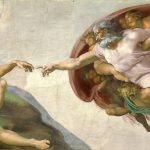
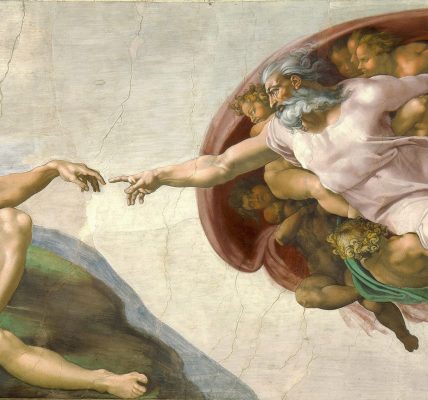
- Michelangelo: David and the ceiling of the Sistine Chapel
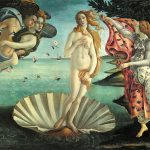
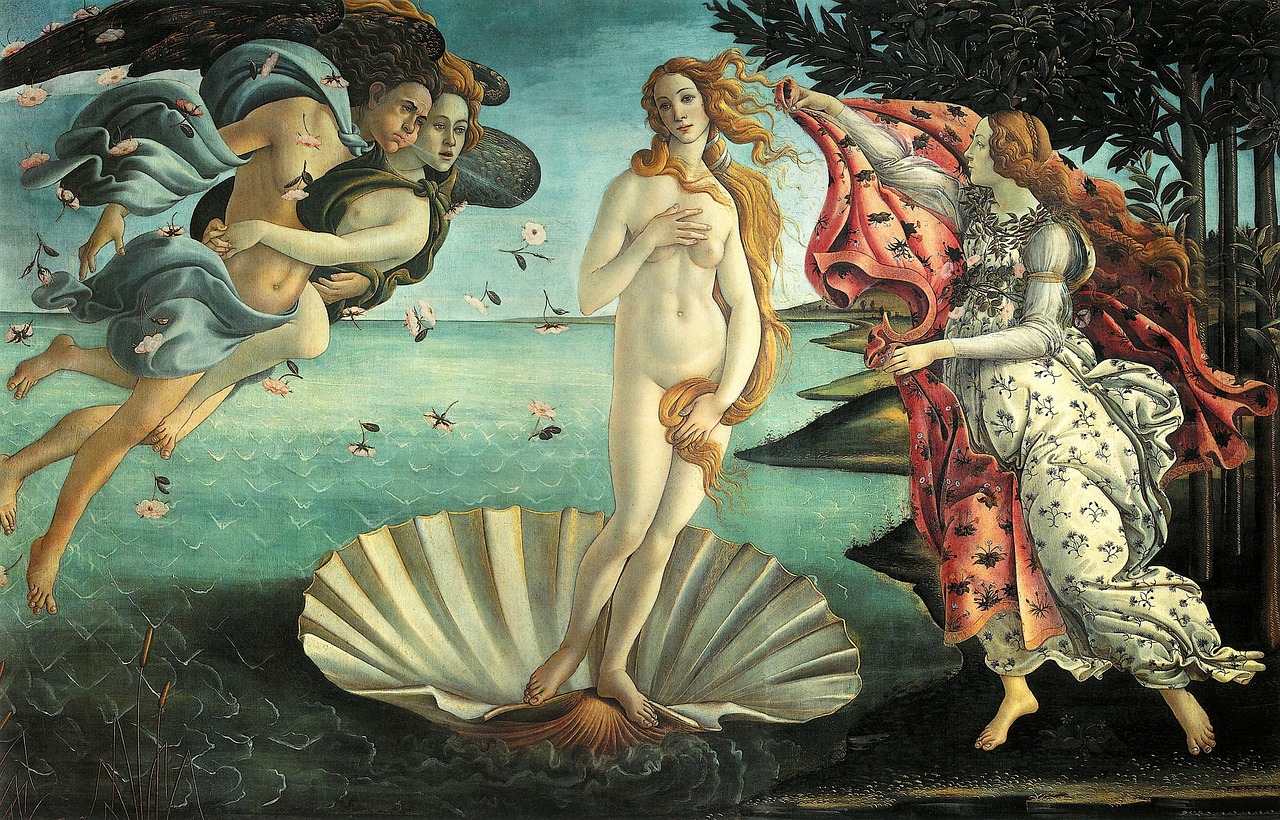
- Botticelli: The Birth of Venus
- Caravaggio: The Calling of Saint Matthew
- Caspar David Friedrich: Wanderer Above the Sea of Fog
- Monet: Impression, Sunrise and Water Lilies
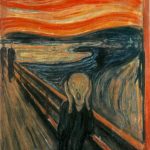
- Munch: The Scream
- Picasso: Guernica
- Dalí: The Persistence of Memory
- Warhol: Marilyn Diptych and Campbell’s Soup Cans
Such works become visual symbols. They then represent not only an artist, but often an entire era or idea.
5. Through Influence on Other Artists
An artist becomes particularly significant when many later artists respond to his work.
- Giotto influenced the development toward the Renaissance.
- Michelangelo shaped generations of painters and sculptors.
- Caravaggio influenced the Baroque period throughout Europe.
- Monet and the Impressionists paved the way for modern painting.
- Cézanne became extremely important for Cubism and Modernism because he simplified forms and restructured pictorial spaces.
- Picasso influenced nearly all of 20th-century art.
Significance thus also arises when other artists say: “We must build on this” or “We must distance ourselves from this.”
6. Through social and political impact
Some artists are known for bringing social issues to light through their work.
- Goya depicted war, violence, and the depths of human depravity.
- Courbet portrayed workers and ordinary people with a serious, realistic touch.
- Käthe Kollwitz powerfully brought poverty, war, grief, and social hardship to light.
- Picasso’s Guernica became one of the most famous anti-war paintings.
- Barbara Kruger and Cindy Sherman question images, advertising, roles, and the media.
- Ai Weiwei combines art with political criticism and human rights issues.
Here, art is understood not merely as decoration, but as a commentary on the world.
7. Through Personality, Myth, and Life Story
For some artists, their biography also plays a major role.
- Van Gogh became a symbol of the misunderstood artist. He had little success during his lifetime, but today he is one of the most famous painters in the world.
- Frida Kahlo became world-famous through her self-portraits, her illness, her injuries, her marriage to Diego Rivera, and her powerful visual language.
- Caravaggio led a dramatic life marked by conflict, violence, and flight. This later reinforced the myth surrounding his persona.
- Dalí presented himself as an eccentric genius. His personality became almost as famous as his paintings.
This isn’t always fair. Sometimes the life story overshadows the work. Nevertheless, it strongly influences how artists are perceived.
Women Artists
In art history, women were long overlooked or deliberately excluded. In the past, many were not allowed to attend art academies, run studios, or work freely as artists. Nevertheless, numerous women have created significant works and had a decisive influence on art history.
Today, it is becoming increasingly clear how important female artists have been and continue to be for the development of art. Their works demonstrate not only great technical skill but also new perspectives on society, identity, nature, the body, and emotions.
Why were female artists overlooked for so long?
For many centuries, the art world was dominated by men. Women often had fewer educational opportunities and were limited in their ability to exhibit their work publicly. Some worked in their family’s studio, others published under difficult conditions, or were later forgotten.
That is why many female artists are missing from older art books, even though they were successful in their own time. It is only in recent decades that their achievements have been more thoroughly researched and recognized.
Notable Female Artists in Art History
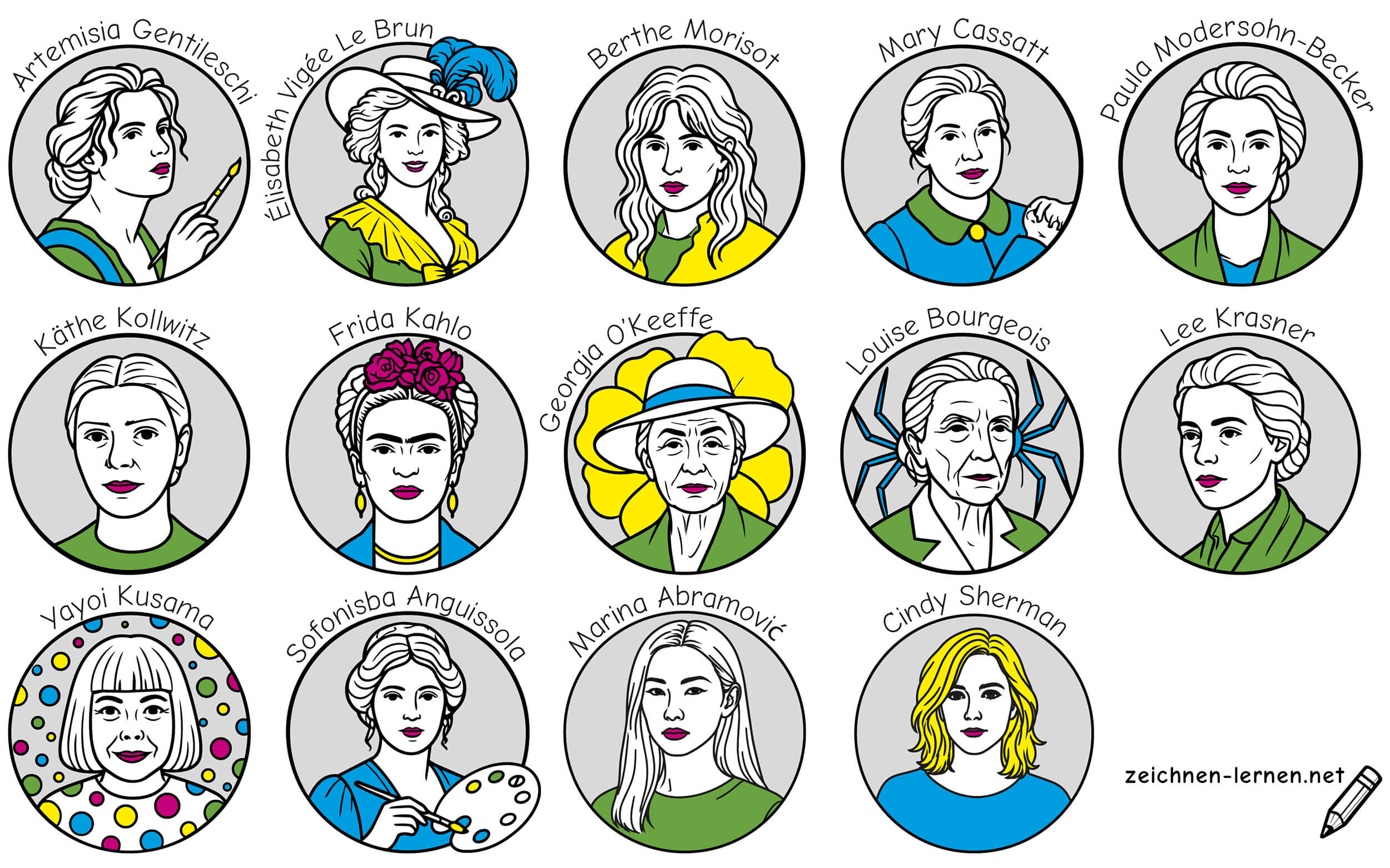
💡 Download profiles of female artists as PDF files
- Artemisia Gentileschi
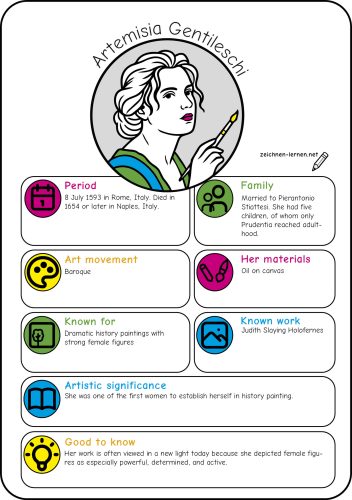
She was a prominent Baroque painter. Her paintings are powerful, dramatic, and emotional. She is particularly known for her depictions of strong female figures from the Bible and mythology. - Élisabeth Vigée Le Brun
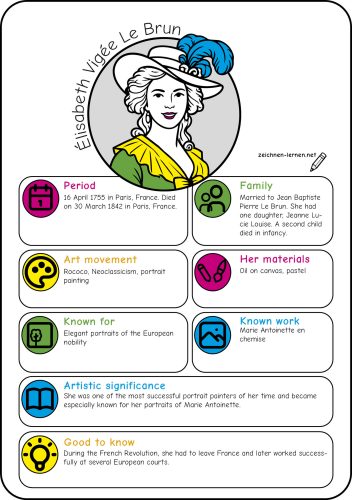
She was a famous portrait painter of the 18th century. She became particularly well-known for her elegant and lively portraits of the European nobility. - Berthe Morisot
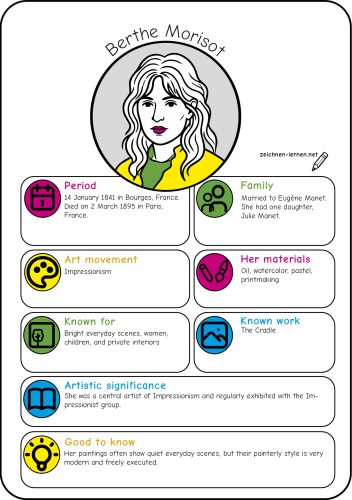
She was part of the Impressionist circle. Her works often depict everyday scenes, women, children, and domestic moments in a bright and loose style. - Mary Cassatt
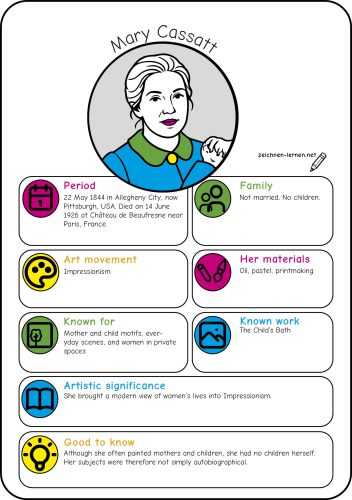
She, too, was an important representative of Impressionism. She is particularly known for her sensitive depictions of mothers and children. - Paula Modersohn Becker
She was a German painter and an important pioneer of modernism. Her paintings appear simple and serene, yet at the same time highly expressive. - Käthe Kollwitz
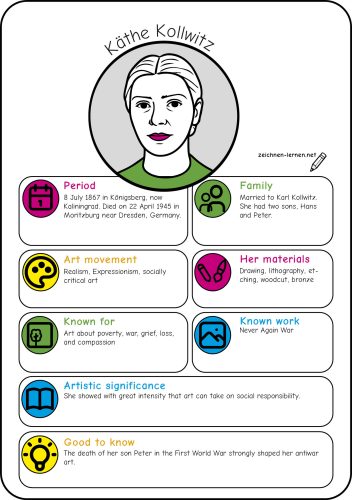
Her drawings, prints, and sculptures address poverty, war, suffering, and compassion. Her art is powerful and socially engaged. - Frida Kahlo
She is one of the most famous female artists of the 20th century. Her often symbolic self-portraits depict pain, identity, culture, and personal experiences. - Georgia O’Keeffe
She became famous for her large-scale flower paintings and landscapes. Her works combine observations of nature with a highly distinctive modern visual language. - Louise Bourgeois
She was a major contemporary artist. She became known, among other things, for her large spider sculptures and works exploring memory, family, and vulnerability. - Lee Krasner
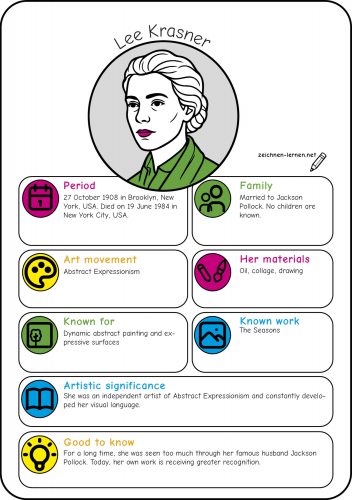
She became known for her powerful, abstract paintings featuring dynamic brushstrokes and collage elements, which established her as a distinct voice within Abstract Expressionism. - Yayoi Kusama
The Japanese artist is world-renowned for her dot patterns, mirror rooms, and installations. Her works combine fantasy, repetition, and strong visual impact. Unfortunately, she passed away in August 2026. - Sofonisba Anguissola
She became known for her finely observed, lively portraits, in which she depicts people very naturally and with great psychological accuracy, making her one of the first internationally successful female artists of the Renaissance. - Marina Abramović
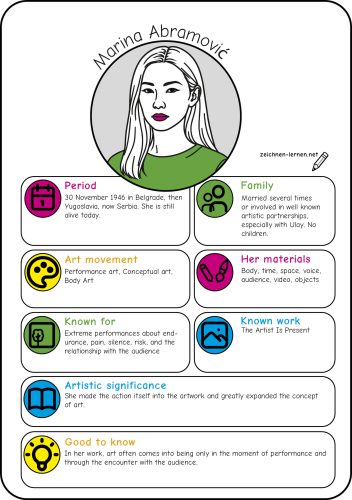
She became famous for her radical performance art, in which she consistently explores the physical and psychological limits of endurance, pain, and the relationship between artist and audience. - Cindy Sherman
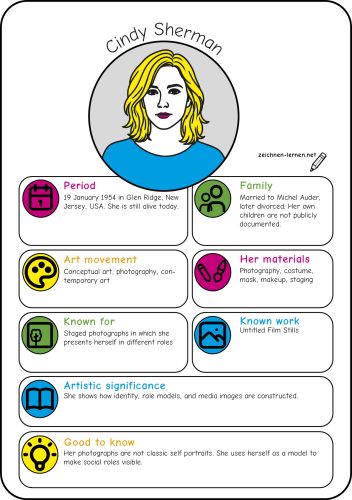
She became known for her staged self-portraits, in which she critically examines social stereotypes and images of identity through costumes, roles, and masks.
Themes in Women’s Art
Women artists have explored every conceivable theme. Nevertheless, many works address issues that have long been overlooked.
These include, for example:
- Identity and Self-Image
- Family and Everyday Life
- The Body and Femininity
- Social roles
- Inequality and freedom
- Memory, loss, and personal experience
Today, women artists are much more visible in museums, galleries, and exhibitions than they used to be. Nevertheless, efforts continue to integrate their works more fully into general art history.
Why are female artists important?
Female artists broaden our perspective on art. They show that art history isn’t just made up of a few big male names, but of many different voices. When you explore the work of female artists, you discover new themes, new perspectives, and often long-forgotten masterpieces.
What makes famous artists unique in their era?
➡ Overview of art eras from antiquity to the modern era
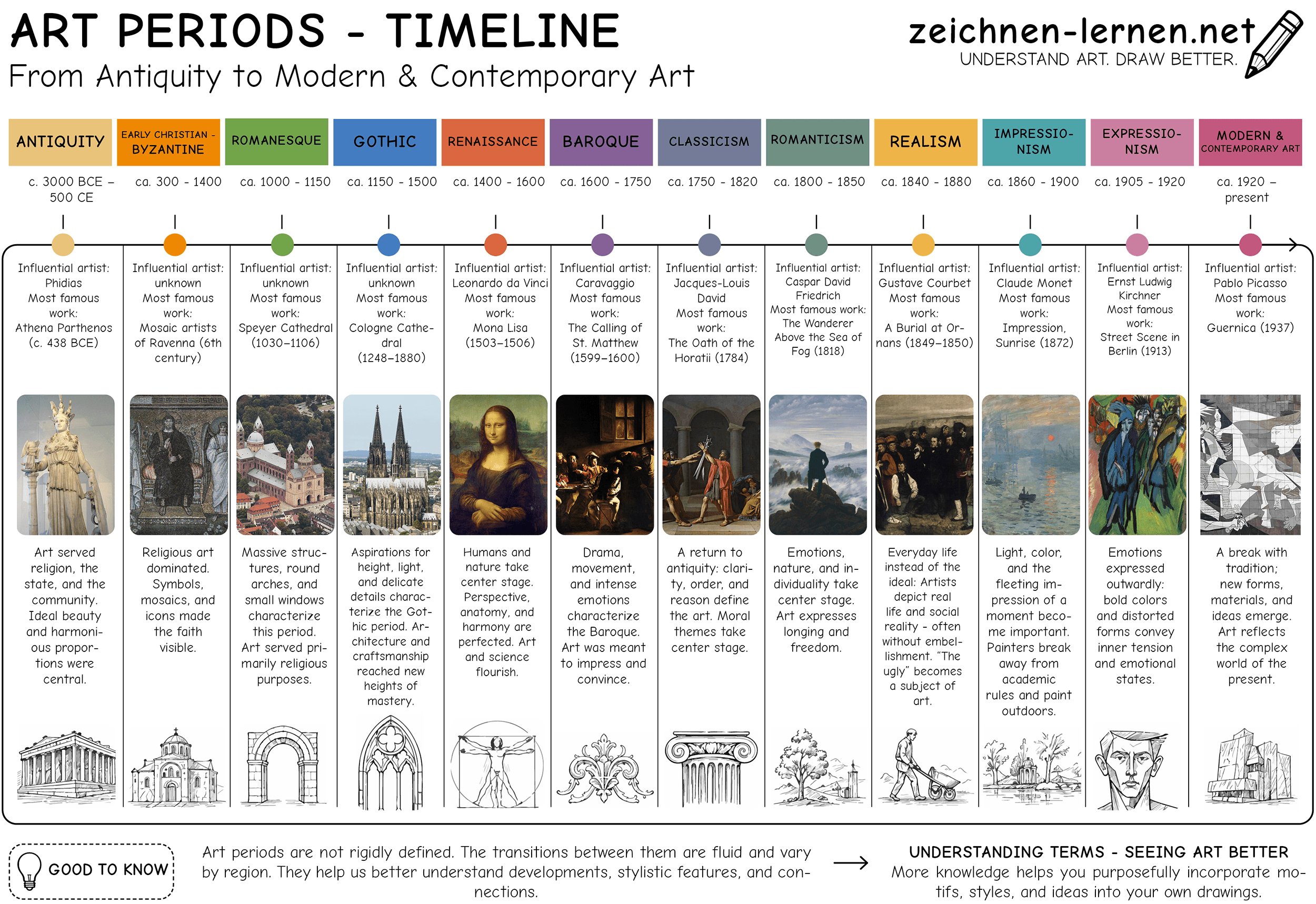
💡 PDF: Timeline of Artistic Periods: From Antiquity to the Modern Era
Antiquity
In antiquity, the focus was often on ideals, harmony, physical proportions, and divine order.
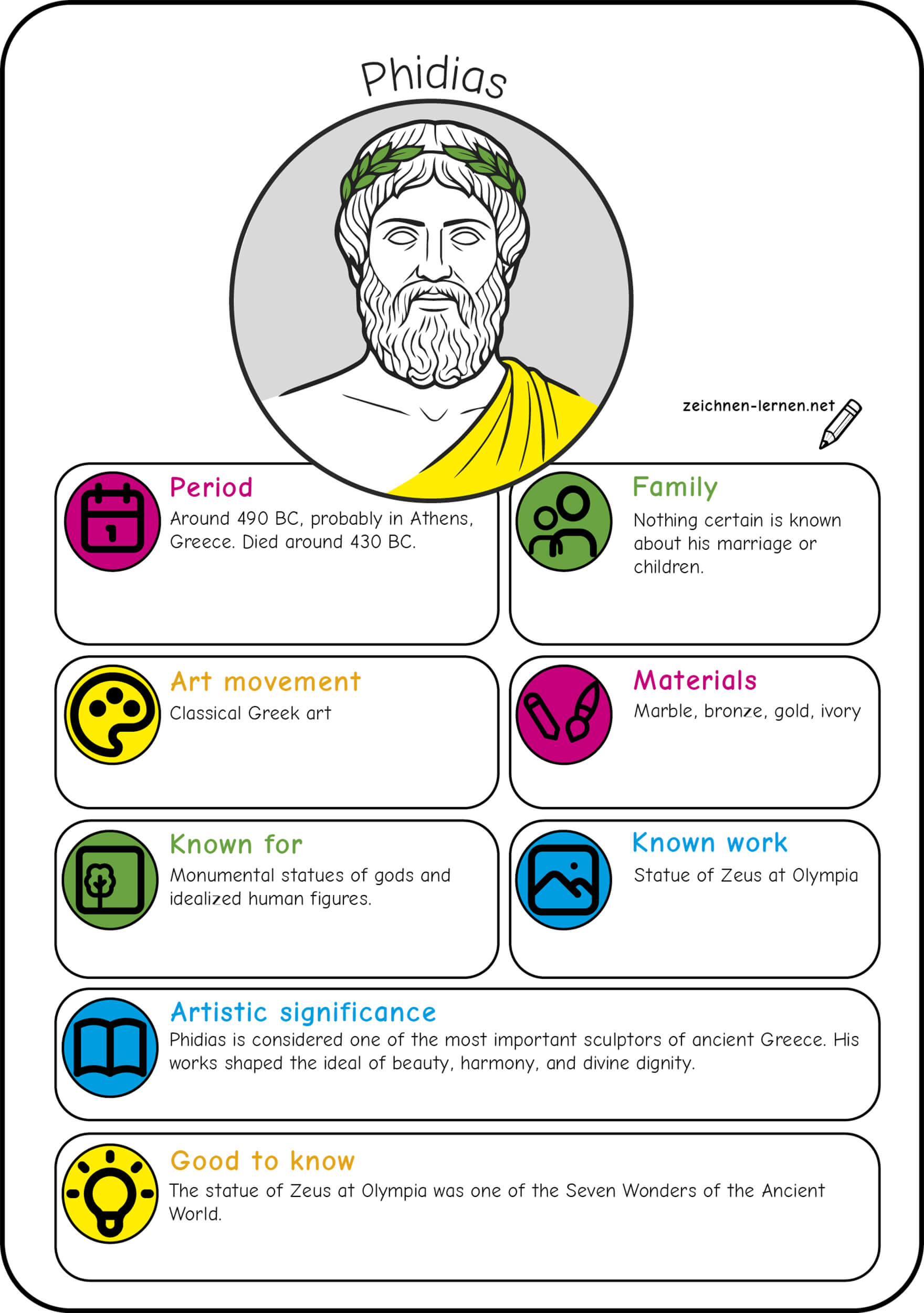
- Artists such as Phidias became famous for depicting gods and humans in idealized forms. What made Phidias special was not only his technique, but his ability to combine power, beauty, and religious significance in monumental figures. His statue of Zeus at Olympia became one of the Seven Wonders of the World.
- Iaia of Kyzikos was already mentioned in ancient sources as an exceptional painter. She is said to have created portraits and ivory carvings and was considered so talented that her works fetched higher prices than those of many male colleagues.
What is remarkable is that her mention shows that women could also find recognition in ancient art, even though their names were rarely preserved.
What is important about antiquity is: It later became a recurring model, especially during the Renaissance and Classicism.
➡ More on the art era of antiquity
Early Middle Ages
In the early Middle Ages, the focus was generally not on individual artists, but on workshops, monasteries, and religious patrons. Many works were anonymous.
Art served primarily to support the faith. Books, altars, reliquaries, and murals were intended to convey and glorify Christian themes.
It was often not individual names that became known, but rather styles or workshops and their leaders.
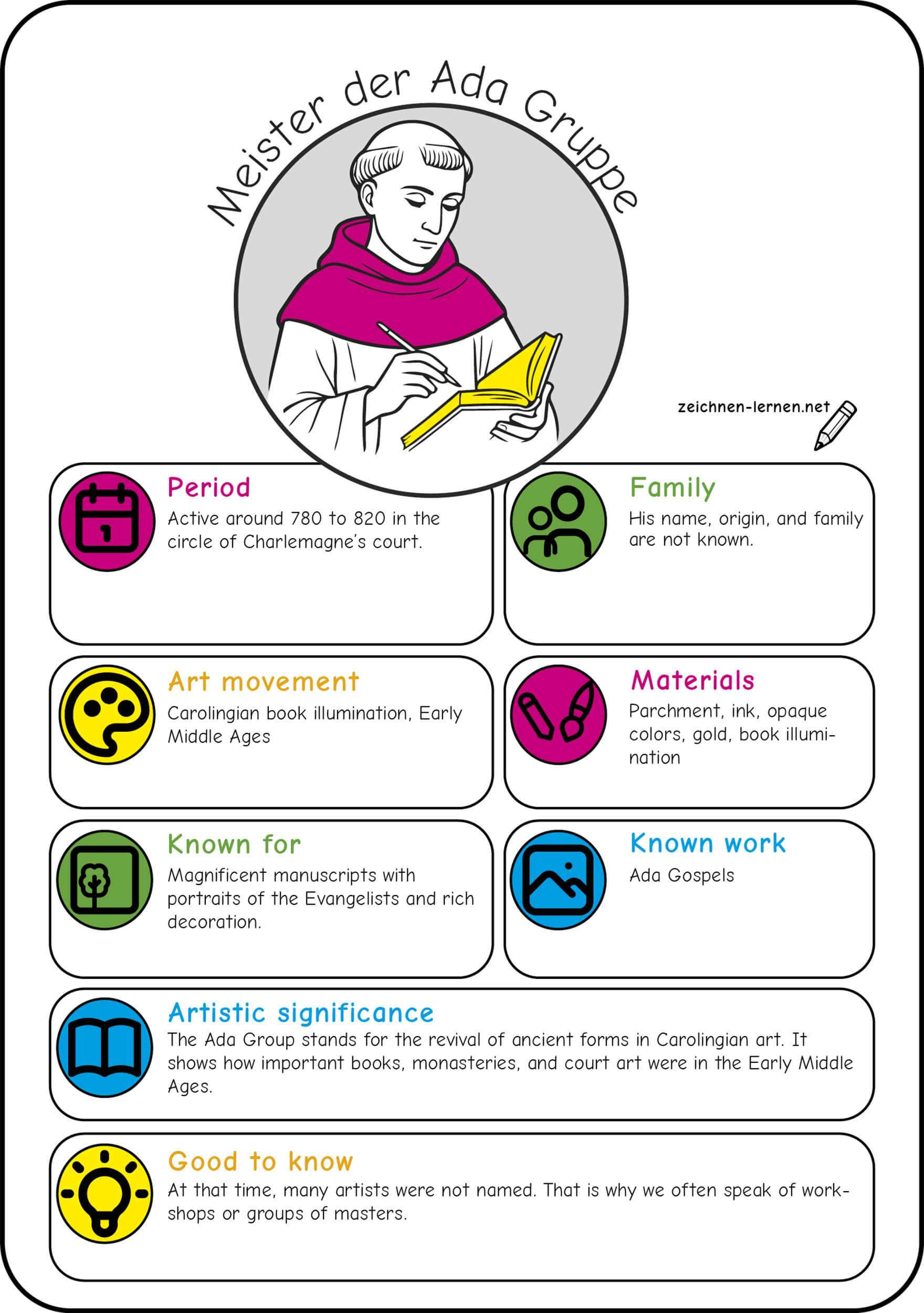
- The Master of the Ada Group is an anonymous early medieval illuminator who, around 800, created magnificently illustrated Gospel books in the Carolingian style within the context of the so-called Ada manuscripts and is known for his clear visual language, which draws on classical antiquity.
- Among the few known artists of this era, Eadfrith of Lindisfarne and Tuotilo of St. Gallen are frequently mentioned.
- Eadfrith is associated with the famous Lindisfarne Gospels, while Tuotilo became known as a versatile artist, sculptor, and goldsmith.
- Ende is one of the few known female artists of that period. She worked as an illuminator on magnificently illustrated manuscripts and even left a signature, which was very unusual at the time.
- Ende is considered a woman because she signed a medieval manuscript as “pintrix,” which is the feminine form of “painter” in Latin.
What makes this era different: The artist was less of a lone genius and more a part of a religious and artisanal community.
➡ More on the Early Medieval art period
Master of the Ada Group
Romanesque
The Romanesque period is characterized by church architecture, clean lines, massive walls, and narrative sculpture.
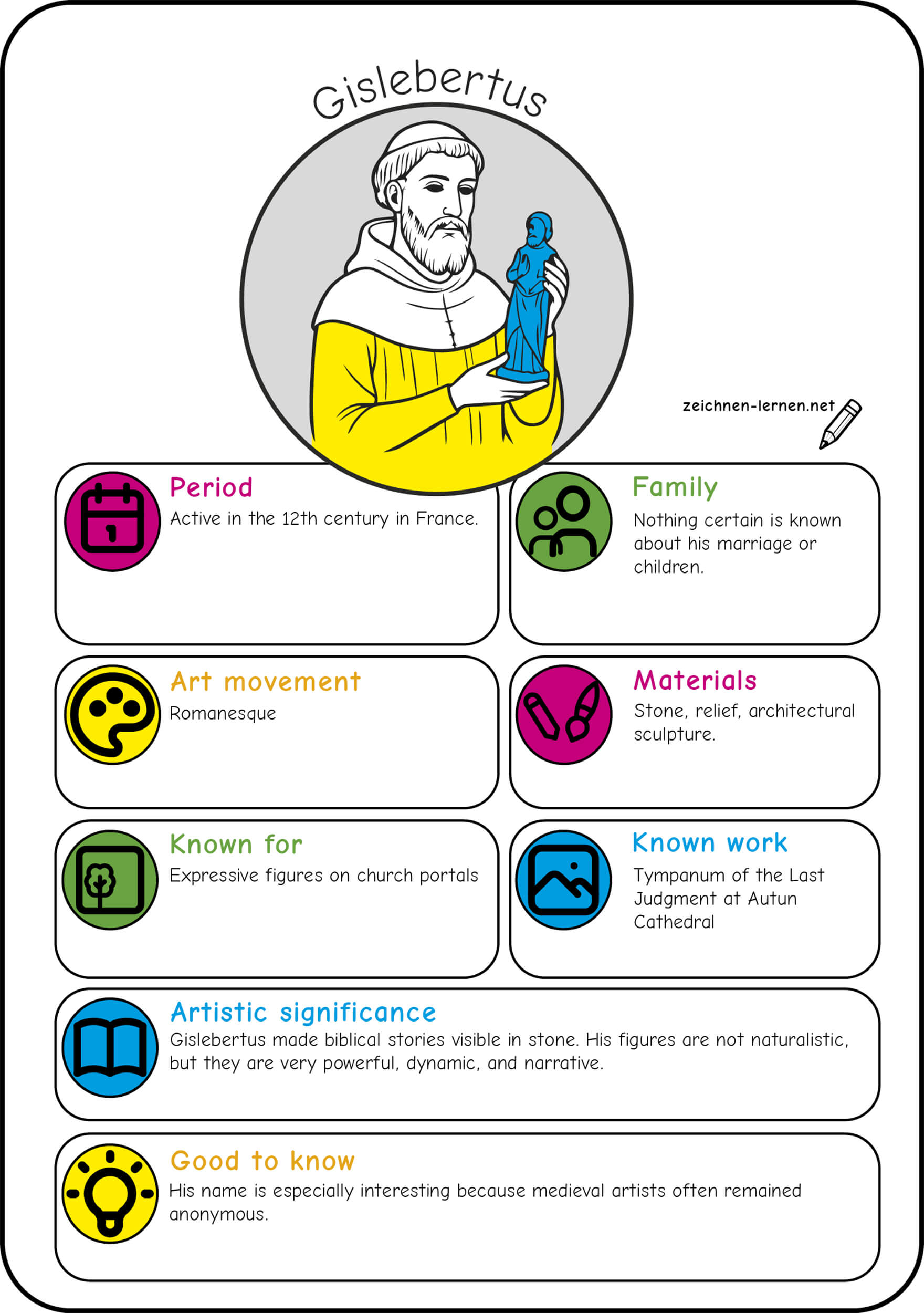
- Artists such as Gislebertus gained prominence because they vividly brought biblical stories to life in stone. His figures do not appear naturalistic in the modern sense, but they are highly expressive.
- Herrad of Landsberg became known for her work “Hortus Deliciarum,” a richly illustrated compendium of knowledge for nuns. She combined education, faith, and art in an extraordinary work.
- Herrad of Landsberg demonstrates that women in convents could make significant contributions to art and the dissemination of knowledge.
What makes it special: The Romanesque period was less about perfect bodies and more about religious messages, warnings, admonitions, and the transmission of faith.
➡ More on the Romanesque art period
Gothic
During the Gothic period, churches became taller, brighter, and more elaborately decorated. Stained-glass windows, altars, sculptures, and illuminated manuscripts played a major role.
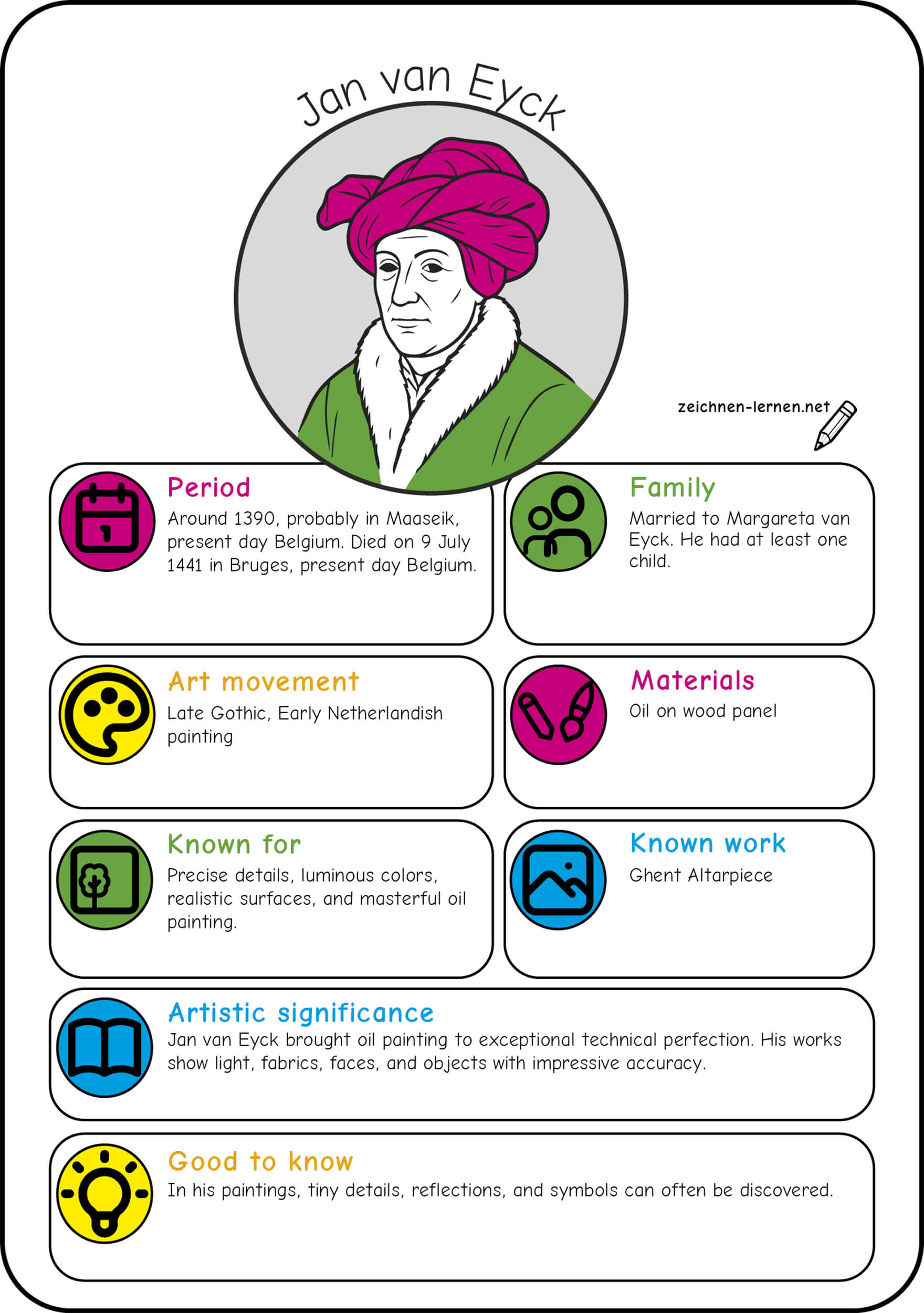
- Jan van Eyck stands at the transition from the Late Gothic to the Early Modern period. He became famous for his extreme attention to detail, vibrant colors, and masterful oil painting. His art demonstrates how interest in reality, space, light, and individuality grew stronger.
- Giotto di Bondone is considered one of the most important pioneers of the Gothic period during the transition to the early Renaissance, because he was the first to depict figures in a more three-dimensional, human, and spatial manner.
- Caterina dei Vigri became known for her religious paintings and manuscripts.
- Christine de Pizan exerted great influence on the culture of her time as an author and patron of magnificently illustrated books.
What makes it special: In the Gothic period, art and architecture became increasingly taller, brighter, and more detailed. The focus shifted more strongly toward light, space, and religious impact. Grand cathedrals with pointed arches, stained-glass windows, and soaring ceilings were designed to make the divine visible and tangible.
Women were not only artists but also important patrons of art and education.
➡ More on the Gothic Art Period
Renaissance
The Renaissance placed greater emphasis on humanity, nature, antiquity, and scientific observation.
- Leonardo da Vinci is so famous because he embodies this era almost perfectly. He was a painter, draftsman, researcher, anatomist, engineer, and inventor. His art is not only beautiful but also deeply thoughtful.
- Michelangelo is known for physical power, dramatic figures, and monumental design.
- Raphael is known for harmony, balance, and ideal beauty.
- Sofonisba Anguissola became famous for her lively portraits and even worked at the Spanish royal court.
- Lavinia Fontana was among the first female artists in Europe to build a successful professional career and receive major commissions.
What makes them special: The artists of this era combined art with knowledge, mathematics, anatomy, perspective, and a newfound self-confidence.
Female artists also fought for recognition in an art world that was almost entirely dominated by men.
➡ More on the Renaissance art period
Baroque
The Baroque period was characterized by movement, drama, emotion, light, and striking composition.
- Caravaggio became famous for painting religious scenes in a radically direct style. His figures look like ordinary people on the street, not otherworldly saints. The strong chiaroscuro immediately draws the eye to the action.
- Peter Paul Rubens is known for abundance, movement, physicality, and Baroque splendor.
- Rembrandt is known for psychological depth, light, and human vulnerability.
- Artemisia Gentileschi became famous for her powerful paintings featuring self-assured female figures.
- Judith Leyster captivated audiences with her lively scenes of everyday life and portraits, which for a long time were even attributed to other artists.
What makes the Baroque special: Art was meant to have an impact. It was meant to overwhelm, convince, shock, or inspire.
➡ More on the Baroque art period
Rococo
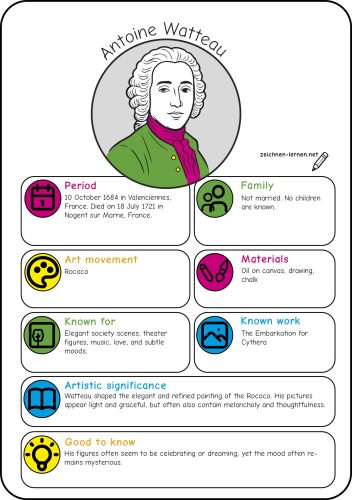
The Rococo style was lighter, more elegant, and more playful than the Baroque. It often focused on courtly society, love, music, fashion, and delicate moods.
- Antoine Watteau became famous for his gallant scenes depicting people celebrating, making music, or daydreaming. His paintings appear light, yet often melancholic as well.
- Fragonard is known for movement, sensuality, and decorative lightness.
- Élisabeth Vigée Le Brun became famous as a portrait painter, particularly for her portraits of Marie Antoinette.
- Rosalba Carriera made pastel painting one of the most popular techniques of her time.
What makes the Rococo special: It presents art as an elegant world of mood, surface, grace, and social role.
➡ More on the Rococo art period
Classicism
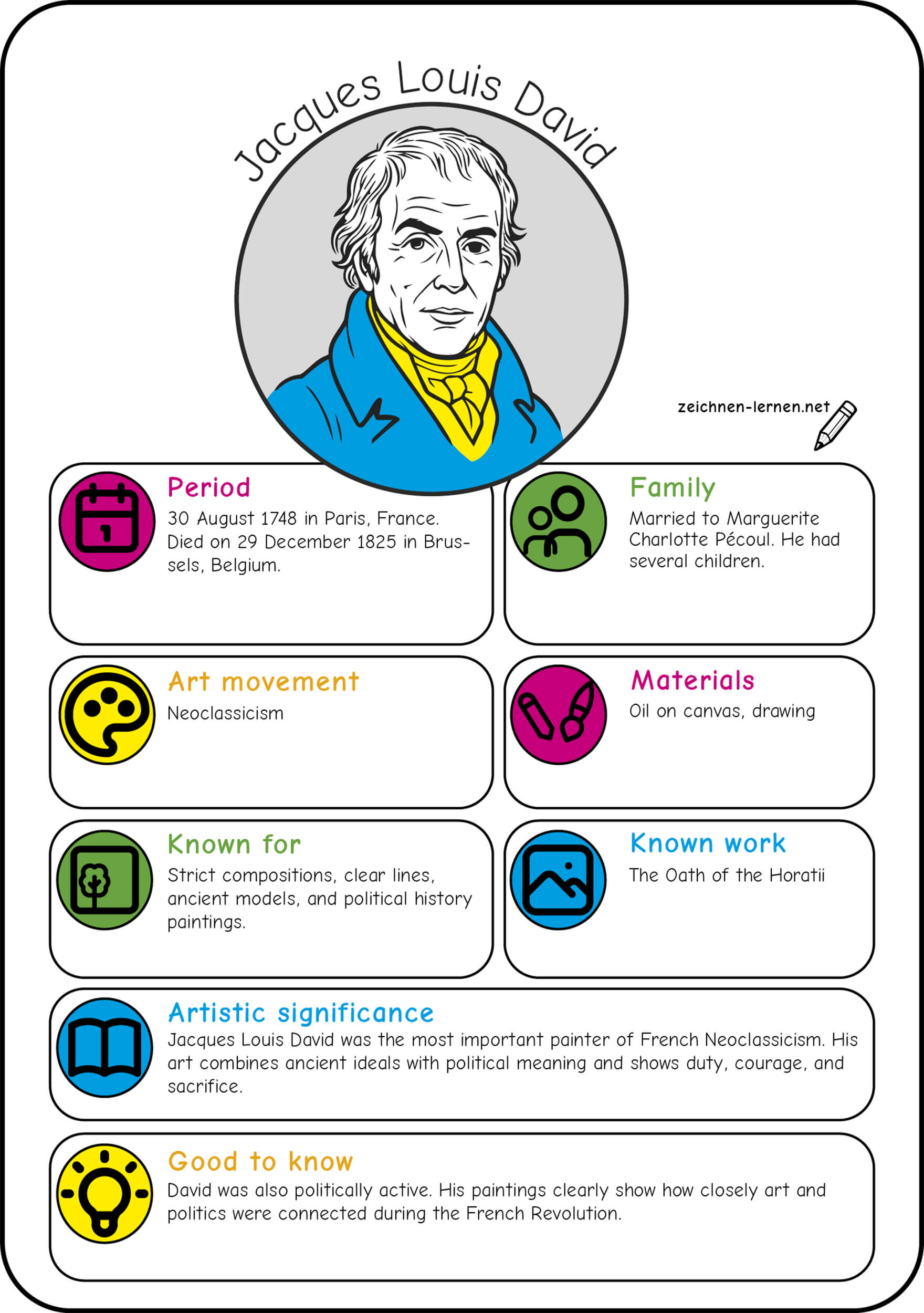
Classicism drew heavily on antiquity. Clarity, order, morality, and strict composition became central to the movement.
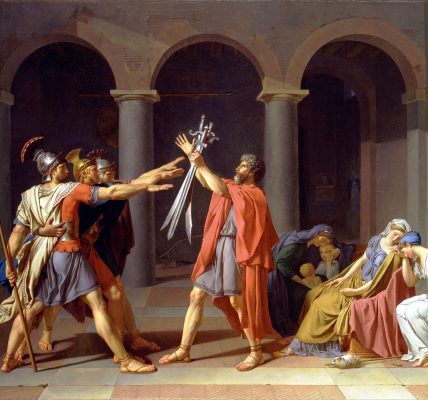
- Jacques-Louis David became famous because his paintings combined classical forms with political messages. His works appear austere, clear, and heroic.
- Angelika Kauffmann became famous for her historical and mythological paintings. She was one of the most respected artists of her time and a co-founder of the Royal Academy in London.
What makes it special: Art also became a political tool here. It depicted virtue, self-sacrifice, duty, and republican ideals.
➡ More on the Classical art period
Romanticism
Romanticism focused on emotion, nature, longing, solitude, spirituality, and the infinite.
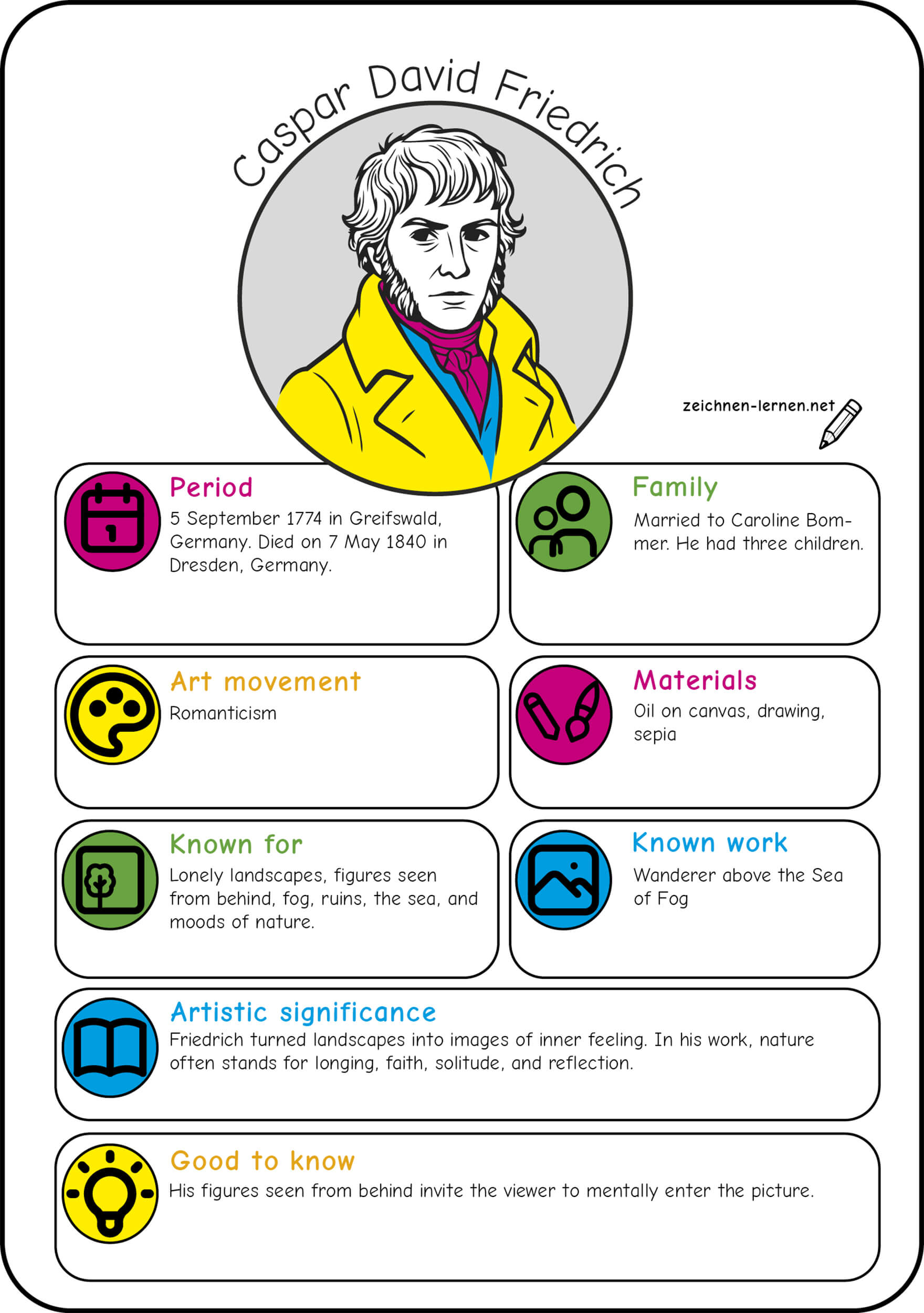
- Caspar David Friedrich is particularly well known because his landscapes are not merely landscapes. They reveal inner states. Fog, mountains, the sea, ruins, and figures seen from behind become symbols of contemplation, transience, and longing.
- Philipp Otto Runge became known for his highly symbolic compositions, often influenced by color theory, in which nature and humanity are understood as expressions of inner states.
- Louise Joséphine Sarazin de Belmont became known for her atmospheric landscapes.
- Sophie Gengembre Anderson created poetic images full of emotion and idealized beauty.
What makes Romanticism special: Humans often appear small in the face of the mighty forces of nature. Art becomes a space for emotion and introspection.
➡ More on the Romantic art period
Realism
Realism sought to depict reality, not ideals, myths, or courtly beauty.
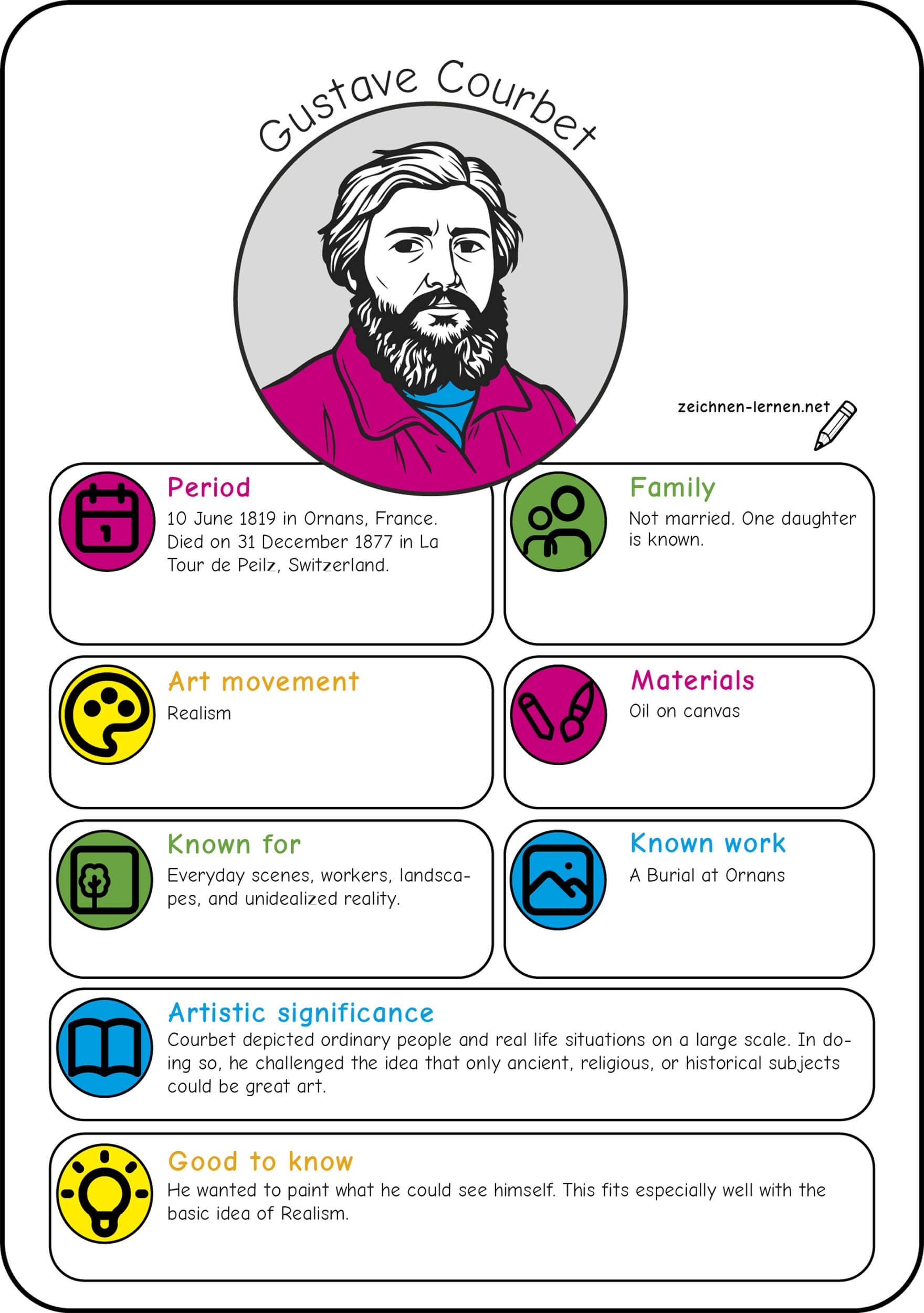
- Gustave Courbet became famous for painting ordinary people in large formats and with a serious tone. This was considered provocative at the time. Workers, funerals, and everyday life suddenly became worthy of being depicted in art.
- Rosa Bonheur became world-famous for her depictions of animals. With keen observation and great technical skill, she created some of the most famous animal paintings of the 19th century.
What makes it special: Realism changed who was even allowed to be depicted. Not just kings, saints, and heroes, but also ordinary people.
➡ More on the art movement Realism
Impressionism
Impressionism sought to capture the fleeting impression of the moment. Light, color, atmosphere, and movement became more important than polished perfection.
- Claude Monet became famous because his painting *Impression, Sunrise* gave the entire movement its name. His series depict the same subject under varying light conditions.
- Renoir and Degas revealed other facets of Impressionism: leisure, dance, theater, and modern everyday scenes.
- Berthe Morisot belonged to the inner circle of the Impressionists and painted modern everyday scenes with a loose style.
- Mary Cassatt became particularly well-known for her depictions of mothers and children.
What makes them special: The Impressionists often painted outdoors, using loose brushstrokes and bright colors. They did not seek to control every line, but rather to capture the impression.
➡ More on the Impressionist art movemen
Expressionism
Expressionism did not aim to depict external reality as accurately as possible, but rather inner tension, emotion, and subjective perception.
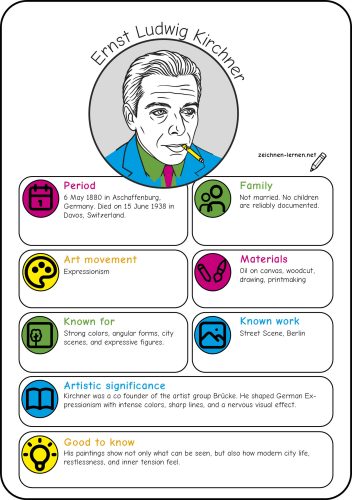
- Ernst Ludwig Kirchner became known for his angular figures, bold colors, and urban scenes. His paintings portray modern life as nervous, fast-paced, and sometimes threatening.
- Kandinsky led art toward abstraction.
- Franz Marc used animals and colors symbolically.
- Käthe Kollwitz depicted suffering and social hardship with great emotional power.
- Lee Krasner became known for her powerful abstract paintings and is considered one of the most important representatives of Abstract Expressionism in the United States.
- Gabriele Münter shaped Expressionism with vibrant colors and simplified forms.
What made it special: Color and form became vehicles for emotion. A face did not have to look realistic if it appeared true from within.
➡ More on the Expressionist art movement
Cubism
Cubism broke objects and figures down into shapes, surfaces, and different angles of view.
- Pablo Picasso and Georges Braque became famous for breaking with traditional notions of space and perspective. A face or object could be shown from multiple angles at the same time.
- Juan Gris became famous for systematically developing Cubism into clear, harmoniously structured compositions, giving it more order and structure.
- María Blanchard developed her own distinctive Cubist style and became one of the most significant artists of this movement.
What makes it special: Cubism asks not only “What does something look like?” but also “How is something constructed?” It turned the image into a construction of forms.
➡ More on the Cubism art movement
Surrealism
Surrealism explored dreams, imagination, the unconscious, and irrational imagery.
- Salvador Dalí became famous for his precisely painted yet completely unreal scenes. Melting clocks, empty landscapes, and bizarre combinations became his trademarks.
- René Magritte became known for his enigmatic visual concepts, such as objects that do not belong together but are painted with clarity and calmness.
- Max Ernst developed his own dream worlds.
- Leonora Carrington created mysterious visual worlds full of myths and magical beings.
- Remedios Varo became known for her detailed dreamscapes and enigmatic figures.
What makes it special: Surrealist art often feels like a dream in which the rules of reality are suspended.
➡ More on the Surrealism art movement
Bauhaus and Functional Modernism
The Bauhaus was not just about painting, but about design for modern life. Architecture, furniture, typography, textiles, metalwork, stage design, and industrial design were all considered as a unified whole.
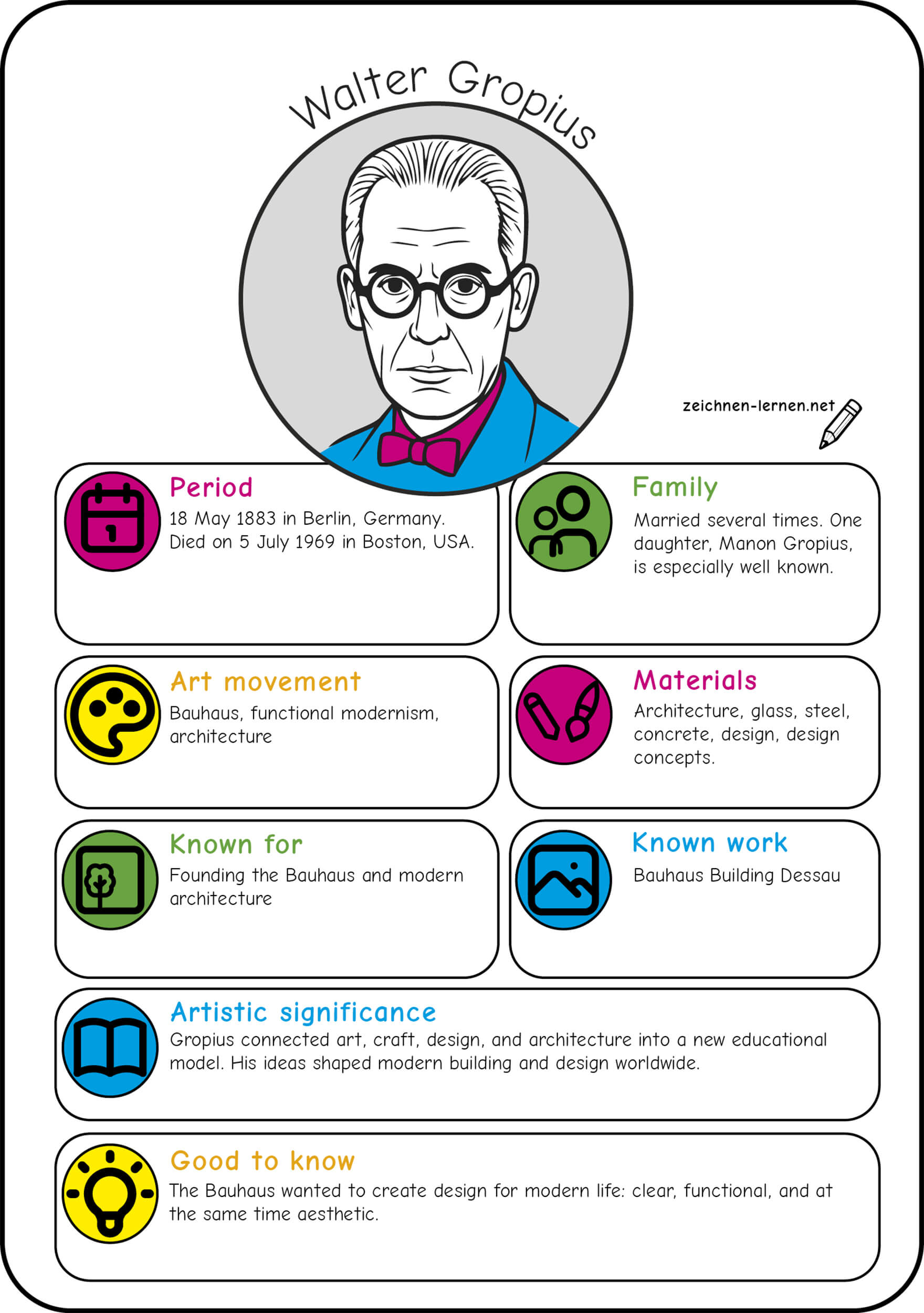
- Walter Gropius became known as the founder of the Bauhaus. His goal was to redefine the relationship between art and craftsmanship.
- Paul Klee and Wassily Kandinsky shaped the curriculum with color, form, and abstraction.
- Marcel Breuer is known for functional furniture design, such as tubular steel furniture.
- Anni Albers turned textiles into an art form in their own right and continues to influence modern design to this day.
- Marianne Brandt created functional metal objects that became icons of Bauhaus design.
What made it special: Design should not only be beautiful, but also useful, clear, and contemporary. The Bauhaus continues to influence architecture, graphic design, product design, and interior design to this day.
➡ Learn more about the Bauhaus art movement and functional modernism
Modern and Contemporary Art
In modern and contemporary art, there is no longer just one style. Art can take the form of painting, photography, film, installation, performance, conceptual art, digital art, or political intervention.
- Andy Warhol became famous for bringing advertising, celebrities, consumer products, and mass media into art. He demonstrated that modern visual culture is shaped by repetition, media, and consumption.
- Joseph Beuys significantly expanded the concept of art. For him, art had the power to change social thought and action.
- Ai Weiwei combines art, politics, and activism.
- Marina Abramović turned the body and the act into a work of art.
- Cindy Sherman shows how role models and media identities are staged.
- Yayoi Kusama became world-famous for her mirror rooms and dot patterns.
What makes it special: It is often no longer just about creating a beautiful object. Frequently, an idea, a question, an attitude, or an experience takes center stage.
➡ More on art in the 20th and 21st centuries
What Famous Artists Have in Common
Many famous artists share at least one of these characteristics:
They have…
- made particularly effective use of a new technique.
- brought a new theme to light.
- developed a distinctive style.
- left a particularly clear mark on their era.
- strongly influenced later artists.
- created works that became iconic images.
- artistically addressed social issues.
- been repeatedly exhibited in museums, by collectors, in schools, and in the media.
Fame, then, is a combination of quality, impact, visibility, and history.
Why is this important for art history?
When you look at famous artists, you don’t just learn their names and works.
You…
- understand how art evolves.
- see how religious art of the Middle Ages gave way to the human-centered art of the Renaissance.
- recognize how Baroque art intensified emotion and drama.
- understands why Impressionism changed the perception of light.
- sees how Expressionism and Cubism broke down the visible world.
- and recognizes why modern art does not always aim to be beautiful, but often raises questions.
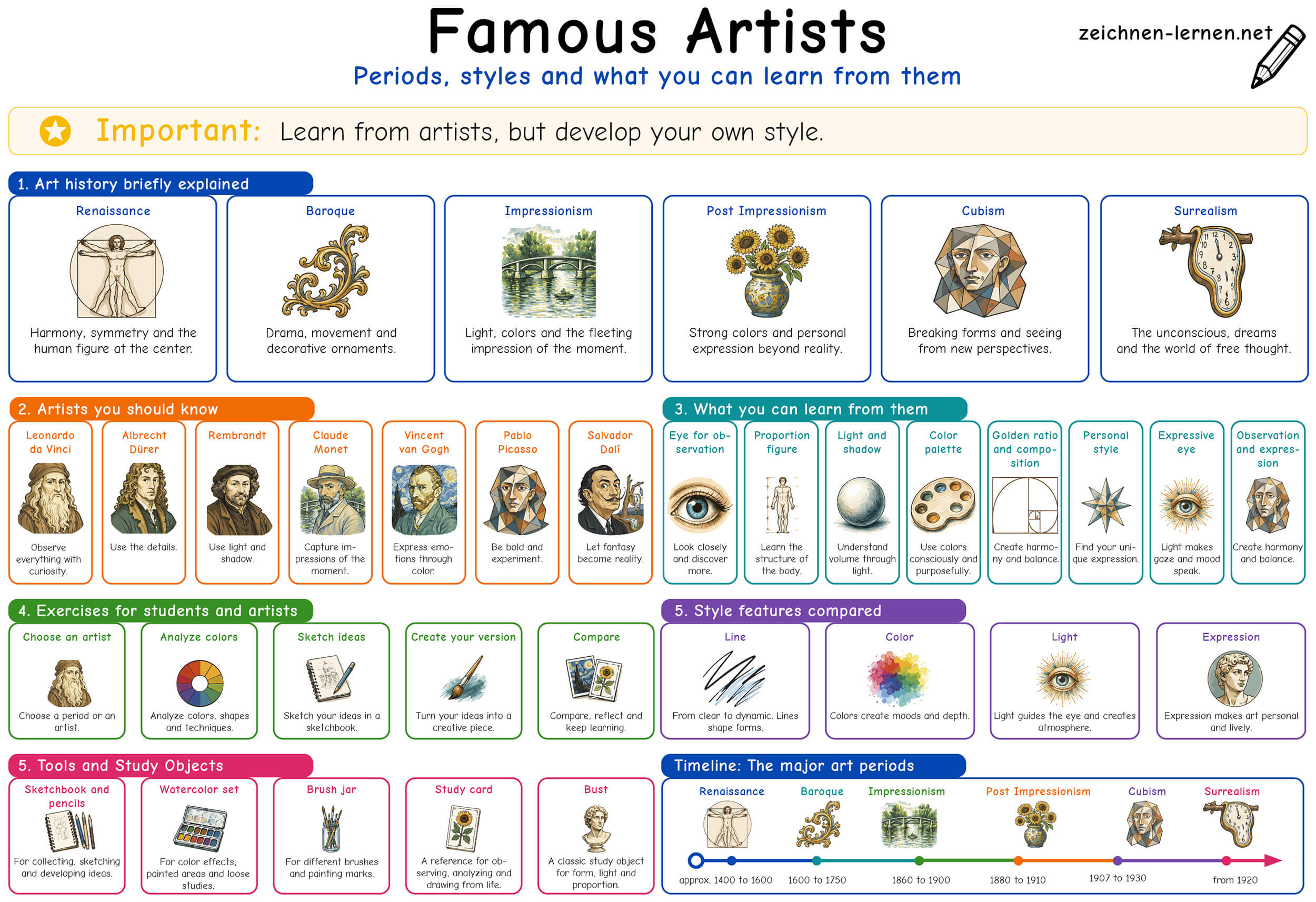
💡 Download the well-known overview as a PDF
In a nutshell
Well-known artists are usually not famous solely for individual beautiful works. They became significant because they had a particularly strong influence on, transformed, or brought to light the art of their time. Their fame stems from their skill, new ideas, recognizability, influence, historical significance, and the way in which later generations have passed on their works.
➡ General information on art history and art periods