
Baroque
The Baroque period is characterized by movement, pathos, strong light-and-shadow effects, and expansive staging. Art was not meant merely to depict, but to overwhelm, convince, and penetrate. The close connection between painting, sculpture, and architecture shaped the era to a particular degree.
➡ General information on Art History and Artistic Periods
➡ Overview of art periods from antiquity to the modern era

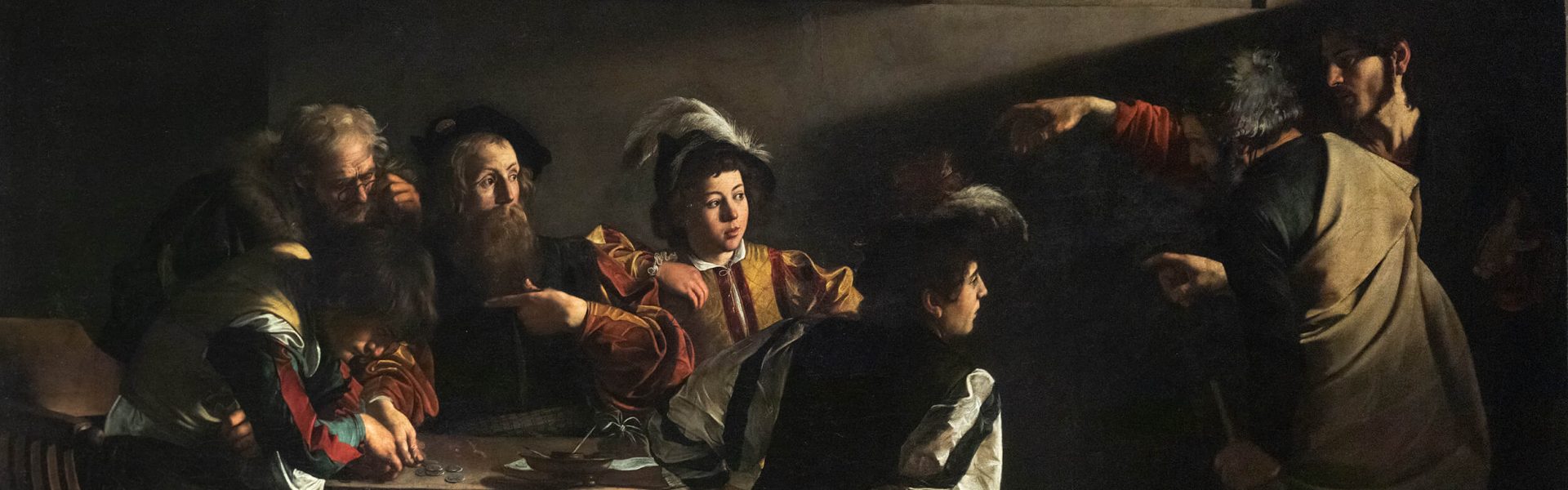
Caravaggio – The Calling of Saint Matthew
Period
The Baroque period is primarily associated with the 17th century, with regional variations extending into the early 18th century. Its centers were in Italy, Spain, the predominantly Catholic parts of Central Europe, and the major court cultures. The era was closely linked to the Counter-Reformation and absolutism.
Key Milestones
Key developments include dramatic lighting, dynamic composition, and the fusion of multiple art forms into striking spatial arrangements. Sacred spaces, palaces, and public squares were designed in new ways as unified spaces. Art thus increasingly became a means of religious conviction and princely representation.
Influential Artists
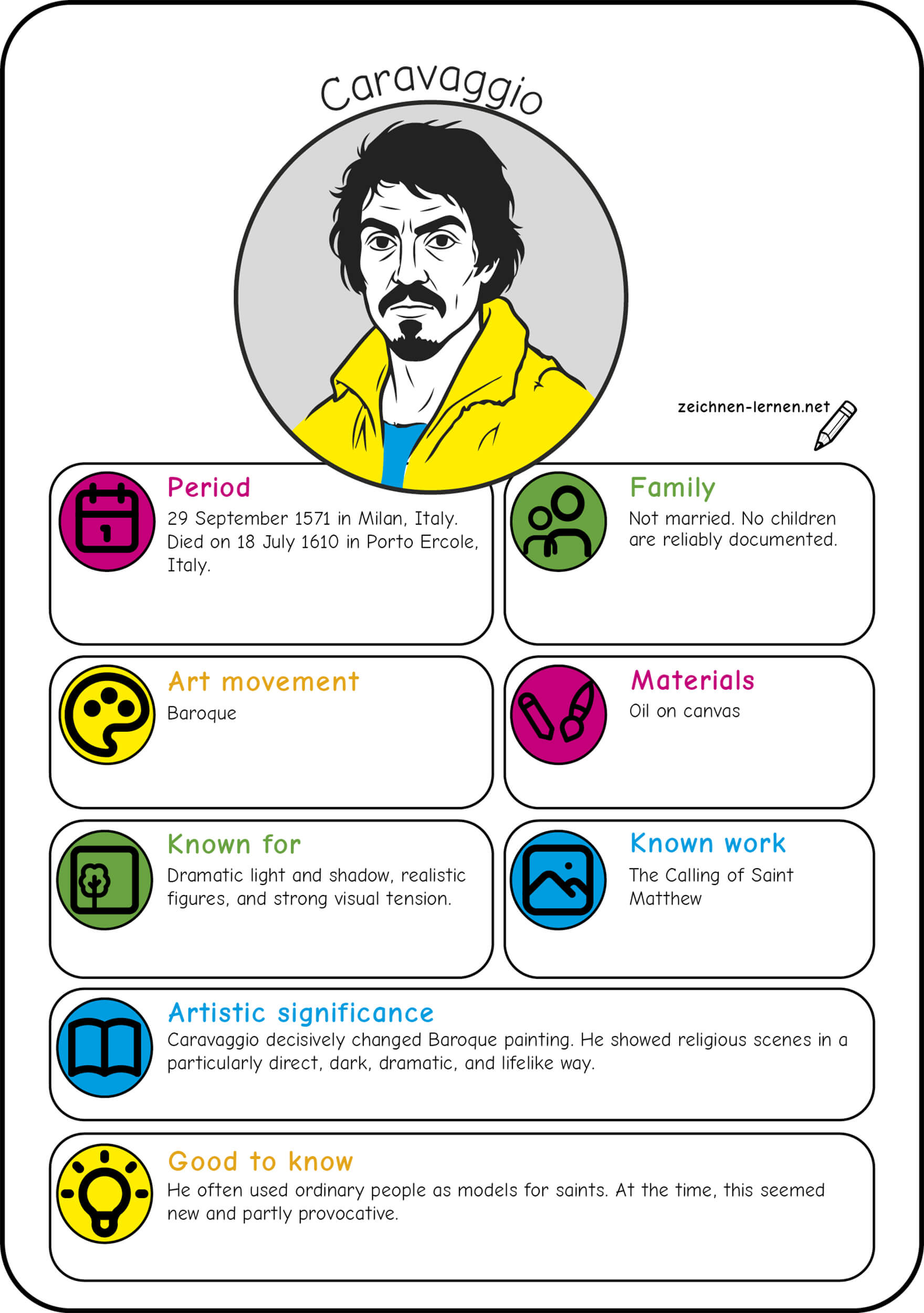
Caravaggio shaped Baroque painting with his striking use of light. Gian Lorenzo Bernini became a key figure in sculpture, architecture, and spatial design. Peter Paul Rubens is synonymous with the dynamic, color-rich, and monumental painting of the Baroque. These artists defined the era in very different but equally influential ways.
Notable Masterpieces
- Bernini, The Ecstasy of Saint Teresa
Notable for the way it combines sculpture, architecture, light, and spirituality into a unified Baroque composition. - Velázquez, Las Meninas
Famous because the work raises questions about gaze, representation, and court society with unusual complexity. - Rembrandt, The Night Watch
Famous because group portraiture, movement, and lighting are brought together in a previously unmatched way.
Connoisseur’s Gems
- Caravaggio, The Calling of Saint Matthew
A connoisseur’s gem because the Baroque use of light and the saint’s proximity to everyday life are exemplified here. - Artemisia Gentileschi, Judith and Holofernes
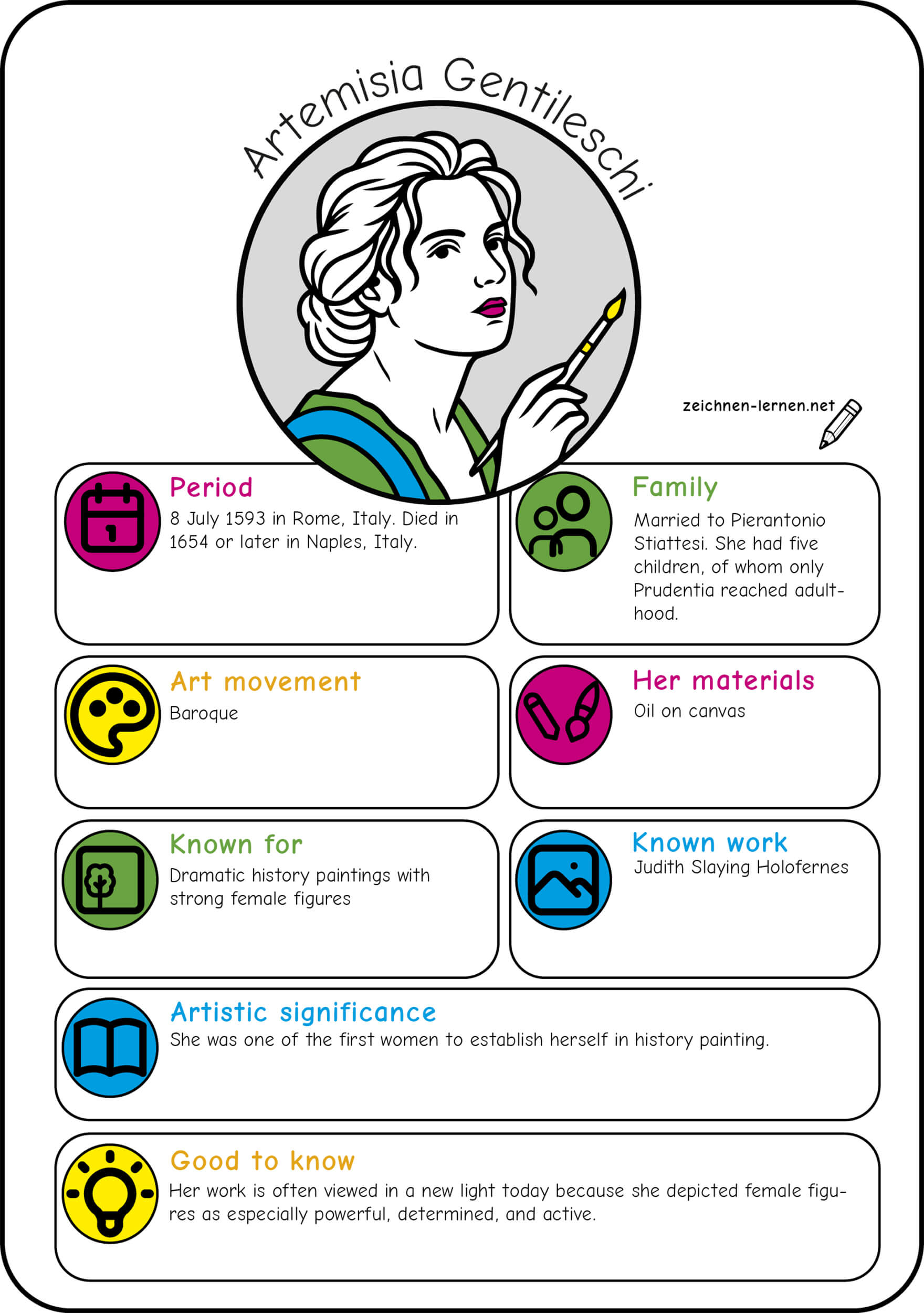
A connoisseur’s gem because violence, determination, and painterly power are combined with unusual intensity. - Zurbarán, Lamb of God
A connoisseur’s gem because it reveals a quieter, more concentrated side of the Baroque—less theatrical, yet no less intense.
Typical Materials and Media
Oil on canvas became the dominant medium because it allowed for the particularly effective rendering of large formats, deep shadows, and luminous highlights. Marble was preferred in sculpture because it enabled the depiction of folds, skin, and movement with illusionistic precision. Stucco, gilded decorations, and illusionistic ceiling frescoes were used because the Baroque aimed for a sensual spatial effect and overall impression.
Impact on the Era
Baroque art was meant to impress, move, and convince. It served to strengthen the Catholic faith as well as to represent princely power. In this way, art became a means of emotional and political impact, making the claims of the Church and the ruling class tangibly perceptible.
Summary
| Key Characteristics | Materials and Media | Notable Artists | Notable Artworks |
| Drama, Movement, and Strong Emotions | Oil on Canvas | Caravaggio | Caravaggio: The Calling of Saint Matthew |
| Striking light and shadow effects | Fresco | Peter Paul Rubens | Peter Paul Rubens: The Rape of the Daughters of Leucippus |
| Theatrical staging | Marble | Rembrandt | Rembrandt: The Night Watch |
| Religious and courtly power is impressively depicted | Bronze, gold | Gian Lorenzo Bernini | Gian Lorenzo Bernini: The Ecstasy of Saint Teresa |
| Bodies appear alive, animated, and emotional | Architecture and spatial staging | Artemisia Gentileschi | Artemisia Gentileschi: Judith Beheading Holofernes |
| Art is meant to overwhelm and impress | Strong contrasts | Diego Velázquez | Diego Velázquez: Las Meninas |
| Diagonal image composition |