
Semantics
Semantics is the study of signs that describes the meaning and content of colors, shapes, and gestures. “Warning signals” and symbols are part of this field.
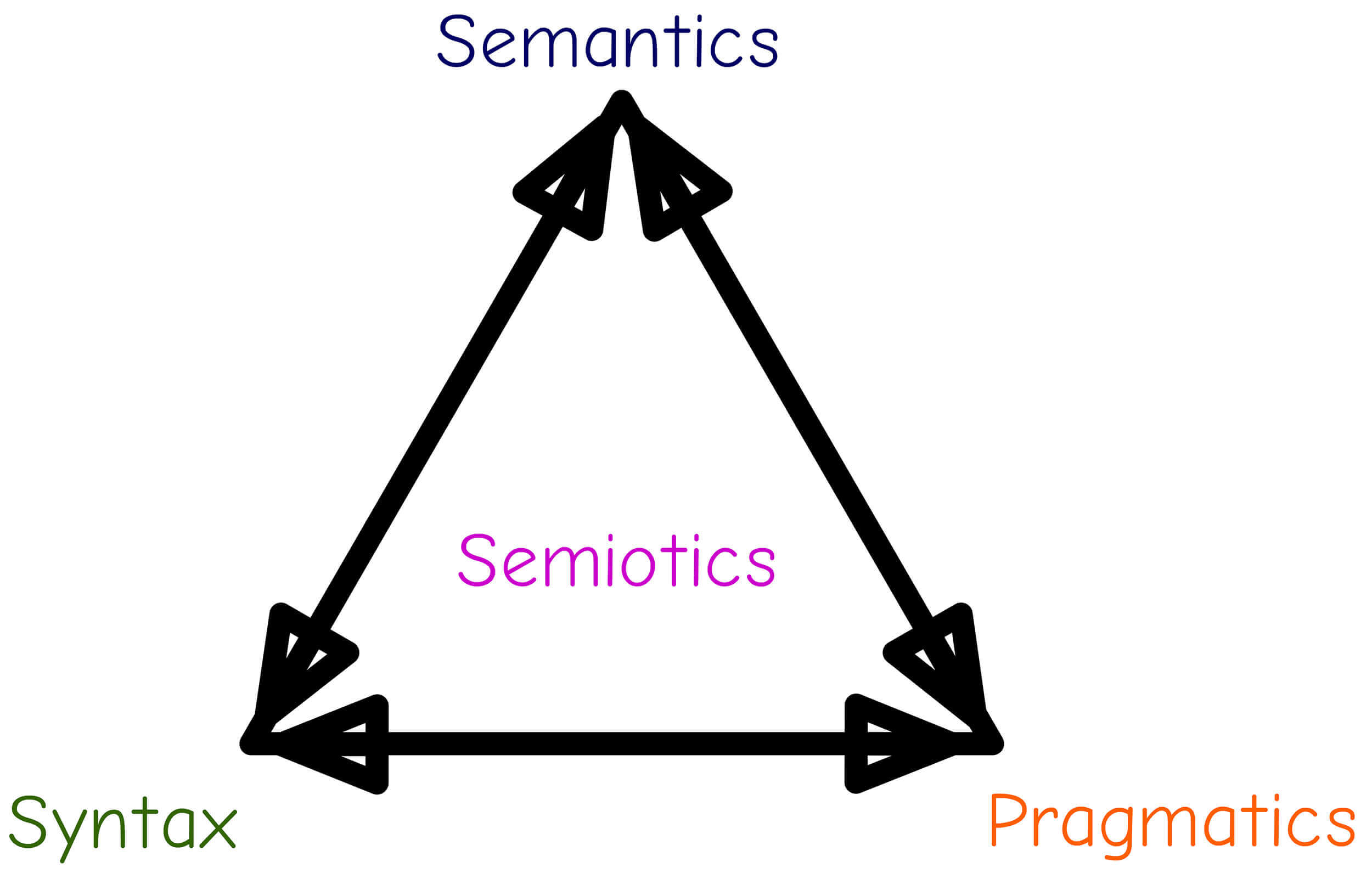
Semiotics (the study of signs)
The field of study that deals with the general theory and analysis of signs, sign systems, and sign processes is called semiotics. “Sema” means “sign.”
History of Symbols
The earliest symbols are geometric shapes such as
- Triangle
- Cross
- Square
- Circle
- Arrows

Visual symbols
- The image
> visual representation of a subject on a surface (3D to 2D)
e.g., drawings, paintings, film, photographs. - Coat of arms (heraldry)
> Originated during the Crusades in
Western Christian culture.
Coats of arms had to be easily recognizable from a distance and quickly comprehensible. As a result, the forms were highly simplified, and bright colors with high contrast were used. - Pictogram
> International, single-color, recognizable from a distance and at a small size,
reduced to the most essential features, intended to stand out, easily understandable (mostly on information signs; example: figures on restroom signs). - Logo
> Originated through trade around 800 BC.
Serves as an identification mark for potters, stonemasons, goldsmiths, seals, brand marks, and pharmacy logos
Can be either a word mark or a figurative mark. This allowed for better identification of goods and assurance of quality: hence the terms “signature” and “to sign.” - Lettering
Semiotics is divided into three disciplines:
- Pragmatics (meaning, purpose, function)
> Purpose, use, and effect of the sign - Semantics (meaning, content)
> Content, message, and meaning of the sign - Syntax (regularity, form)
> Form, color, brightness, texture, movement, and arrangement of the sign
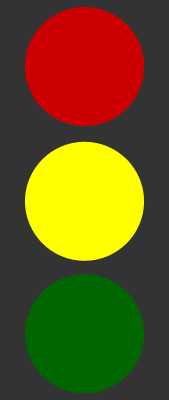
Traffic Light Example
- Syntax: Color: Red
- Semantics: Stop!
- Pragmatics: The recipient (observer) stops (when red) and walks (when green)
Semiotic Analysis
- Syntax = Appearance
> Describe the pure appearance, as if explaining it to a blind person. - Semantics = Content
> Meaning of the individual elements
(color, shape, symbols, etc.) - Pragmatics = Purpose/Effect
> What one should do and what is ultimately done.
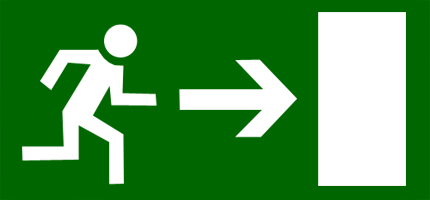
Example: Emergency Exit
- Syntax
> Rectangle, green;
white elements on it; a moving figure facing right; an arrow pointing right; a raised rectangle - Semantics
> Figure = movement
Arrow = indicates the direction (right)
Superscript rectangle = means a door located in that direction
Green = Indication - Pragmatics
> The emergency exit is located in that direction, and in an emergency, one should proceed there.
Semiotic analysis is also applicable to advertisements.
Signal Colors in Semiotics
Safety colors and regulatory colors according to DIN 1818 are used on traffic signs and road markings, as well as in factories.
| Color | General Meaning | Examples of Use |
| Yellow | Caution, Danger | Right-of-way road, Risk of Injury |
| Red | Stop, Danger | Stop sign, Emergency stop button |
| Green | Safety | Right-turn arrow, First aid equipment |
| Blue | Information | Highway sign, recommended speed |
| White | Guidance | Road markings, guide lines, directional arrows |
Color and Shape Perception
There are also common shapes associated with safety colors.
- Yellow – Triangle
- Red – Polygon
- Green – Rectangle
- Blue – Circle
In terms of content, there are 3 different types of symbols
- Icon
> Resemblance to the object it represents
(photo, naturalistic painting, stylized object)
What is important is that a connection is recognizable (the medium—e.g., pictogram, drawing, etc.—does not matter) - Index
> Indication; always has an indicative character,
it draws attention to something and directs thought.
e.g., all traffic signs, warning, emergency, or regulatory signs - Symbol
> Must be learned to be interpreted
Contains absolutely no resemblance to its meaning.
e.g., four-leaf clover = luck
heart = love
dove = peace, etc. - But also text
> serves merely as a carrier of specific information.
> Can also be classified as a symbol, since individual letters and combinations (words) must be learned.
More Pages
Excerpt from the German blog
- Drawing and creating reflections
- Creating a collage with Photoshop: the mythical creature, the griffin
- Creating Silhouettes in Photoshop
- Create a tilt-shift/miniature effect in Photoshop
- Creating Metallic Effects in Photoshop
- How do you recognize a good advertising graphic designer?
- Creating selective blur / editing the background with Photoshop
- Change the color of photos in a flash with selective color correction
Excerpt from the German forum